
Food waste composting on site, where the waste is produced
On-site food waste composting cuts what your site stores and hauls, and turns a daily disposal stream into fresh compost you can use. This page explains why sites do it, how the 12-24 hour process works, what comes out and how it changes hauling.
- 12-24 h
- composting cycle
- Up to 90%
- less wet food waste volume
- No
- water or drain connection
- Own factory
- every system built in Sivas, Türkiye
Why compost food waste on site
Food waste often sets the pickup schedule. It is wet, heavy for its size and cannot sit for long, so many sites pay for frequent organics pickups and extra containers, even when the containers are not full. Where no organics processor is nearby, collection can be limited or costly.
On-site food waste composting changes that. Staff load the machine during the shift instead of moving waste to a bin by the loading dock, and what leaves the site is a much smaller amount of compost, on your schedule. On Pine Cay in Turks and Caicos, where hauling waste is costly, kitchen scraps become compost on site with an ECO-30 KSN. At Tottenham Hotspur Stadium, food waste from the match-day kitchens is processed on site with an ECO-130 KSN instead of being hauled away.
The 12-24 hour process, step by step
Every ECO model runs the same basic cycle. One cycle takes 12-24 hours, and because capacities are given per day, the machine takes waste every day. Very oily or wet batches get the right recipe automatically.
- Load: staff add food waste as it is produced and press one button.
- Heat and turn: the chamber holds 45-75 °C (113-167 °F) while mixing arms turn the waste and fans move air through it.
- Break down: from the ECO-130 KSN up, an enzyme-assisted biological process does the work, with liquid enzyme dosed automatically at the first start.
- Clean exhaust: air leaves through the built-in activated carbon and UVC filter, so the machine can stand indoors or outdoors.
- Carry over: compost left in the drum starts the next cycle, so there are no daily enzyme or microbe refills.
Volume and hauling
For hauling, volume is the number that matters. The ECO series reduces wet food waste by up to 90%; for waste rich in carbohydrates, fiber or acid, such as bread, rice or fruit peels, the reduction is 60-70%. Adding dry matter lowers the reduction but raises compost quality.
Savings depend on your contract and your waste, so collect these facts before you build the business case:
- Your current organics and trash pickup schedule, and the cost of each pickup
- Container counts and rental fees for organics
- Daily food waste weights over two to four weeks, including your busiest days
- The waste mix, since wet food waste reduces more than bread, rice or landscaping material
- Contract terms such as minimum pickups or fees for changing the service level
What comes out and where it goes
The machine makes compost, not wastewater: there is no drain connection and nothing goes to the sewer. Use the fresh compost as an organic fertilizer or soil amendment on your grounds, gardens and landscaping, so it does not need to be hauled away at all. Teruar Urla, which holds a Michelin star and a Michelin Green Star, runs an ECO-130 KSN so its kitchen food waste is handled where it is produced.
From the ECO-130 KSN up, four load cells, an energy analyzer and OCTOEN Carbon Tracker software record every load: kilograms in, output, energy used, date and time. You can compare actual volumes with your old hauling records, back ESG reports with measured data and plan capacity for the next site.
Where on-site composting counts toward organics rules
Several US rules name on-site processing as an accepted way to comply. In New York City, covered food service businesses, hotels and food stores may process organic waste on site in an in-vessel composting system. New Jersey accepts enclosed on-site composting for large generators, Washington State lists on-site management under HB 1799, and Washington, DC allows an on-site in-vessel or DPW-approved system. Seattle and Austin also accept on-site composting, and from 2030 Maine allows composting at the point of generation. Connecticut adds a caveat: material from an on-site dehydrator is still solid waste unless it is then composted or digested.
Rules differ by place and change over time, so confirm with your agency before you count on-site composting toward compliance. This is general information, not legal advice.
Source: NYC Department of Sanitation, Commercial Organics Requirements · New Jersey DEP, Food Waste Recycling Law · Washington State Department of Ecology, 2022 Organics Management Law (HB 1799) · D.C. Code § 8-1031.03a · Maine Legislature, 38 M.R.S. § 2147 · Connecticut DEEP, Commercial Organics Recycling Law
Recommended systems
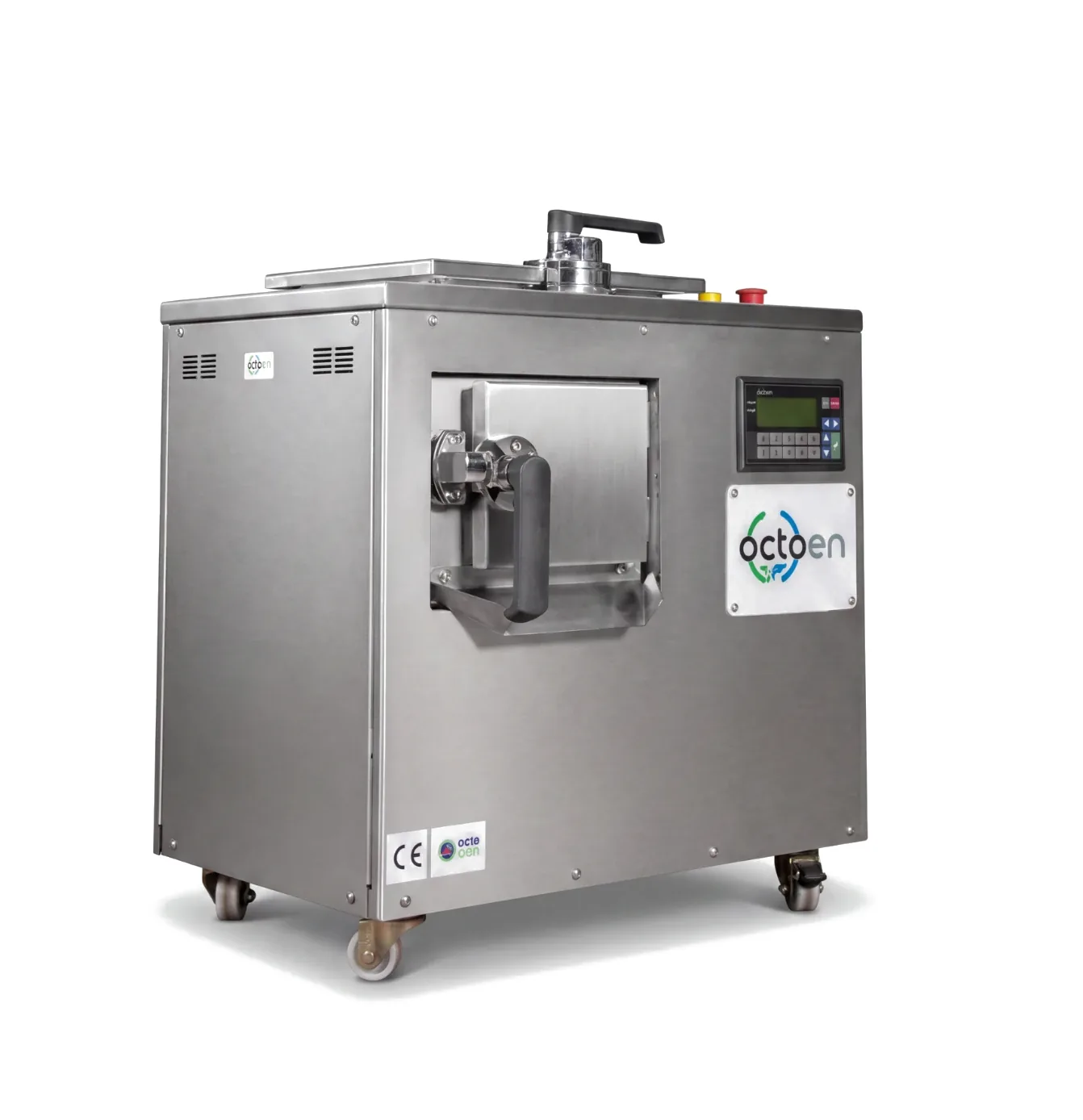
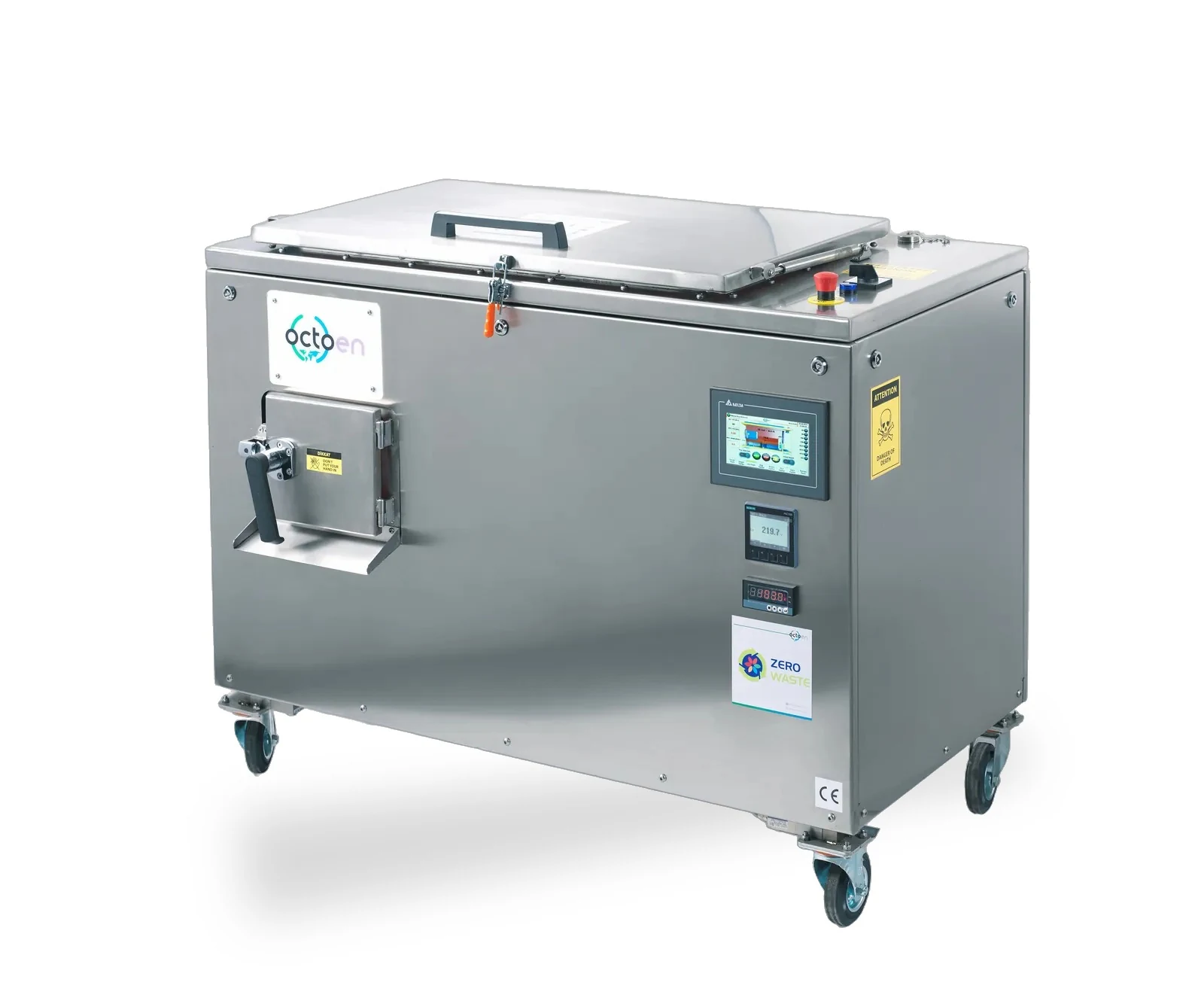
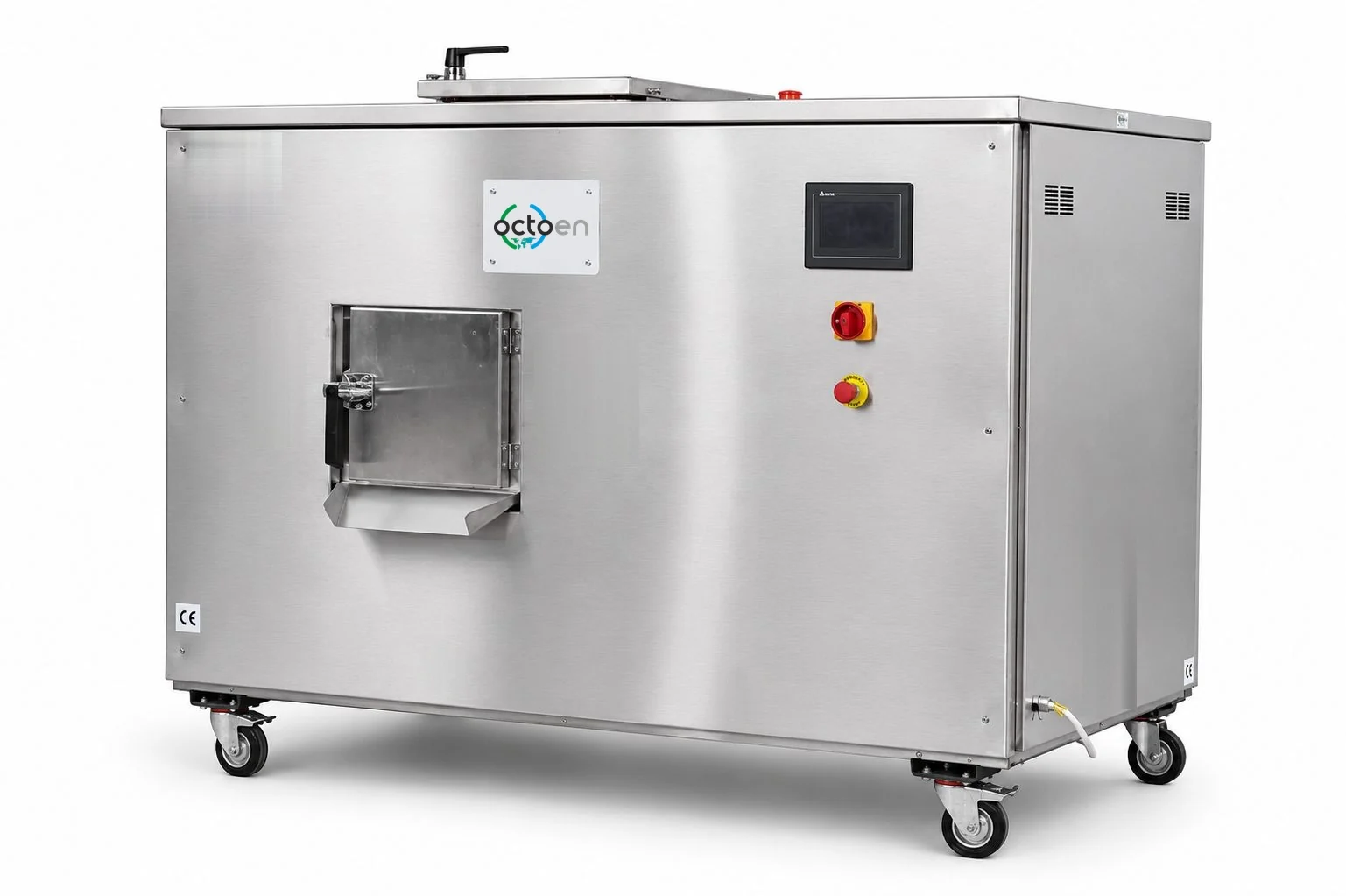
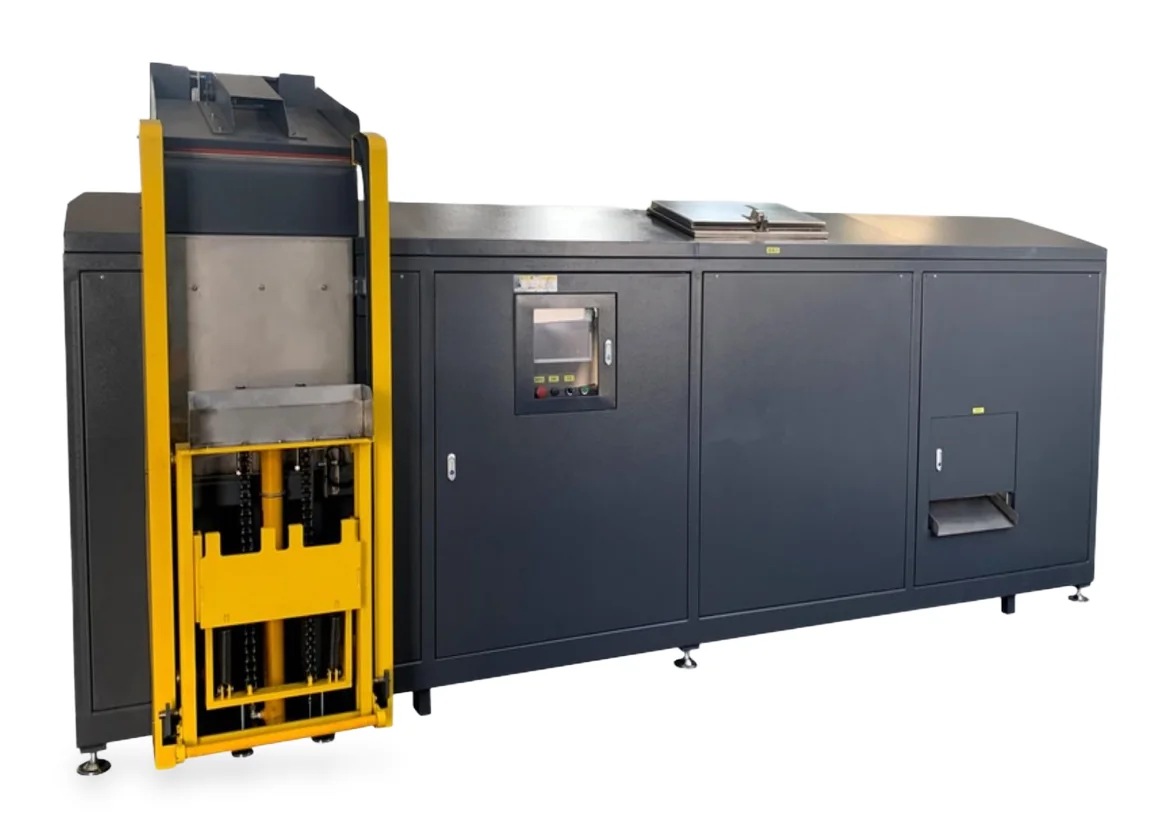
Sized by the food waste you produce per day. Our engineers confirm the final size after a site review.
Solutions by industry
- Hotels and resortsOn-site food waste composters sized by occupied rooms, from boutique hotels to large resorts.
- Restaurants and cateringCompact on-site composters for restaurant kitchens, chains and contract caterers, sized by meals served.
- Hospitals and healthcareOn-site composters for hospital kitchen, cafeteria and patient-meal food waste. Never medical waste.
- Schools and universitiesCafeteria and campus food waste composted on site, from a school kitchen to 1,000 kg (2,205 lb) a day.
- MunicipalitiesMarket, park and kitchen waste composted near where it is collected, plus pet food lines for animal shelters.
- Stadiums and event venuesMatch-day and event food waste composted on site, kitchens first, at stadiums, arenas and event venues.
- Shopping mallsOne central composter for the food court, restaurant and landscaping waste of every tenant.
- Supermarkets and marketsCompost produce, bakery and deli waste in the store, at the distribution center or at the weekly market.
- Food and beverage plantsCompost production scraps, off-spec product and canteen waste at the plant, from 500 to 5,000 kg a day.
- Factories and corporate campusesOn-site composting for plant cafeterias and campus grounds, from 130 kg (287 lb) to 1,000 kg (2,205 lb) a day.
- Islands, ships and offshoreCompact on-site composters for island resorts, ships and offshore sites, with no water or drain connection.
- Mining and remote campsComposting lines for mining camps and remote sites, from 1,000 kg (2,205 lb) to 5,000 kg (11,023 lb) a day.
- Farms and greenhousesOn-farm composting for plant residues, culled produce and farm kitchen waste, with compost used on your land.
Frequently asked questions
How long does food waste composting take?
One cycle takes 12-24 hours, and the machine is loaded every day.
Which model do we need?
Choose by daily amount: the ECO-30 KSN for 30 kg (66 lb), ECO-130 KSN for 130 kg (287 lb), ECO-300 KSN for 300 kg (661 lb), ECO-500 KSN for 500 kg (1,102 lb) and ECO-1000 KSN for 1,000 kg (2,205 lb) a day. Our engineers confirm the size after a site review.
Can we compost bones and shells?
Yes, after shredding. The ECO-100 Shredder reduces bones, shells and fibrous waste to a compost-ready size at up to 300 kg (661 lb) an hour, and the ECO-30 to ECO-1000 KSN can be ordered with an integrated shredder.
Does it need a water or drain connection?
No. The machine needs power and a ventilated area. Add a little water only if the compost gets too dry.
What should stay out of the machine?
Anything that is not organic, such as packaging, metal, glass and plastics. Ask us first if you are not sure about a material.
See what on-site composting would change for your site
Share your daily food waste amount, your hauling schedule and your location, and we will size a system and send a written quote.