SB 1383 Compliance: California Compost Law for Businesses

California Compost Law: A Strategic Compliance Guide for Businesses

California Compost Law: A Strategic Compliance Guide for Businesses

Waste management in California has undergone a paradigm shift, transitioning from voluntary environmentalism to a regime of rigorous statutory discipline. Governed by the landmark SB 1383 legislation, this new era fundamentally redefines how businesses must manage organic waste. With the 2026 volume thresholds now in effect, facilities of all scales are legally mandated to adopt professional, high-capacity solutions to ensure compliance.


What is the California Compost Law?


Formally recognized as the california composting law, this comprehensive strategy is designed to curb the potent methane emissions generated by organic matter decomposing in landfills. Using 2014 waste levels as a benchmark, the law mandates a 75% reduction in organic waste disposal by 2025. This california compost mandate extends beyond simple waste segregation; it also dictates that 20% of currently disposed edible food must be recovered for human consumption.


The Consequences of Non-Compliance: Fines and Penalties


The year 2024 marked a critical juncture in the enforcement timeline, signaling the end of the "educational" phase and the commencement of the "punitive" phase. california compost law fines are now being levied directly against enterprises found to be in violation of sorting protocols during inspections. Under the established california compost rules, failure to adhere to segregation mandates or reporting requirements exposes businesses to severe financial liabilities under Section 41850 of the Public Resources Code.


Strategic Implementation: How California Businesses Should Manage Compost


To achieve statutory compliance, commercial entities must segregate organic waste at the source—typically within kitchens or production areas—ensuring it remains isolated from traditional refuse. While the deployment of standardized california compost bins and comprehensive staff training are essential, technical nuances in material selection often remain a point of confusion.

For instance, a frequent inquiry is: why are paper plates not compostable in california? The answer lies in the fact that a significant portion of these products contain synthetic linings or PFAS chemicals. These contaminants compromise the integrity of high-grade compost in california, rendering the final byproduct unsuitable for agricultural use. Furthermore, as of 2026, exemptions have been virtually eliminated for organic waste generators exceeding the 96-gallon weekly threshold. Managing this volume via traditional hauling presents significant logistical hurdles, escalating costs, and potential sanitation risks.


Professional Solutions for Enterprises: Octoen Industrial Compost Machines


The most efficient strategy to bypass the escalating costs of municipal hauling and the looming risk of legal penalties is decentralized, on-site management. Integrating an industrial compost machine directly into your facility’s infrastructure not only diminishes your carbon footprint but ensures absolute alignment with SB 1383 standards.

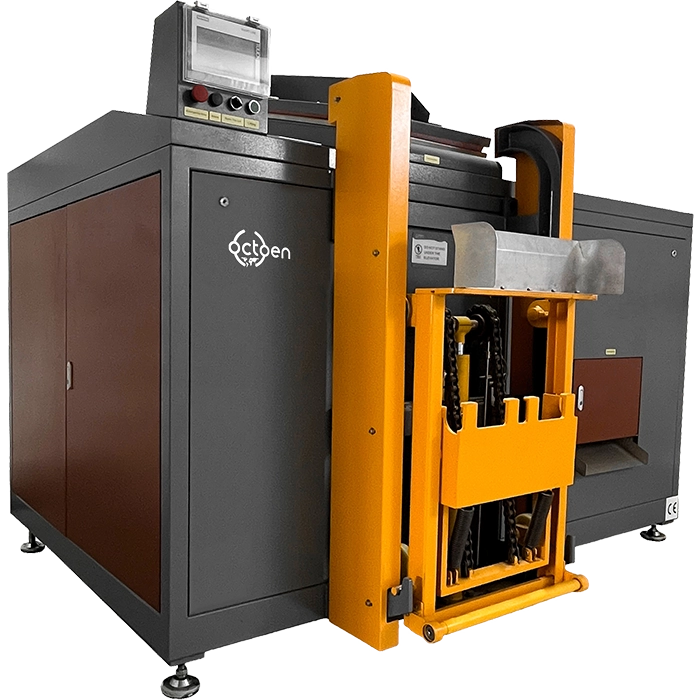
Octoen technology stands at the vanguard of this transition, utilizing state-of-the-art aerobic digestion to sterilize and transform organic waste into nutrient-dense resources without it ever leaving your premises. By leveraging Octoen industrial systems, businesses can optimize waste-related overhead, eliminate odorous liabilities and pest concerns, and secure a seamless pass in any california compost audit.


Why Octoen Composting Machines?


Integrating an industrial compost machine directly into your facility’s infrastructure is no longer just an environmental choice—it is a strategic necessity to bypass the escalating costs of municipal hauling and the looming risk of legal penalties. Octoen technology stands at the vanguard of this transition, providing a high-performance, on-site solution that ensures absolute alignment with SB 1383 standards.

Key advantages of Octoen’s high-tech composting systems include:

  1. Rapid & Automated Processing: Utilizing state-of-the-art aerobic digestion, Octoen machines can transform a wide variety of organic waste—including fruits, vegetables, seafood shells, and even small bones—into nutrient-dense resources.
  2. Significant Volume Reduction: Our systems are engineered to reduce the volume of organic waste by up to 90%, significantly optimizing waste-related overhead.
  3. Advanced Control & Monitoring: Equipped with Siemens PLC integration and a 7” HMI touchscreen, Octoen offers precise control over parameters like waste density, moisture content, and temperature.
  4. Carbon Footprint Tracking: Support for OCTOEN CarbonTrack® software allows businesses to track their carbon footprint in real-time, simplifying the data requirements for mandatory reporting.
  5. Scalable Modular Design: Our flexible, modular system solutions are tailored to meet the specific high-volume processing needs of any facility, from hotels to industrial centers.
  6. Operational Excellence: By processing waste at a working temperature of 45-75°C, the system effectively sterilizes organic matter, eliminating odorous liabilities and pest concerns while ensuring a seamless pass in any California compost audit.

By adopting Octoen’s decentralized management model, your facility can convert a tedious legal obligation into a streamlined, high-tech success that offers long-term economic and ecological benefits.


Transform your legal obligations into a strategic operational advantage with Octoen.


California Compost Law: A Strategic Compliance Guide for Businesses

Descubra Nuestros Productos Relacionados


Obtener una Cotización