Sizing an On-Site Composter by Daily Food Waste
Most sizing mistakes start with a guess. A kitchen manager says "about half a ton a day," a system gets ordered, and six months later the machine is either overloaded on weekends or half empty most of the week. A better approach takes a few weeks of simple measuring and a clear look at what is actually in the bins.
This guide walks through that process for hotels, venues, campuses, food plants, municipalities and the dealers who serve them.
Step 1: Weigh your waste for two to four weeks
Start with real numbers. Put a floor scale near the back door and weigh every bin of food and organic waste before it goes out. Record the date, the weight and where the waste came from (prep kitchen, plate returns, banquet, grounds).
A few habits make the data more useful:
- Cover your busy days. Weekend brunch, game days, conference weeks and move-in week tell you more than a quiet Tuesday.
- Keep sources separate. Prep scraps, plate waste and landscaping material behave differently in the machine.
- Note the season. A campus in July and a campus in October are two different sites.
When you finish, you should know three figures: your average day, your busiest regular day, and your peak events.
Step 2: Size for the busy day, not the average
An on-site composter has a daily capacity. If your average is 200 lb but Saturdays reach 330 lb, a unit sized for the average will back up every weekend. Size for your busiest regular day and plan a short holding routine for rare peaks, such as a sealed cart that is fed in over the next day or two.
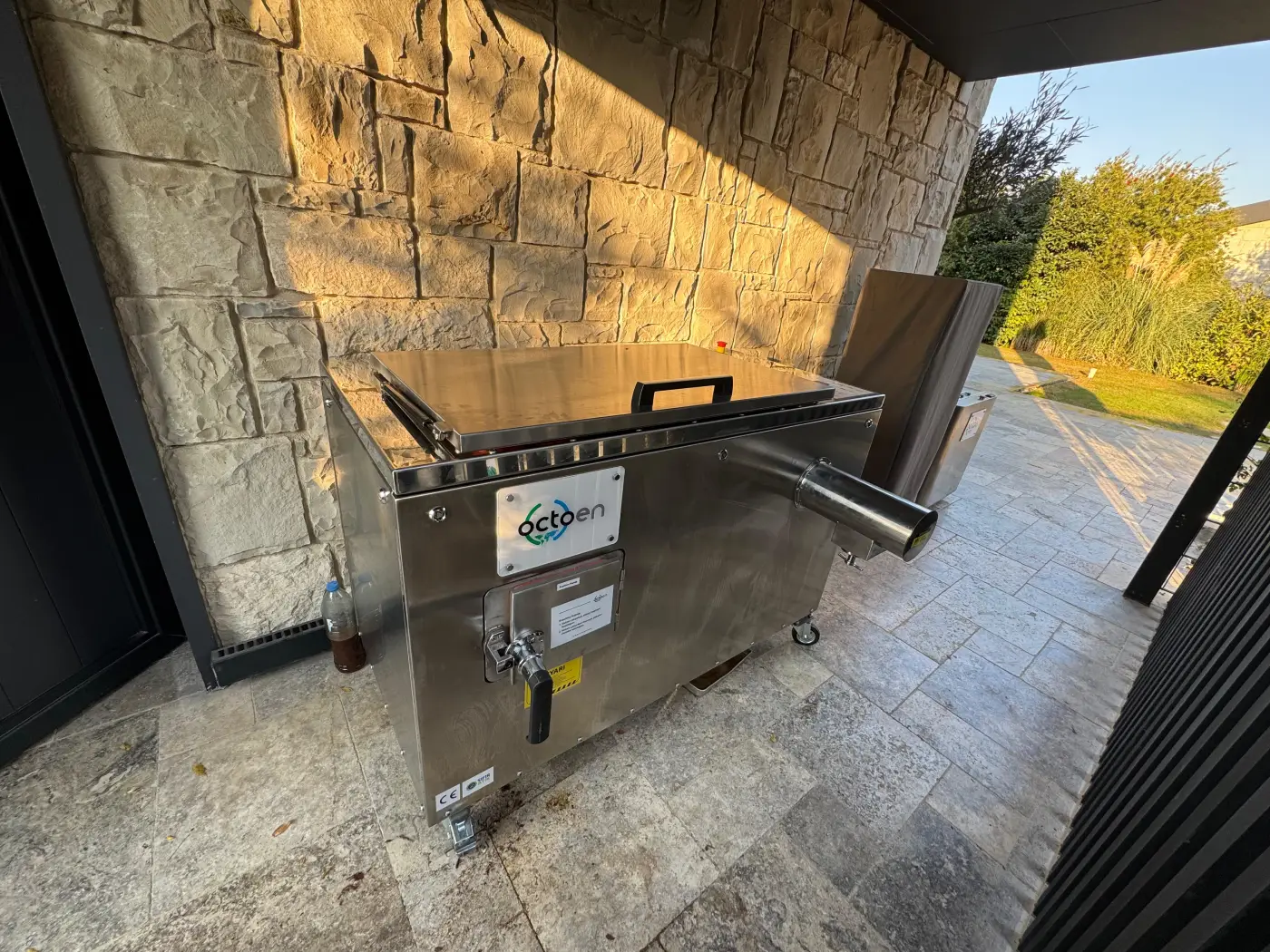
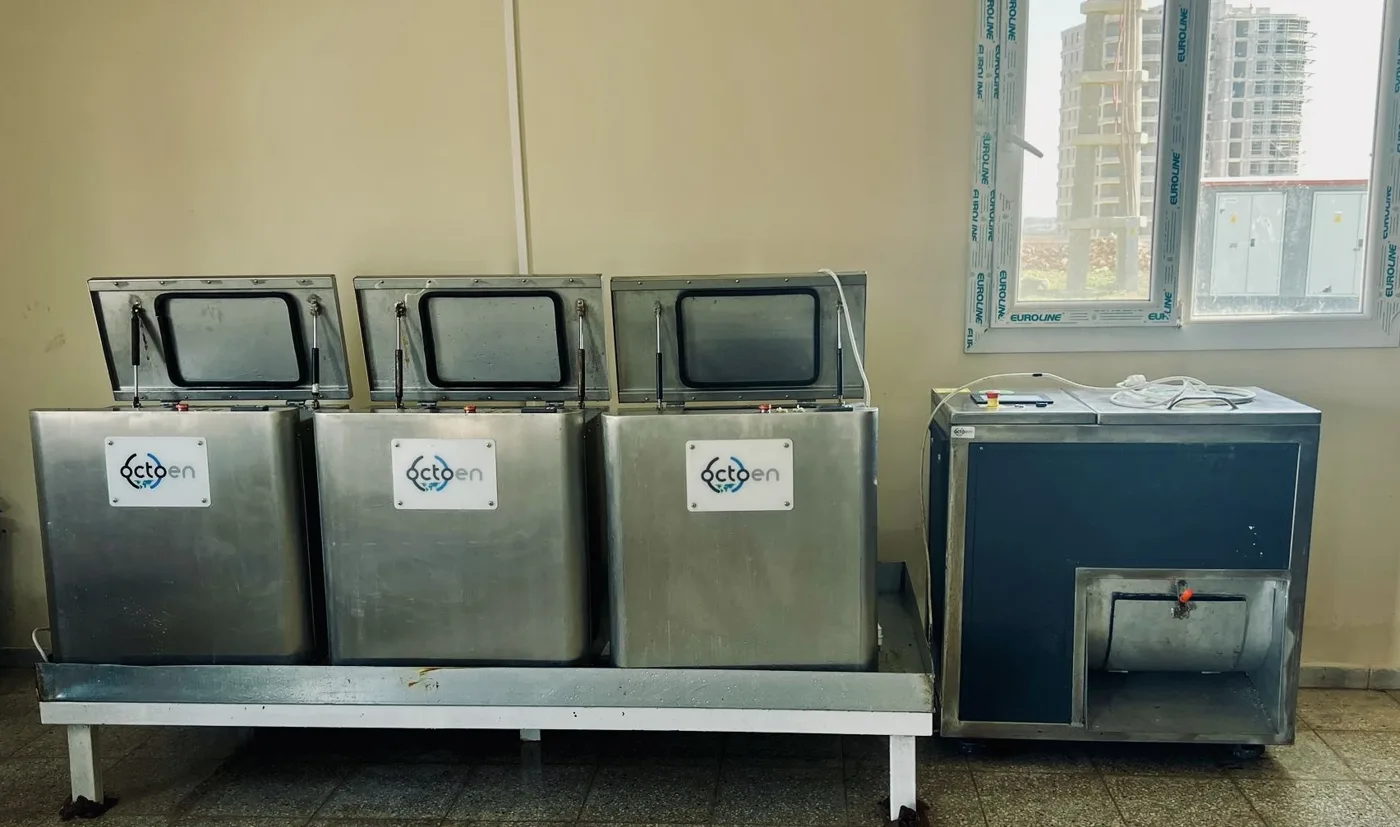
The OCTOEN ECO series covers a wide range in one product family, so the sizing question is mostly about where your busy-day number falls:
- ECO-30 KSN: 30 kg/day (66 lb), 50 L bin (13 gal). Small kitchens, offices, cafes.
- ECO-130 KSN: 130 kg/day (287 lb), 300 L bin (79 gal). Restaurants, small hotels, school kitchens.
- ECO-300 KSN and ECO-500 KSN: the same body with bins of 530 L (140 gal) and 750 L (198 gal). Mid-size hotels, cafeterias, venues.
- ECO-1000 KSN: 1,000 kg/day (2,205 lb). Large hotels, campuses, arenas, food plants.
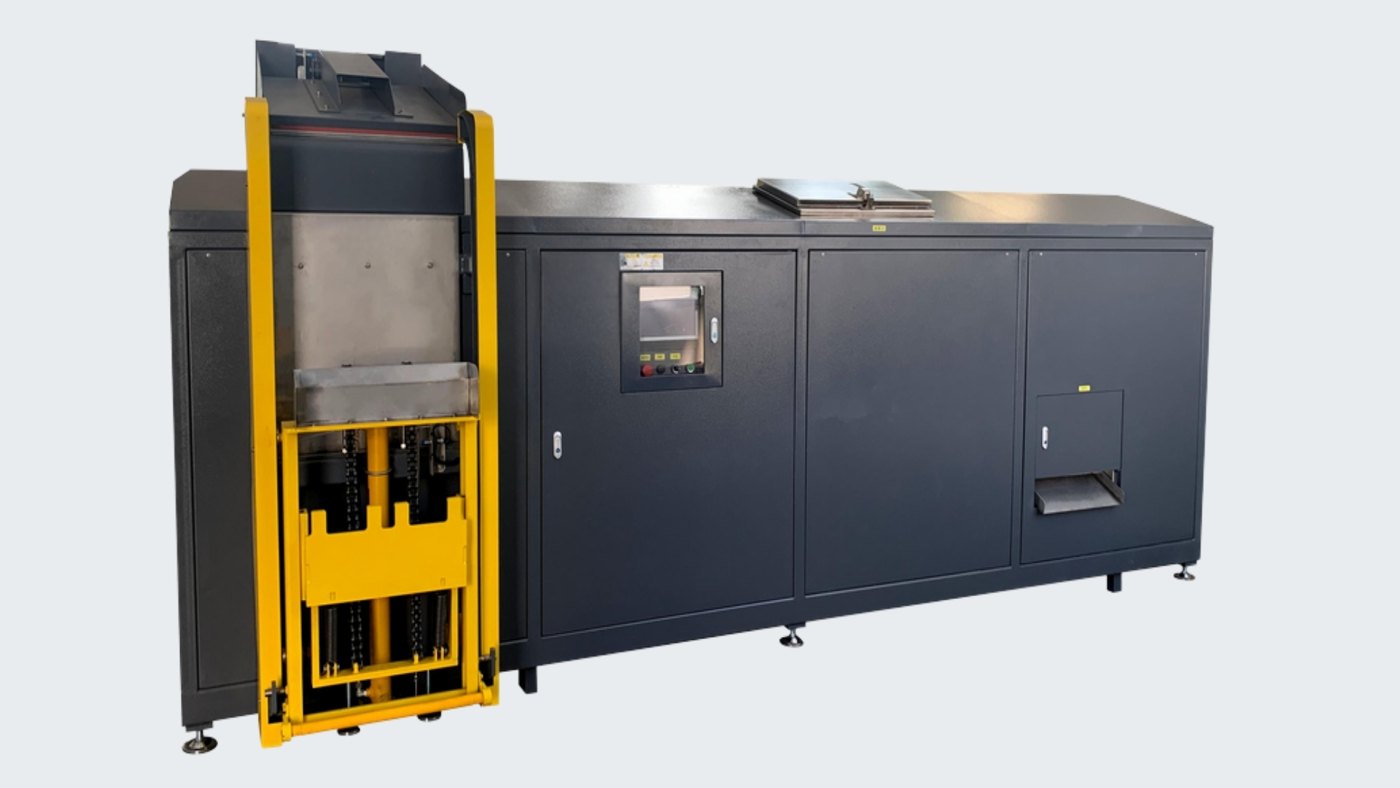
- ECO-2500 KSN and ECO-5000 KSN: 2,500 kg/day (5,512 lb) and 5,000 kg/day (11,023 lb). Municipal programs and industrial sites. The ECO-5000 KSN is a complete line with hopper, conveyors, shredder and dewatering.
Each unit runs a 12-24 hour composting cycle at 45-75 °C (113-167 °F), with volume reduction of up to 90% for wet food waste.
Step 3: Look at what goes in, not only how much
Weight is only half the picture. The mix changes how a batch behaves.
- Wet, oily food waste is the most common input. For high oil and water content, the machine applies the right recipe automatically, and this is the waste where the volume reduction of up to 90% applies.
- Carbohydrate-rich, fibrous or acidic waste (bread, rice, fruit peels, coffee grounds) reduces less, typically 60-70%.
- Landscaping material, compostable tableware and brown cardboard can go in too. Adding dry matter lowers the reduction rate but raises compost quality.
- Large or bulky pieces break down faster if they go through a shredder first. The ECO-100 Shredder handles up to 300 kg/h (661 lb/h) and works with every ECO model. For the ECO-300 KSN and ECO-500 KSN it is an external option.
If your log shows a lot of fibrous or dry material, your output volume will be higher than with pure food waste, so plan for more compost handling.
Step 4: Check the site before you commit
A machine that fits the waste also has to fit the room. Before you settle on a size, walk the site with these points:
- Footprint and access. The ECO-130 KSN measures about 53 × 28 × 33 in, while the ECO-1000 KSN is about 132 × 63 × 55 in. Check doors, ramps and the route for forklift or crane placement, which is the buyer's responsibility.
- Power. Small models run on single-phase power (208-240 V, 60 Hz in the US). Larger models use three-phase industrial power, and site voltage is confirmed per project.
- Floor and air. You need a flat, load-bearing floor, a grounded supply with residual-current protection, and a ventilated or air-circulated area. No water connection is needed.
- Noise. The ECO-30 KSN, ECO-130 KSN and ECO-1000 KSN run below 45 dB, a quiet office level, so they can sit close to a kitchen. Built-in odor filtration allows indoor or outdoor installation.
From the ECO-130 KSN up, each unit includes load cells and OCTOEN Carbon Tracker software. That means your waste log does not stop after installation: the machine keeps recording what goes in, which helps with future capacity planning and ESG reporting.
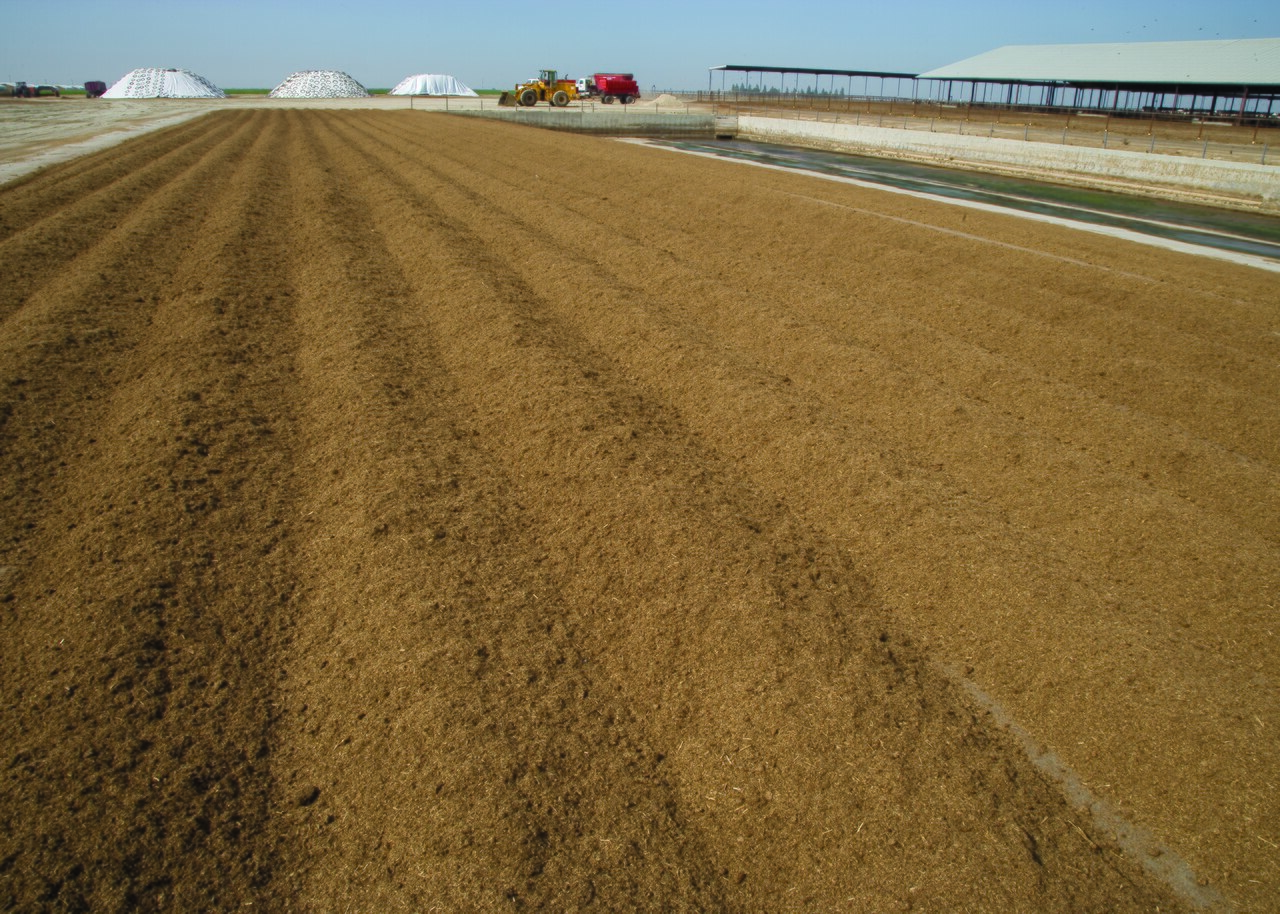
The output is fresh compost, used as a soil amendment on grounds, gardens and landscaping.
To compare models side by side, visit our products page or contact us for a site review and a written quote.
Written by the OCTOEN team.
All news and blog posts