
Hospital food waste composters for kitchens and cafeterias
OCTOEN on-site composters turn food waste from hospital kitchens, staff cafeterias and patient meals into fresh compost in a 12-24 hour cycle. They take food and other organic waste only; medical and clinical waste stays in your existing process.
- 12-24 h
- composting cycle
- Up to 90%
- less wet food waste volume
- No
- water or drain connection
- Own factory
- every system built in Sivas, Türkiye
The challenge
Where food waste weighs on a hospital
- Kitchens that never closeHospital kitchens serve patients, staff and visitors every day of the year, so food waste builds up on weekends and holidays too.
- Crowded docks and waste roomsFood waste shares the loading dock with many other waste streams. Every extra bin takes space, and odor near entrances reaches patients.
- Sustainability goals need dataA hospital with waste and climate goals wants to show progress in numbers, and food waste is hard to track without measured weights.
How OCTOEN fits
How on-site composting fits a hospital
The machine stands near the main kitchen or cafeteria, indoors or outdoors, and takes food waste from tray returns, prep and the cafeteria line. Staff load it and press one button; no dedicated operator is needed. From the ECO-130 KSN up, an enzyme-assisted biological process at 45-75 °C (113-167 °F) turns the waste into fresh compost in 12-24 hours, with up to 90% less volume. OCTOEN also runs at Grünenthal's pharmaceutical plant in Santiago, Chile, an industrial site rather than a hospital, where an ECO-130 KSN composts organic waste on site.
- Food and other organic waste only: kitchen, cafeteria and patient-meal waste, never medical waste
- ECO-130 KSN and ECO-1000 KSN below 45 dB, a quiet office level; ECO-300 KSN and ECO-500 KSN below 60 dB
- Closed 100% stainless steel body with lid interlocks; built-in odor filtration (activated carbon and UVC)
- No water or drain connection: it makes compost, not wastewater
- OCTOEN Carbon Tracker logs every load, from the ECO-130 KSN up
Recommended systems
Sized by the food waste you produce per day. Our engineers confirm the final size after a site review.
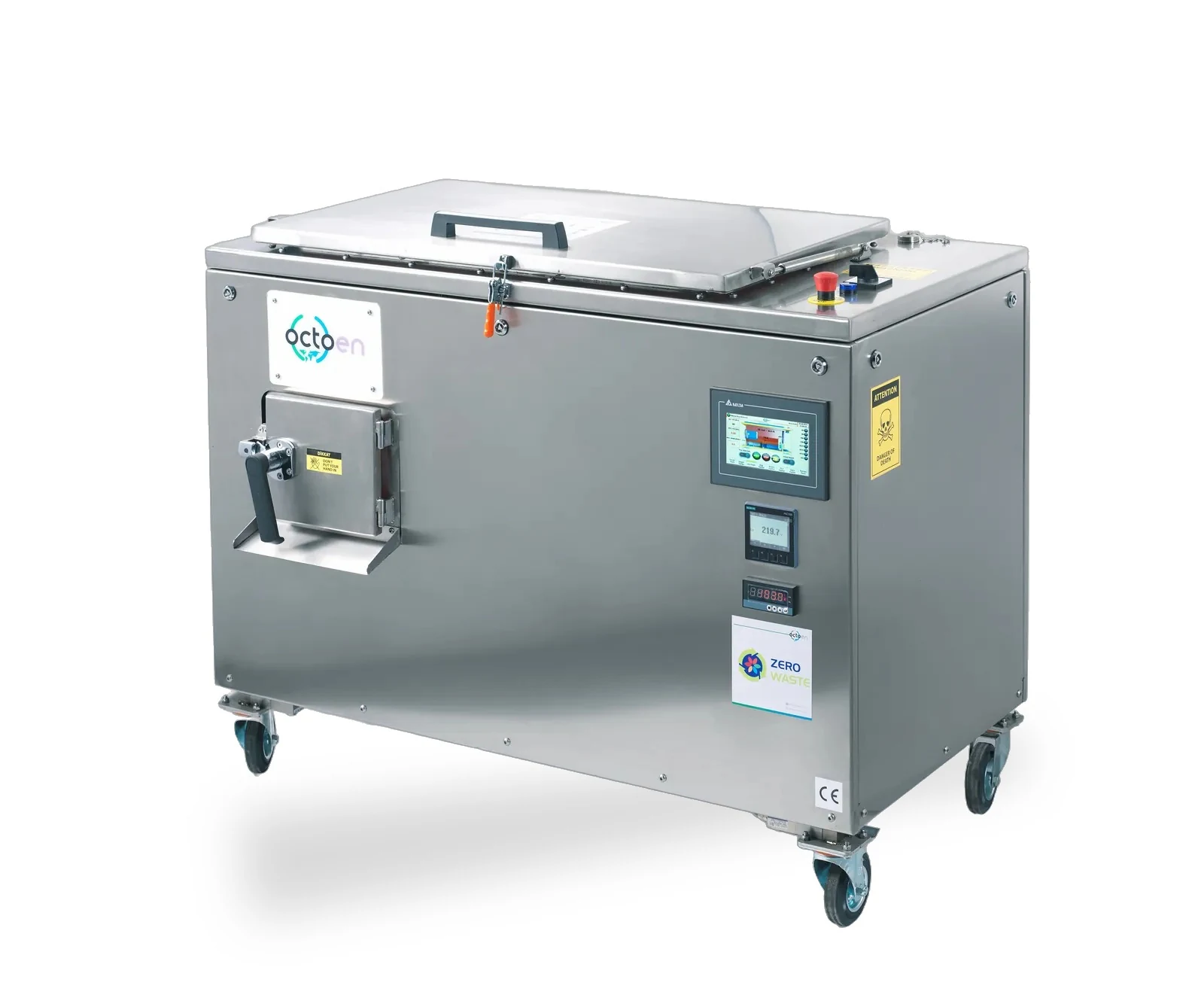
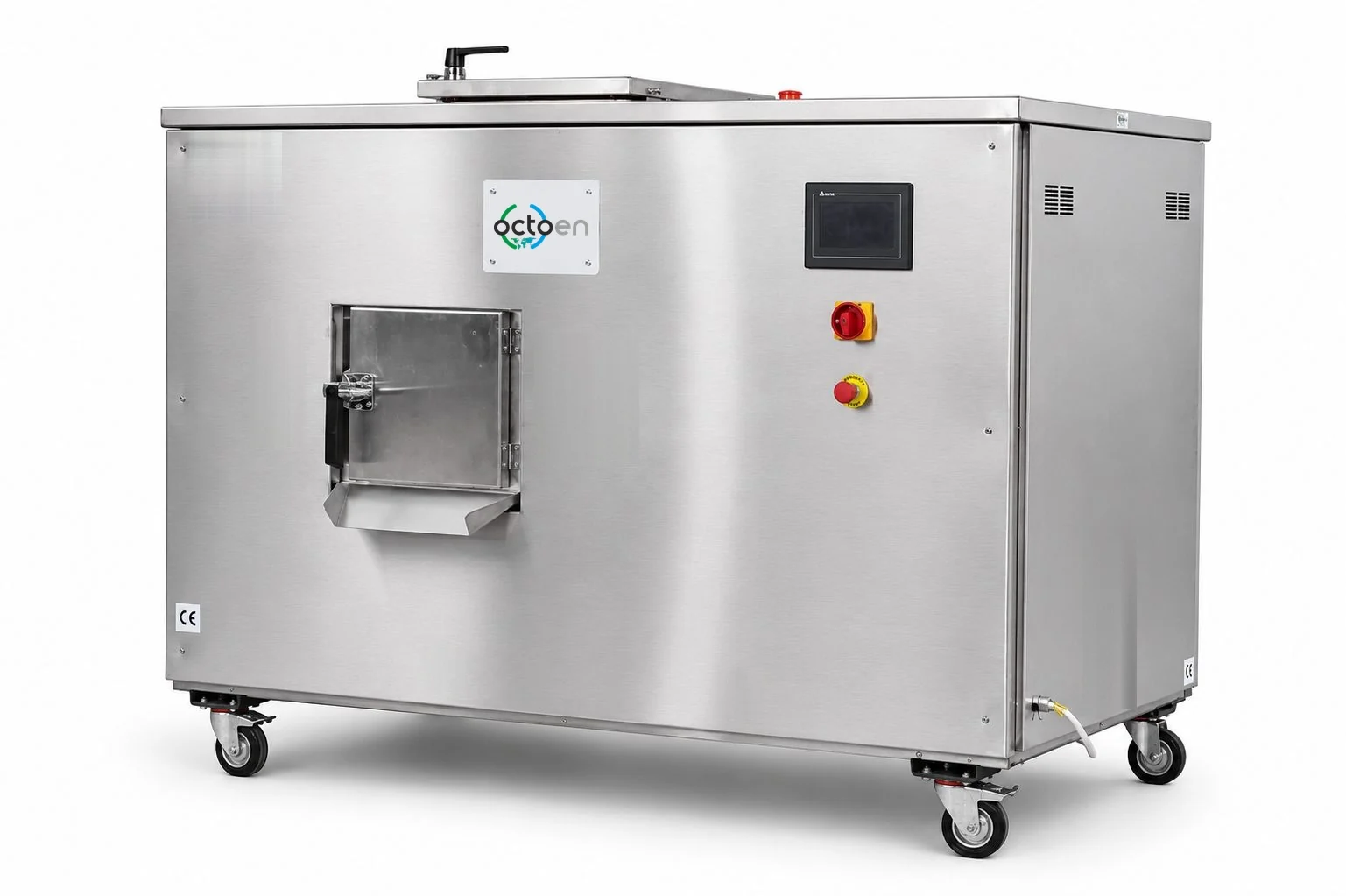
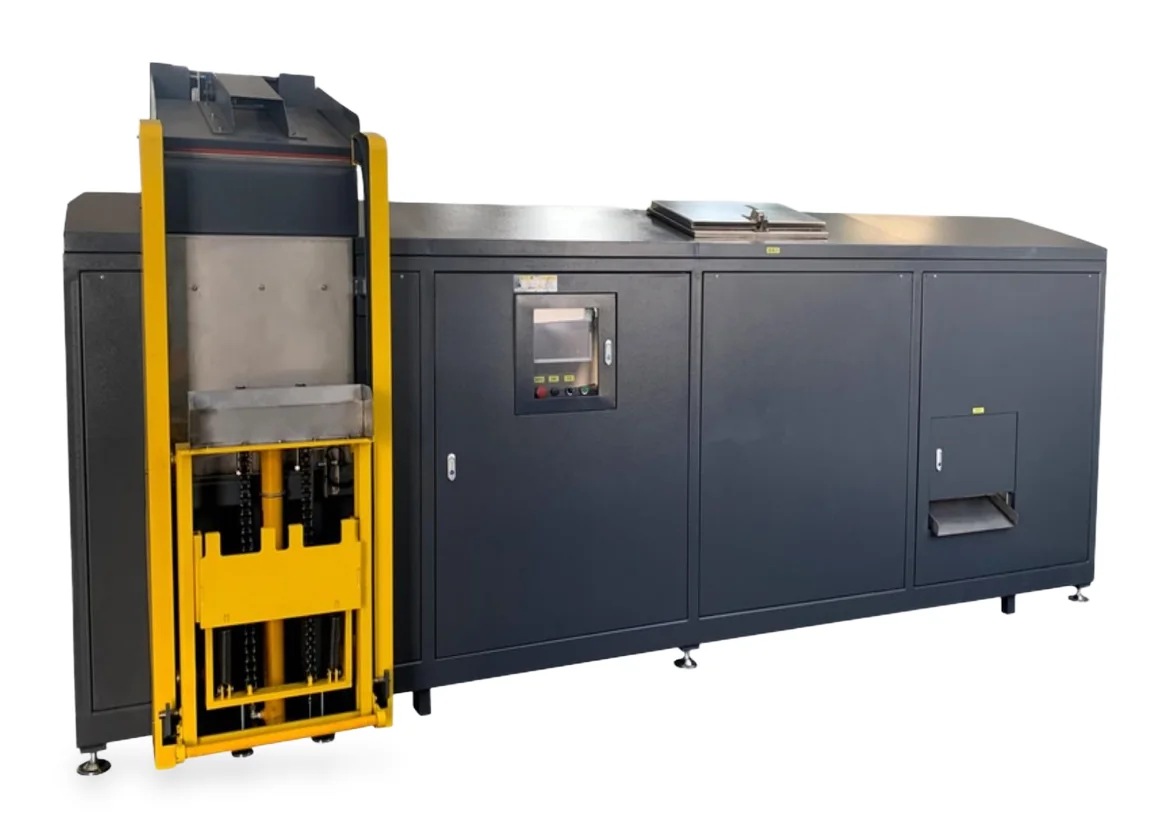
Sizing
Sizing by meals served
Count every meal the kitchen serves in a day: patient trays, cafeteria and meeting catering. A common rule of thumb is about 0.26 kg (0.57 lb) of food waste per meal served; it comes from restaurant data, so we check it against your own bin weights. By that rule the ECO-130 KSN covers up to about 500 meals a day, the ECO-300 KSN about 1,150, the ECO-500 KSN about 1,900 and the ECO-1000 KSN about 3,800. Size a hospital food waste composter for your busiest regular day; the ECO-1000 KSN adds a built-in electric bin lifter.
A hospital kitchen serving 1,500 meals a day produces about 390 kg (860 lb) of food waste, which fits the ECO-500 KSN.
Source: EPA Ireland, food waste in full-service restaurants
Open the system finderWhere it already runs
Our references span stadiums, Michelin-starred kitchens, campuses, municipalities and a copper mine.
See all referencesRules that reach hospitals in the US
There is no federal composting mandate, but several states and cities cover hospitals and other institutions. In Washington, DC, hospitals and nursing homes have had to separate back-of-house food waste since 2024, and an on-site in-vessel system is allowed. Connecticut has covered institutions since 2025 when they generate 26 tons or more of food waste a year within 20 miles of an authorized facility. Massachusetts bars businesses and institutions that dispose of half a ton or more of food material a week from sending it to disposal. Check the official source before you rely on a rule.
See the rules on our regulations pageQuestions from facility and food service teams
Can the machine take medical or clinical waste?
No. OCTOEN machines process food and other organic waste only, such as kitchen, cafeteria and patient-meal food waste, landscaping material and compostable tableware. Medical, clinical and infectious waste stays out and follows your existing process, as do any tray returns your infection control policy treats as clinical waste.
Which model fits our hospital?
Multiply the meals you serve on a busy regular day by about 0.26 kg (0.57 lb), then pick the model that covers it: ECO-130 KSN (130 kg, 287 lb a day), ECO-300 KSN (300 kg, 661 lb), ECO-500 KSN (500 kg, 1,102 lb) or ECO-1000 KSN (1,000 kg, 2,205 lb).
Will it disturb patients and staff?
The machine runs closed, and built-in odor filtration (activated carbon and UVC, plus HEPA on the ECO-1000 KSN) allows indoor or outdoor installation.
What does the site need, and who installs it?
A grounded supply with residual-current protection, a ventilated area and a flat, load-bearing floor; no water or drain connection. The ECO-130 KSN runs on single-phase power, larger models on three-phase power confirmed per project. In the US, installation, commissioning and training are quoted separately; limited warranty: 12 months from acceptance or 14 months from shipment.
Can we use the data in sustainability reports?
Yes. From the ECO-130 KSN up, OCTOEN Carbon Tracker, an energy analyzer and four load cells record the kilograms loaded, the output, the energy used and the date and time of each load.
Plan a system for your hospital kitchen
Tell us how many meals your kitchen serves a day, and we will recommend a model and send a written quote.