
Food waste dehydrator vs composter vs digester: a neutral comparison
Three kinds of on-site machines handle commercial food waste, and each leaves something different behind. This comparison sets out how each one works, what it needs at installation, what local rules say and what to ask any supplier, so you can decide on facts.
- 12-24 h
- composting cycle
- Up to 90%
- less wet food waste volume
- No
- water or drain connection
- Own factory
- every system built in Sivas, Türkiye
Three processes, three outputs
The three technologies start with the same food waste and end in very different places. What comes out decides most of what follows: where it goes, what it costs to move and whether it counts under local organics rules.
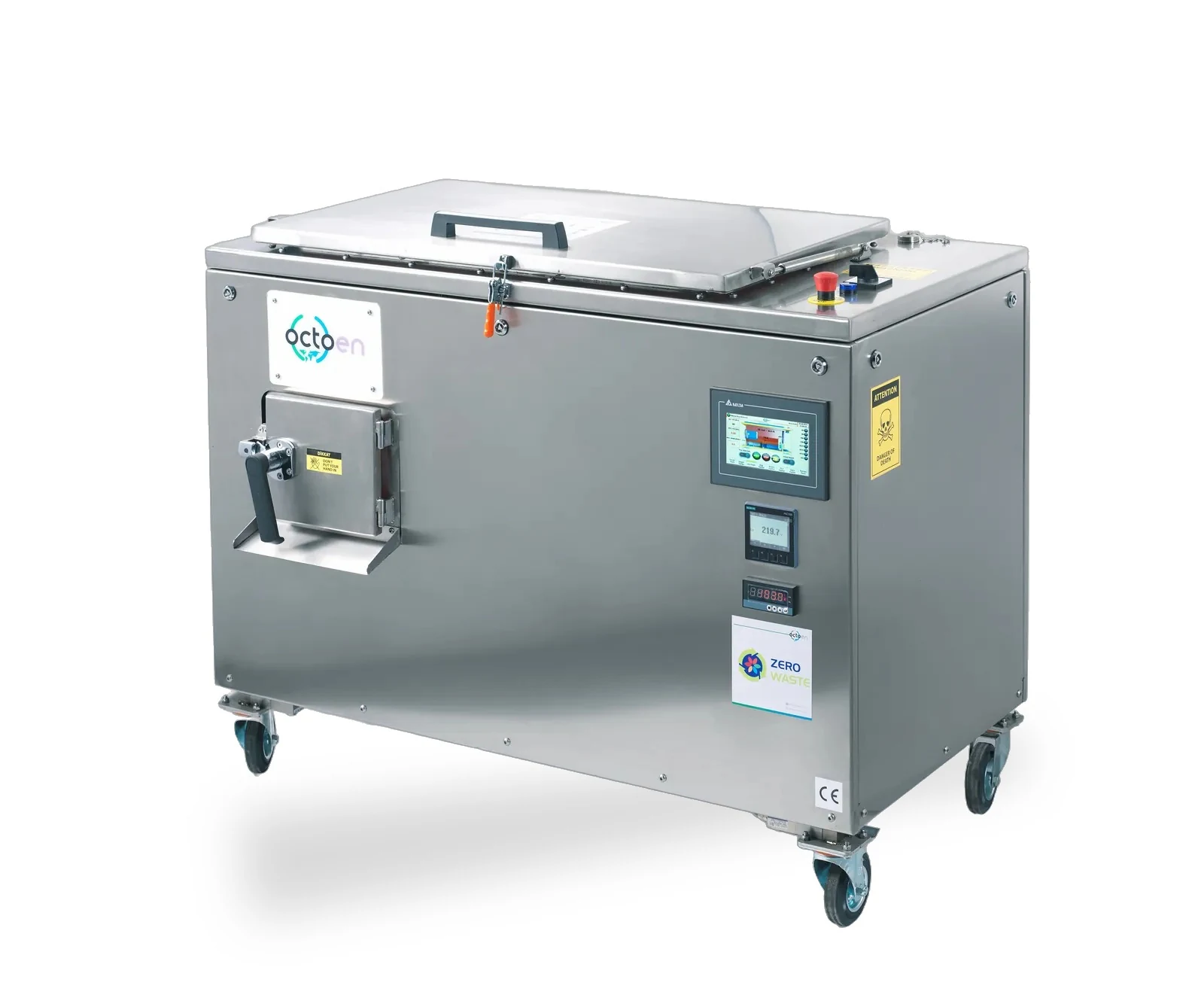
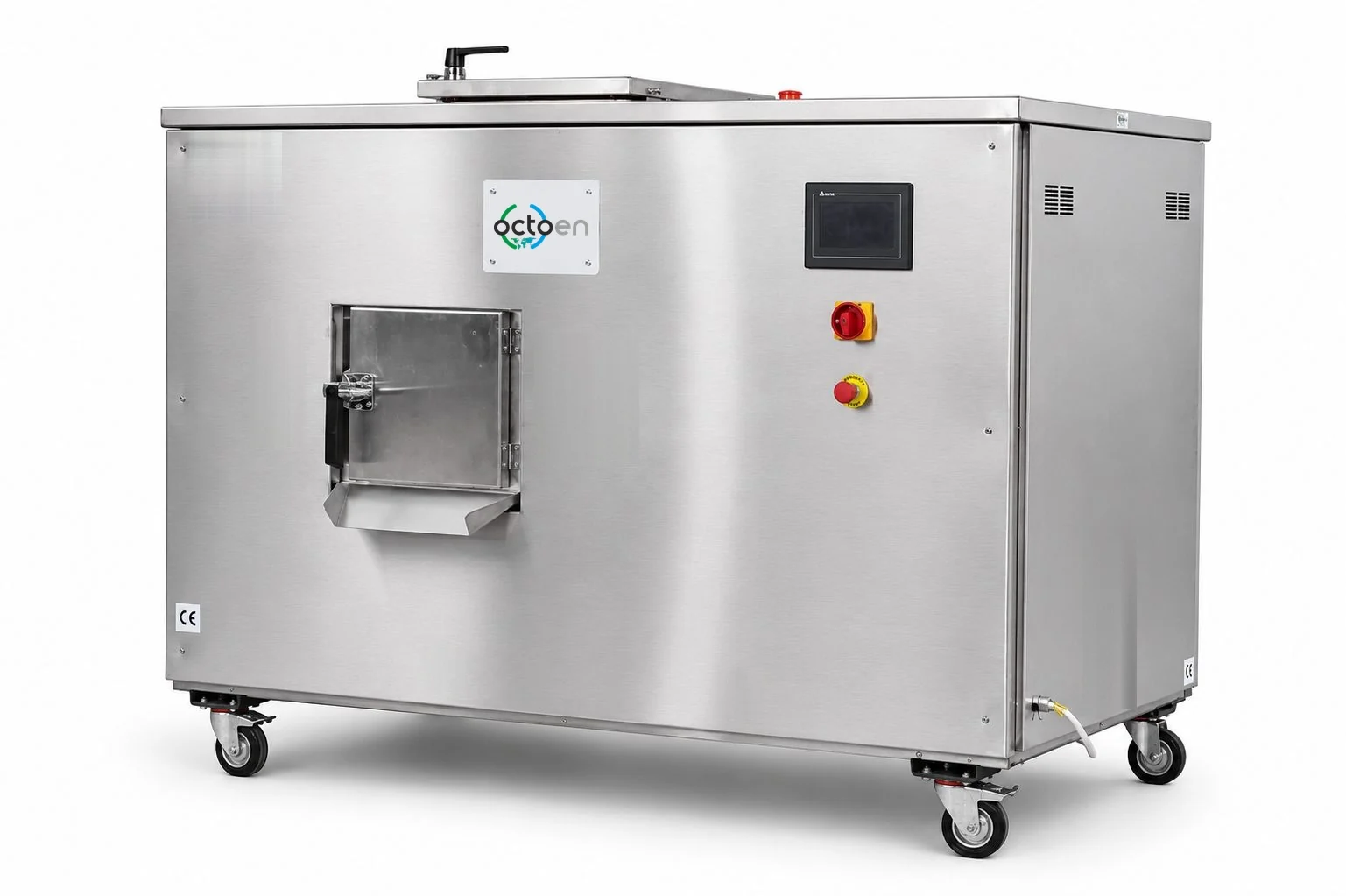
- Composter (OCTOEN ECO-130 KSN and larger): enzyme-assisted aerobic composting at 45-75 °C (113-167 °F) in a 12-24 hour cycle. Output: fresh compost, used as an organic fertilizer or soil amendment.
- Food waste dehydrator: heats and dries the waste. Output: dried food waste that still has to be hauled or processed somewhere else. Volume reduction varies by product.
- Digester to drain: microbes break the waste down into liquid. It needs water and a drain connection, and the result goes to the sewer instead of leaving a solid product.
Side by side
These are typical characteristics of each technology, based on published product information. Individual products vary, so check the spec sheet of any machine you consider.
- Water and drain: the composter needs neither; a dehydrator usually needs a water connection; a digester needs water and a drain.
- Odor control: the composter has a washable filter cassette in which only the activated carbon is refilled; dehydrators and digesters typically use replaceable cartridges and a vent connection.
- Recurring consumables: none required for the composter, with enzyme only at the first start; filter cartridges for a dehydrator; microbe chips refilled monthly for a digester.
- Next cycle: compost kept in the drum starts the next cycle; a dehydrator has no biological starter; a digester depends on refilled microbe media.
- Body and data: OCTOEN uses 100% passivated stainless steel inside and out, four load cells and an energy analyzer; other units are often stainless inside with plastic or painted panels outside, usually with one weight sensor.
When each technology fits
Each approach answers a different need, and a fair choice starts with yours. A digester to drain suits a site that has the plumbing in place and wants no solids to handle, once its utility and local rules accept the effluent. A dehydrator suits a site that mainly wants less weight and volume in the bin and already has an outlet for the dried material, such as a composting or digestion facility. An on-site composter suits a site that wants a usable product at the end, with no water or drain work and no cartridges or microbe refills to budget for.
For many kitchens, the deciding questions are practical: what you will do with the output, what installation work you can take on and what your local organics rules accept.
What local rules say
Rules can treat the three outputs differently. Connecticut's DEEP says material from an on-site dehydrator is still solid waste: it only complies if it is then composted or digested, and liquefying food waste to the sewer does not comply. Other rules name on-site composting as a way to comply, including Washington State's HB 1799, Seattle's commercial composting rule, Austin's Universal Recycling Ordinance and DC's food waste law, where on-site composting must be in-vessel or approved by DPW. New York City also accepts processing in an in-vessel composting system.
OCTOEN ECO-130 KSN and larger models run an in-vessel aerobic composting process, not a dehydrator. Rules differ by place, so confirm with your agency before you count on-site processing toward compliance. This is general information, not legal advice.
Source: Connecticut DEEP, Commercial Organics Recycling Law · Washington State Department of Ecology, 2022 Organics Management Law (HB 1799) · Seattle Public Utilities, business and commercial collection · City of Austin, commercial organics diversion requirements · D.C. Code § 8-1031.03a · NYC Department of Sanitation, Commercial Organics Requirements
Questions to ask any supplier
Whatever system you choose, these answers show what you will live with after installation. For reference, here are OCTOEN's: fresh compost used as an organic fertilizer or soil amendment; no water or drain connection, with odor filtration built in, indoors or out; no mandatory filter change, since only the activated carbon is refilled; installation, commissioning and staff training from Chicago; and named references, from Tottenham Hotspur Stadium to Pine Cay.
- What comes out, and what will we do with it?
- Does it need water, drain or vent work?
- What has to be replaced, and how often?
- Does the output count under our local organics rules?
- Who installs and services it near us, and can we see a site where it runs?
Recommended systems
Sized by the food waste you produce per day. Our engineers confirm the final size after a site review.
Solutions by industry
- Hotels and resortsOn-site food waste composters sized by occupied rooms, from boutique hotels to large resorts.
- Restaurants and cateringCompact on-site composters for restaurant kitchens, chains and contract caterers, sized by meals served.
- Hospitals and healthcareOn-site composters for hospital kitchen, cafeteria and patient-meal food waste. Never medical waste.
- Schools and universitiesCafeteria and campus food waste composted on site, from a school kitchen to 1,000 kg (2,205 lb) a day.
- MunicipalitiesMarket, park and kitchen waste composted near where it is collected, plus pet food lines for animal shelters.
- Stadiums and event venuesMatch-day and event food waste composted on site, kitchens first, at stadiums, arenas and event venues.
- Shopping mallsOne central composter for the food court, restaurant and landscaping waste of every tenant.
- Supermarkets and marketsCompost produce, bakery and deli waste in the store, at the distribution center or at the weekly market.
- Food and beverage plantsCompost production scraps, off-spec product and canteen waste at the plant, from 500 to 5,000 kg a day.
- Factories and corporate campusesOn-site composting for plant cafeterias and campus grounds, from 130 kg (287 lb) to 1,000 kg (2,205 lb) a day.
- Islands, ships and offshoreCompact on-site composters for island resorts, ships and offshore sites, with no water or drain connection.
- Mining and remote campsComposting lines for mining camps and remote sites, from 1,000 kg (2,205 lb) to 5,000 kg (11,023 lb) a day.
- Farms and greenhousesOn-farm composting for plant residues, culled produce and farm kitchen waste, with compost used on your land.
Frequently asked questions
Is an OCTOEN machine a food waste dehydrator?
No. The ECO-130 KSN and larger models run an enzyme-assisted biological process at 45-75 °C (113-167 °F). A dehydrator dries the waste; our machines compost it.
Is dehydrator output compost?
Not by itself. A dehydrator heats and dries the waste, and the output is dried food waste. Connecticut DEEP, for example, treats it as solid waste until it is composted or digested.
What installation work does each one need?
An OCTOEN composter needs power and a ventilated space, with no water or drain connection. Dehydrators usually need a water connection, and digesters need water and a drain.
Which OCTOEN models does this comparison cover?
The ECO-130 KSN (130 kg, 287 lb a day), ECO-300 KSN (300 kg, 661 lb) and ECO-500 KSN (500 kg, 1,102 lb), which run the enzyme-assisted biological process. The full range runs from 30 to 5,000 kg (66 to 11,023 lb) a day.
Is this comparison about specific brands?
No. It describes typical characteristics of each technology, based on published product information. Individual products vary, so check the spec sheet of any machine you consider.
Compare against your own site
Tell us your daily food waste, your site and your local rules, and we will show you how an OCTOEN composter fits and send a written quote.