
Food waste composters for shopping malls and food courts
Shopping mall food court food waste, restaurant scraps and landscaping material can become fresh compost on your own property, in one system that serves every tenant. Here is where the machine goes, how to size it and which organics rules to check.
- 12-24 h
- composting cycle
- Up to 90%
- less wet food waste volume
- No
- water or drain connection
- Own factory
- every system built in Sivas, Türkiye
The challenge
What makes mall food waste hard to manage
- Many kitchens, one waste roomFood court counters and restaurants produce waste on their own schedules, and all of it waits in one waste room until pickup.
- Odor close to shoppersWaste rooms often sit near the food court, entrances or service corridors, and bins left a day or two in warm weather get noticed.
- Hauling costs and missing numbersFood waste is heavy and wet: it fills dumpsters and adds pickups. Without daily weights, there is little to put in a Zero Waste or ESG report.
How OCTOEN fits
How one system serves every tenant
Tenants sort food waste in their kitchens and bring it to one OCTOEN machine in the waste room, at the loading dock or in a service yard. An enzyme-assisted biological process at 45-75 °C (113-167 °F) turns the day's load into fresh compost in a 12-24 hour cycle. It is an in-vessel aerobic composting system, not a dehydrator, and it needs no water or drain connection. The fresh compost goes back into the property's planters and green areas as organic fertilizer or soil amendment.
- ECO-1000 KSN: a built-in electric lifter empties tenants' 120 and 240 L (32 and 63 gal) bins.
- Built-in odor filtration (activated carbon and UVC), indoors or outdoors.
- 100% stainless steel body with dip passivation against corrosion.
- Food waste, landscaping material, compostable tableware and brown cardboard in one machine.
- OCTOEN Carbon Tracker and four load cells (ECO-130 KSN and up) record the weight that goes in and comes out.
Recommended systems
Sized by the food waste you produce per day. Our engineers confirm the final size after a site review.
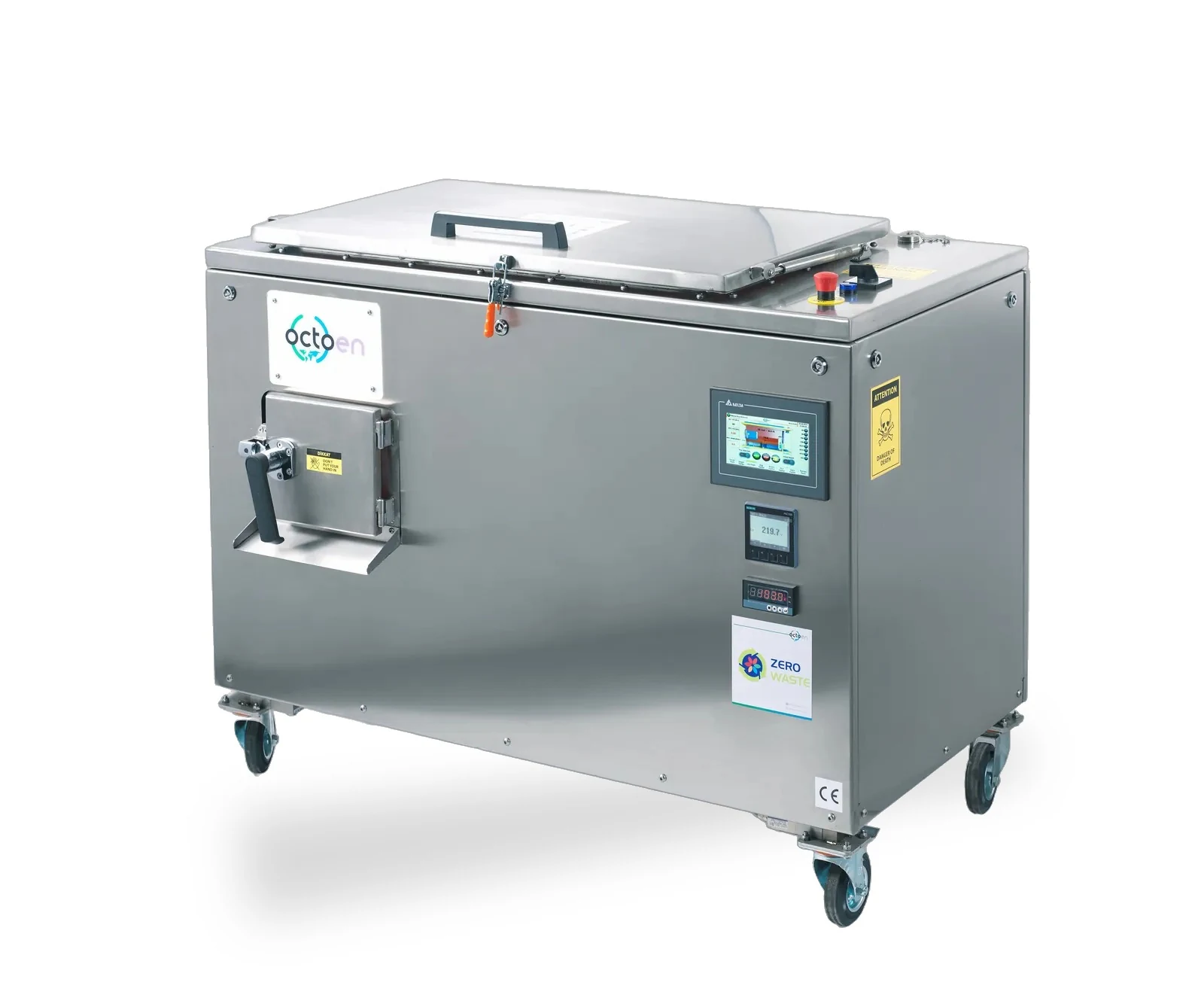
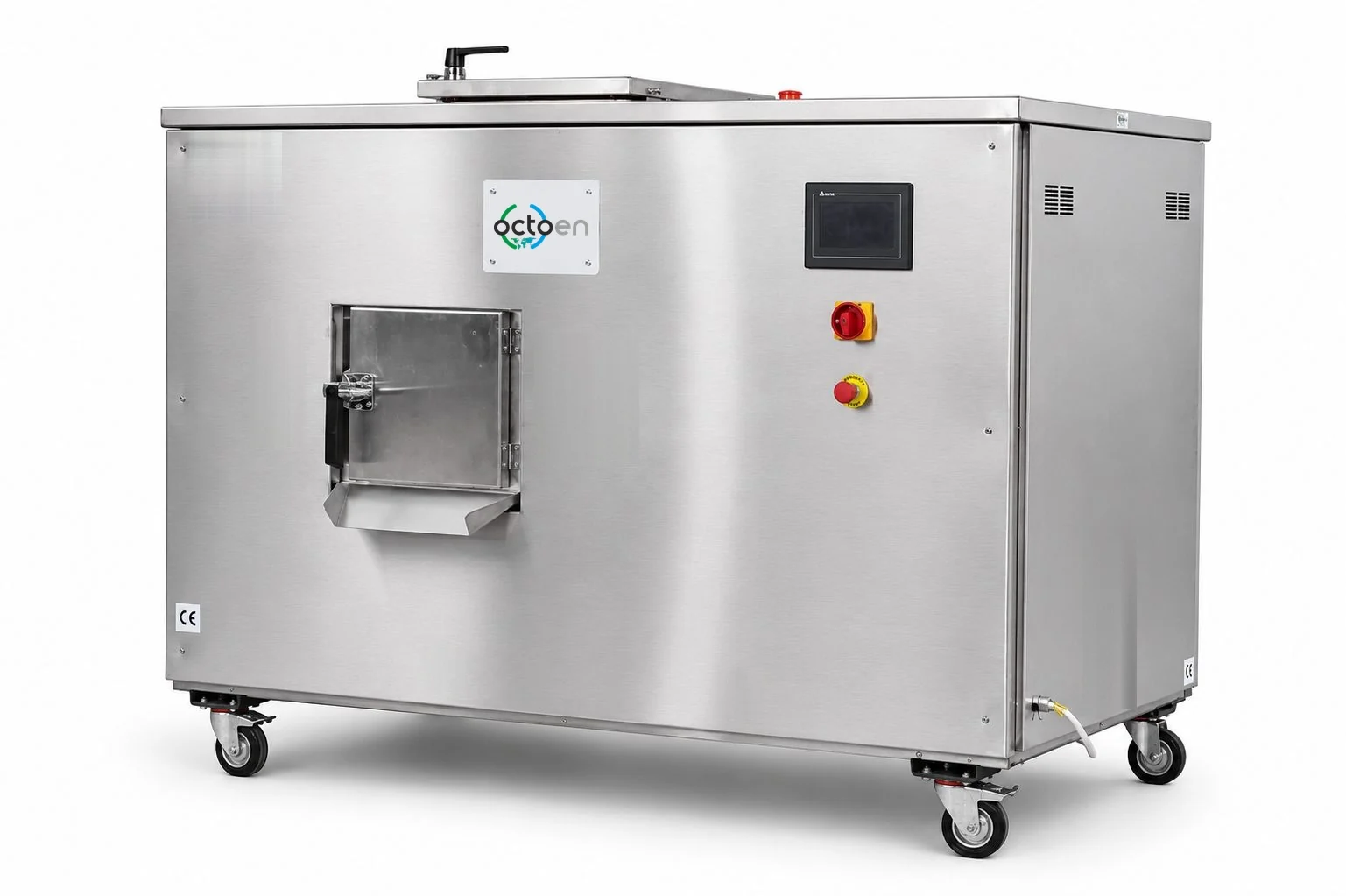
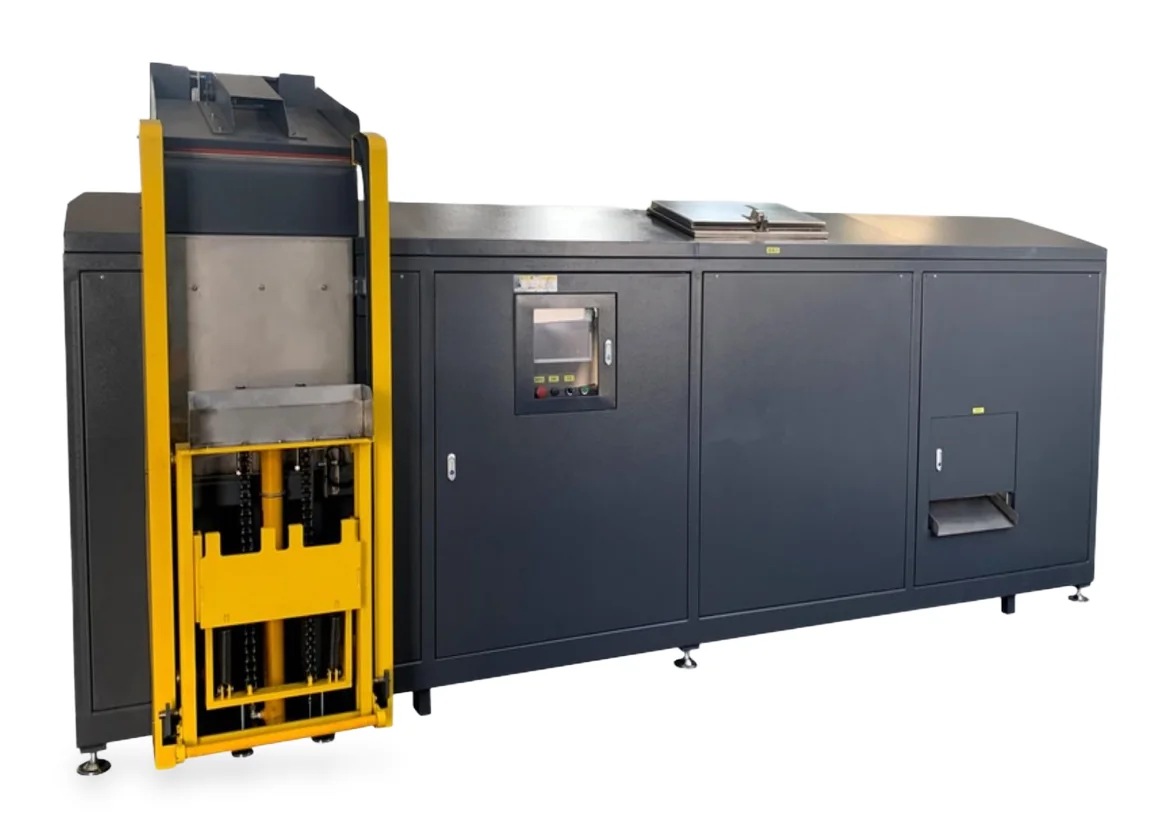
Sizing
How to size a system for a mall
Shopping mall food court food waste is easiest to estimate from meals served: a rule of thumb of about 0.26 kg (0.57 lb) per meal gives a first figure. Add restaurants, cafes, any staff canteen and landscaping material on collection days. Smaller centers start with the ECO-130 KSN at 130 kg (287 lb) a day. We confirm the real amount on site before you order.
A mall whose food court and restaurants serve 3,000 meals a day produces about 780 kg (1,720 lb) of food waste. The ECO-1000 KSN, at 1,000 kg (2,205 lb) a day, takes that amount and leaves room for landscaping material.
Source: EPA Ireland, food waste in full-service restaurants
Open the system finderWhere it already runs
Our references span stadiums, Michelin-starred kitchens, campuses, municipalities and a copper mine.
See all referencesOrganics rules that reach mall tenants
In the US, the binding organics rules come from states and cities. In Massachusetts, businesses and institutions that dispose of half a ton or more of food material a week may not send it to a disposal facility. In covered areas of Washington State, businesses must arrange organics management from 96 gallons a week, and on-site management is a listed way to comply. In New York City, covered food service businesses above set size thresholds must separate organic waste, and an in-vessel system on site is one way to comply. Check which rules apply to your property on our regulations page.
See the rules on our regulations pageShopping mall composting questions
Can one machine serve all our tenants?
Yes. Tenants bring sorted food waste to one central machine, sized for their combined daily amount. On the ECO-1000 KSN, a built-in lifter empties the bins, so nobody lifts waste by hand.
Where does the machine go?
In the waste room, at the loading dock or in a service yard, indoors or outdoors. It needs a flat, load-bearing floor, ventilation and a grounded supply with residual-current protection, but no water or drain. The ECO-130 KSN takes 1,350 × 720 mm (53 × 28 in) of floor, the ECO-1000 KSN 3,355 × 1,600 mm (132 × 63 in).
Will shoppers or tenants notice odor or noise?
Built-in activated carbon and UVC filtration keeps operation odorless, and the ECO-1000 KSN adds a HEPA filter. The ECO-130 KSN and ECO-1000 KSN run under 45 dB, a quiet office level; the ECO-300 KSN and ECO-500 KSN run under 60 dB.
What can tenants put in?
Food and other organic waste, compostable tableware, brown cardboard and landscaping material. Packaging, plastic, glass and metal stay out. When a batch is very oily or wet, the machine applies the right recipe automatically.
Who installs it, and what does it cost?
OCTOEN LLC serves US customers from its assembly, installation and service facility in Chicago. Installation, commissioning and training are quoted with the machine, and the limited warranty runs 12 months from acceptance or 14 months from shipment. Contact us for a quote.
Plan a composting system for your mall
Tell us how many meals your tenants serve and where the machine could go; we will recommend a system and send a quote.