
Commercial food waste composters for kitchens, hotels and campuses
An OCTOEN commercial food waste composter is an on-site, in-vessel aerobic composting system that stands next to your kitchen and turns daily food waste into fresh compost. Five models cover 30 to 1,000 kg (66 to 2,205 lb) a day.
- 12-24 h
- composting cycle
- Up to 90%
- less wet food waste volume
- No
- water or drain connection
- Own factory
- every system built in Sivas, Türkiye
What an in-vessel composter does
In-vessel means the composting happens inside a closed drum, not in an open pile. Food waste goes into a closed, 100% stainless steel machine held at 45-75 °C (113-167 °F); mixing arms turn it and fans keep air moving through it, so the process stays aerobic. From the ECO-130 KSN up, an enzyme-assisted biological process breaks the waste down in a 12-24 hour cycle, and the compost left in the drum starts the next batch.
That is the difference from a food waste dehydrator, which heats and dries the waste and leaves dried food waste behind. An OCTOEN machine leaves fresh compost, used as an organic fertilizer or soil amendment. Some rules draw on the same idea: New York City and Washington, DC both accept on-site processing in an in-vessel system.
Source: NYC Department of Sanitation, Commercial Organics Requirements · D.C. Code § 8-1031.03a
How it fits a working kitchen
An on-site food waste composter only works if it fits the daily routine. Staff load waste during a normal shift and press one button; PLC control runs the cycle, so no dedicated operator is needed. The emergency stop and the door and lid locks are built to CE safety standards.
- Quiet: the ECO-30, ECO-130 and ECO-1000 KSN run under 45 dB, a quiet office level; the ECO-300 and ECO-500 KSN under 60 dB
- Odor-free: built-in activated carbon and UVC filtration allows installation indoors or outdoors
- No plumbing: no water or drain connection, only power and a ventilated area
- Low upkeep: about every six months, or when odor appears, the filter cassette is rinsed and only the activated carbon is refilled
- No daily consumables: enzyme is dosed only at the first start and after a full emptying
Five sizes, 30 to 1,000 kg (66 to 2,205 lb) a day
Size for your busiest regular day. If you have not weighed your waste yet, rules of thumb give a first estimate: about 0.43 kg (0.95 lb) of food waste per occupied hotel room a day, and about 0.26 kg (0.57 lb) per meal served or per attendee on an event day. A hotel with 250 occupied rooms comes to about 108 kg (238 lb) a day, which fits the ECO-130 KSN. A cafeteria serving 1,000 meals comes to about 260 kg (573 lb), which fits the ECO-300 KSN. Our engineers confirm the final size after a site review.
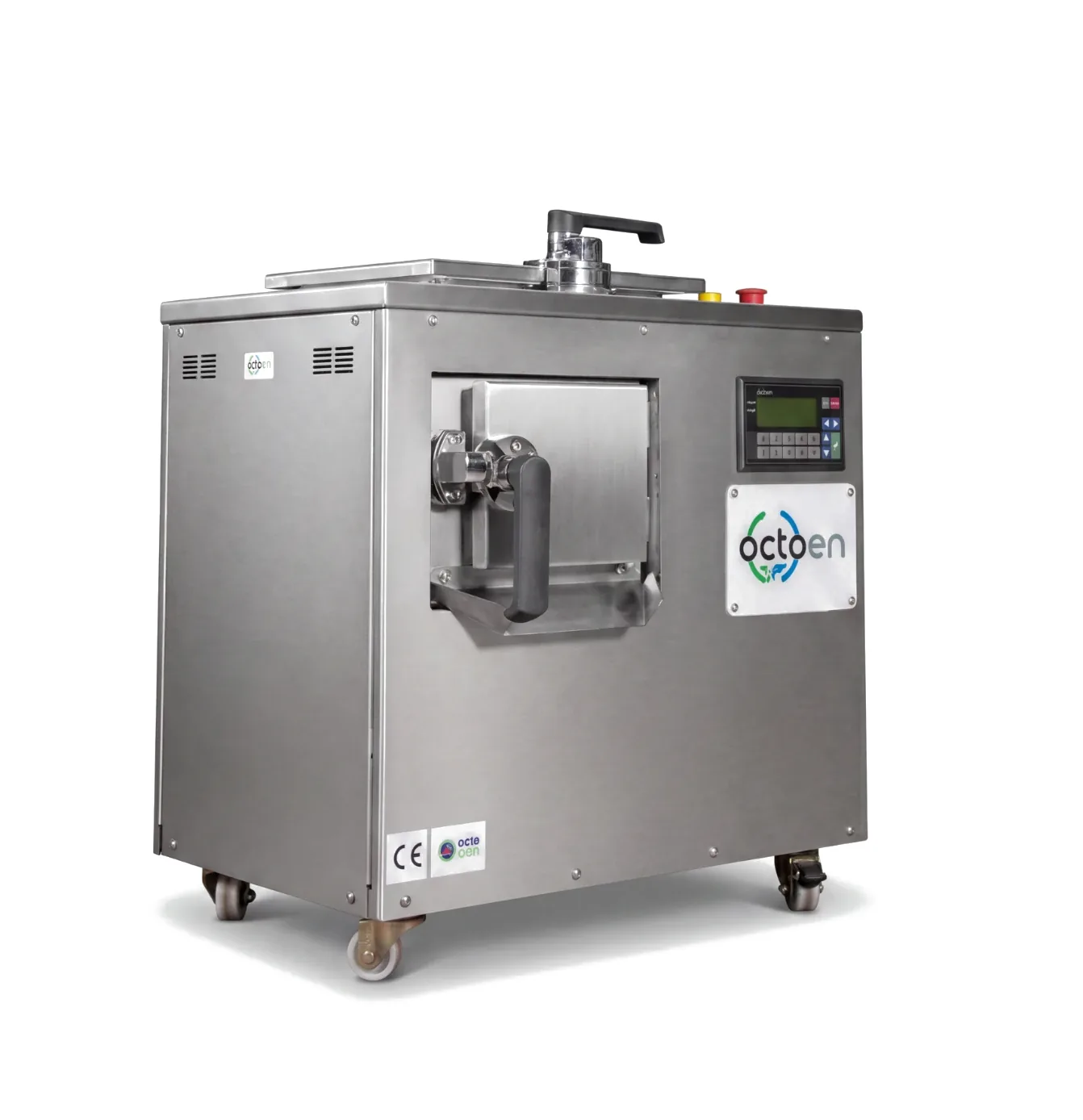
- ECO-30 KSN: 30 kg (66 lb) a day, 50 L (13 gal) bin, 720 × 420 mm (28 × 17 in) footprint
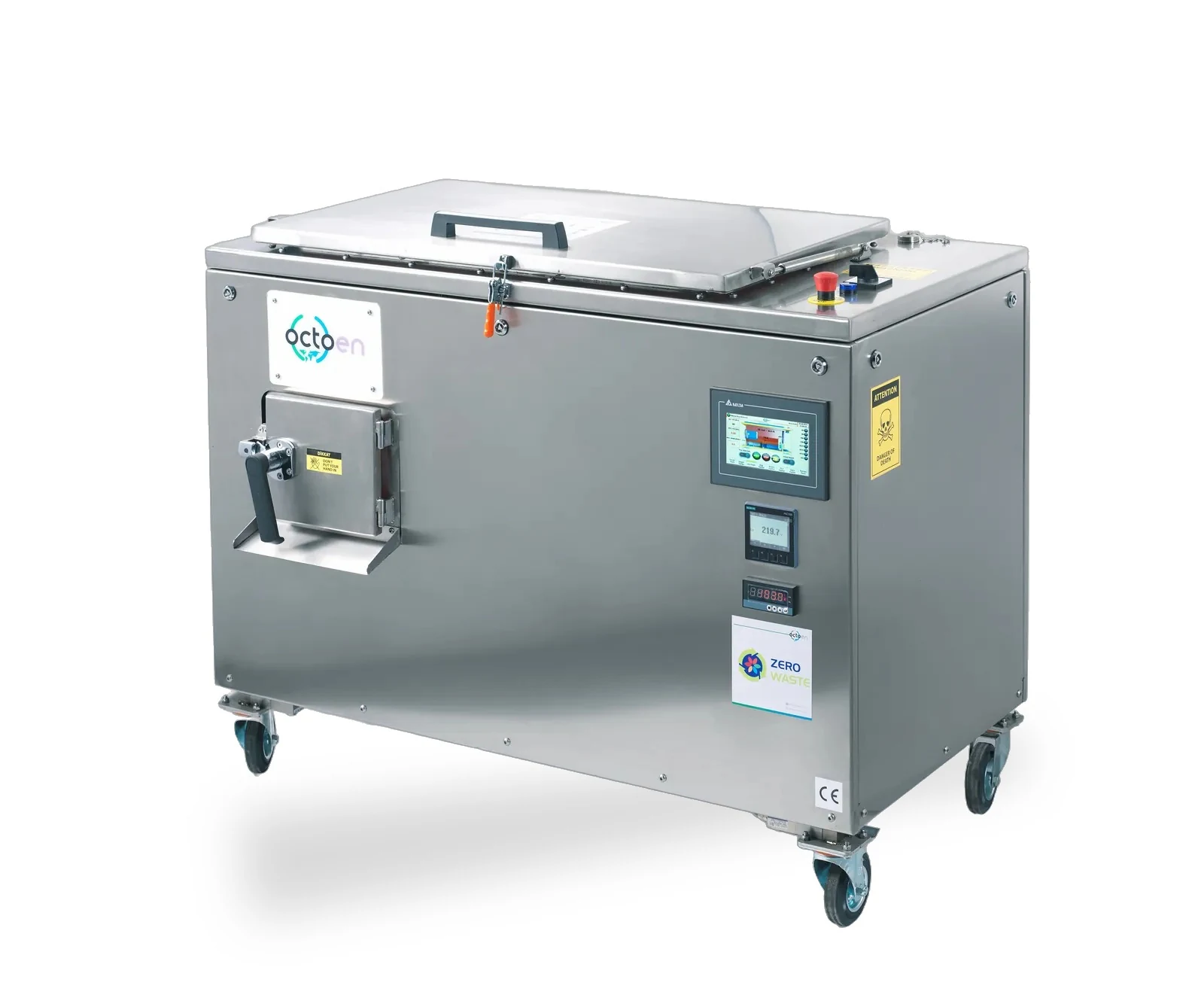
- ECO-130 KSN: 130 kg (287 lb) a day, 300 L (79 gal) bin, 1,350 × 720 mm (53 × 28 in)
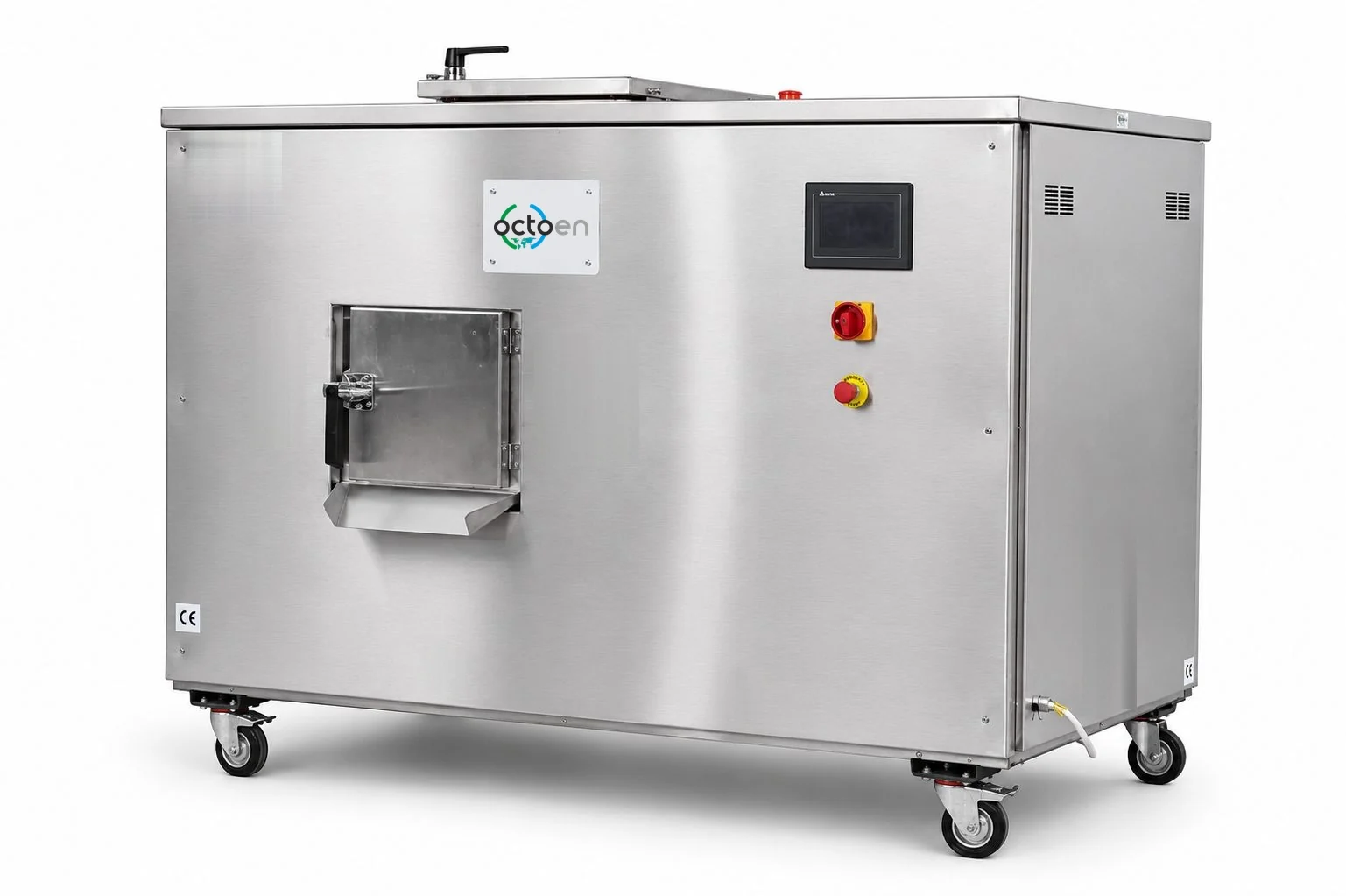
- ECO-300 and ECO-500 KSN: 300 and 500 kg (661 and 1,102 lb) a day, bins of at least 530 and 750 L (140 and 198 gal), one 2,000 × 965 mm (79 × 38 in) body
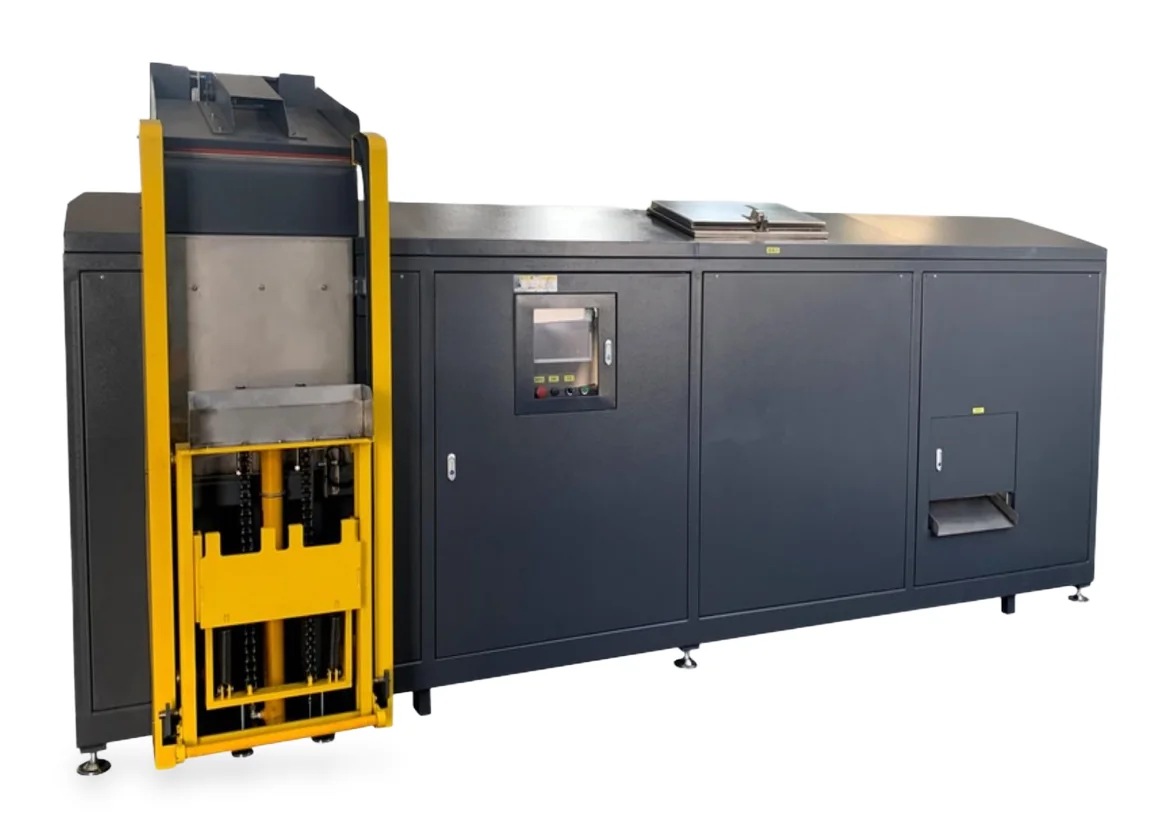
- ECO-1000 KSN: 1,000 kg (2,205 lb) a day, 1,800-2,000 L (476-528 gal), with a built-in electric bin lifter
Source: RecyclingWorks Massachusetts, hotel food waste guide · EPA Ireland, food waste in full-service restaurants · EPA Ireland, one meal per attendee
Measured data for ESG reporting
From the ECO-130 KSN up, every machine carries OCTOEN Carbon Tracker software, an energy analyzer and four load cells at no extra cost. Each loading is recorded with the kilograms loaded, the output produced, the energy used and the date and time, so sustainability reports use measured data instead of estimates.
The same connection supports remote monitoring and intervention: our engineers can check settings and help, often without a site visit. Some rules also ask for reports: Cook County, Illinois, requires large venues to report every quarter, and Connecticut has required annual reporting from institutions since 2025. The ECO-30 KSN has a simpler keypad control without Carbon Tracker or load cells, so choose the ECO-130 KSN or larger when reporting matters.
Source: Cook County Department of Environment and Sustainability, waste diversion for large event facilities · Connecticut DEEP, Commercial Organics Recycling Law
Who runs OCTOEN on site
From Pine Cay in Turks and Caicos to Michelin-starred kitchens, hospitality teams run OCTOEN on site every day. Pine Cay composts its kitchen scraps with an ECO-30 KSN on an island where hauling is costly. Teruar Urla, with a Michelin star and a Michelin Green Star, runs an ECO-130 KSN. At Tottenham Hotspur Stadium, an ECO-130 KSN processes waste from the match-day kitchens, and Parken Stadium in Copenhagen runs an ECO-500 KSN with an OCTOEN shredder. In Chile, Sodexo processes food waste at contract catering sites with the ECO-130 KSN.
OCTOEN LLC serves US customers from Chicago, with assembly, installation and service facilities in Chicago, Peru and Chile. Installation, commissioning and training are quoted separately, and the limited warranty runs 12 months from acceptance or 14 months from shipment.
Recommended systems
Sized by the food waste you produce per day. Our engineers confirm the final size after a site review.
Solutions by industry
- Hotels and resortsOn-site food waste composters sized by occupied rooms, from boutique hotels to large resorts.
- Restaurants and cateringCompact on-site composters for restaurant kitchens, chains and contract caterers, sized by meals served.
- Hospitals and healthcareOn-site composters for hospital kitchen, cafeteria and patient-meal food waste. Never medical waste.
- Schools and universitiesCafeteria and campus food waste composted on site, from a school kitchen to 1,000 kg (2,205 lb) a day.
- MunicipalitiesMarket, park and kitchen waste composted near where it is collected, plus pet food lines for animal shelters.
- Stadiums and event venuesMatch-day and event food waste composted on site, kitchens first, at stadiums, arenas and event venues.
- Shopping mallsOne central composter for the food court, restaurant and landscaping waste of every tenant.
- Supermarkets and marketsCompost produce, bakery and deli waste in the store, at the distribution center or at the weekly market.
- Food and beverage plantsCompost production scraps, off-spec product and canteen waste at the plant, from 500 to 5,000 kg a day.
- Factories and corporate campusesOn-site composting for plant cafeterias and campus grounds, from 130 kg (287 lb) to 1,000 kg (2,205 lb) a day.
- Islands, ships and offshoreCompact on-site composters for island resorts, ships and offshore sites, with no water or drain connection.
- Mining and remote campsComposting lines for mining camps and remote sites, from 1,000 kg (2,205 lb) to 5,000 kg (11,023 lb) a day.
- Farms and greenhousesOn-farm composting for plant residues, culled produce and farm kitchen waste, with compost used on your land.
Frequently asked questions
What is the difference between an on-site food waste composter and a dehydrator?
A dehydrator heats and dries food waste, and the dried material still has to be hauled. OCTOEN ECO-130 KSN and larger models run an enzyme-assisted biological process at 45-75 °C (113-167 °F) and leave fresh compost.
Where should the composter stand?
Close to where waste is produced: next to the kitchen, in a back-of-house room or on a loading dock, indoors or outdoors. It needs a level, load-bearing floor, a ventilated area and a grounded power supply.
What power does a commercial food waste composter need?
The ECO-30 and ECO-130 KSN run on single-phase power, 208-240 V at 60 Hz in the US. Larger models need three-phase power, typically 480 V or 208 V at 60 Hz, confirmed per project.
Can it take compostable tableware?
Yes. Compostable tableware, brown cardboard and landscaping material can go in with food waste. Bones, shells and fibrous waste go through a shredder first; packaging, metal, glass and plastics stay out.
How much does it cost?
Prices depend on the model, the options and your site, so we send a written quote. Contact us for a quote.
Plan a composter for your kitchen
Tell us your daily food waste, the space you have and your location, and we will recommend a model and send a written quote.