
Food waste composters for factories and corporate campuses
A corporate cafeteria food waste composter turns the leftovers of every shift into fresh compost where they are produced, in a 12-24 hour composting cycle. This page covers sizing, the data the machine records for ESG reporting and the factories that already run one.
- 12-24 h
- composting cycle
- Up to 90%
- less wet food waste volume
- No
- water or drain connection
- Own factory
- every system built in Sivas, Türkiye
The challenge
What plant and campus teams deal with
- Waste from every shiftCafeterias that serve two or three shifts fill organics bins around the clock, and wet food waste cannot sit until the next pickup without odor.
- Numbers for the ESG reportSustainability and zero-waste reports need measured weights, not estimates from hauler invoices.
- Little space, no spare utilitiesProduction sites leave little room for waste equipment, and running water or drain lines to a new machine means extra plumbing.
How OCTOEN fits
How on-site composting fits a plant
The machine stands next to the cafeteria or at the loading dock, indoors or outdoors. Kitchen staff load food waste after each service and press one button; no dedicated operator is needed. From the ECO-130 KSN up, an enzyme-assisted biological process at 45-75 °C (113-167 °F) composts the waste: this is not a dehydrator. Landscaping material, compostable tableware and brown cardboard can go in too, and the fresh compost goes back onto campus green areas as a soil amendment. At the Classic Fashion Apparel factory in Jordan, compost from an ECO-500 KSN is spread on sandy land so the soil holds water and the area can be greened.
- Four load cells, an energy analyzer and OCTOEN Carbon Tracker software on the ECO-130 KSN and up
- No water or drain connection; built-in odor filtration with activated carbon and UVC
- Up to 90% less volume for wet food waste, 60-70% for bread, rice and fruit peels
- 100% stainless steel body; under 45 dB on the ECO-130 KSN and ECO-1000 KSN
- Built in our own factory in Türkiye; assembly, installation and service from Chicago, Peru and Chile
Recommended systems
Sized by the food waste you produce per day. Our engineers confirm the final size after a site review.
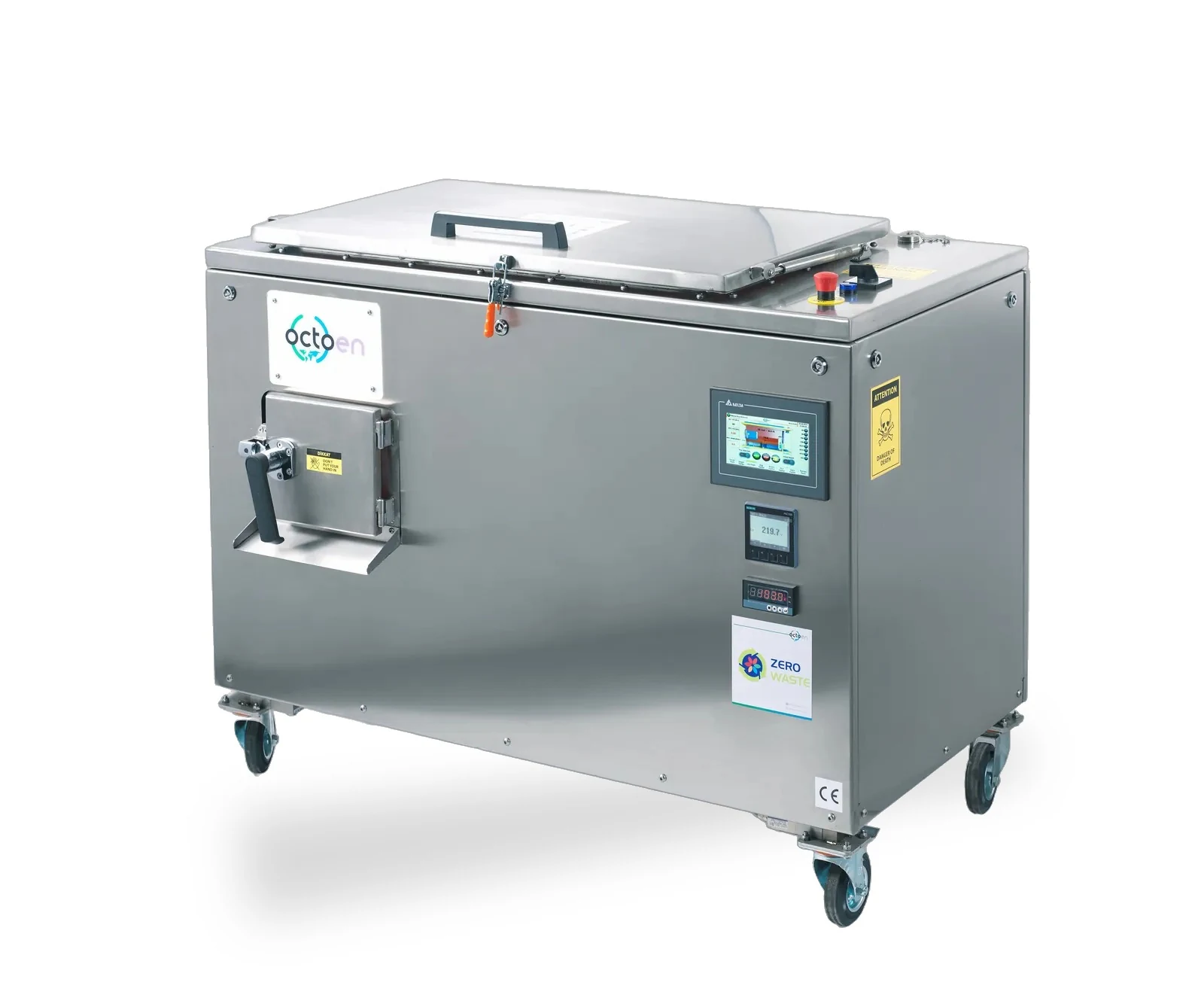
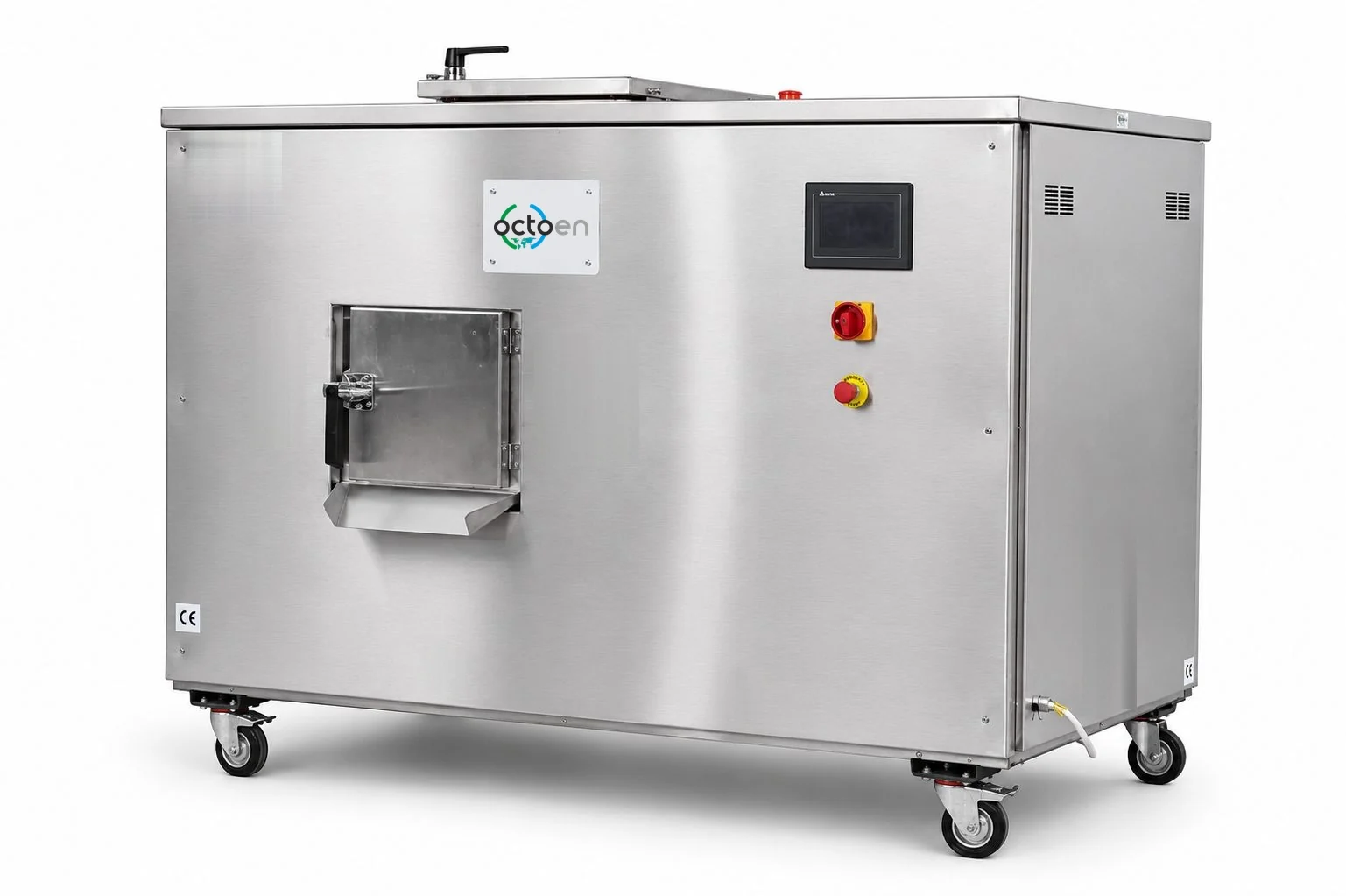
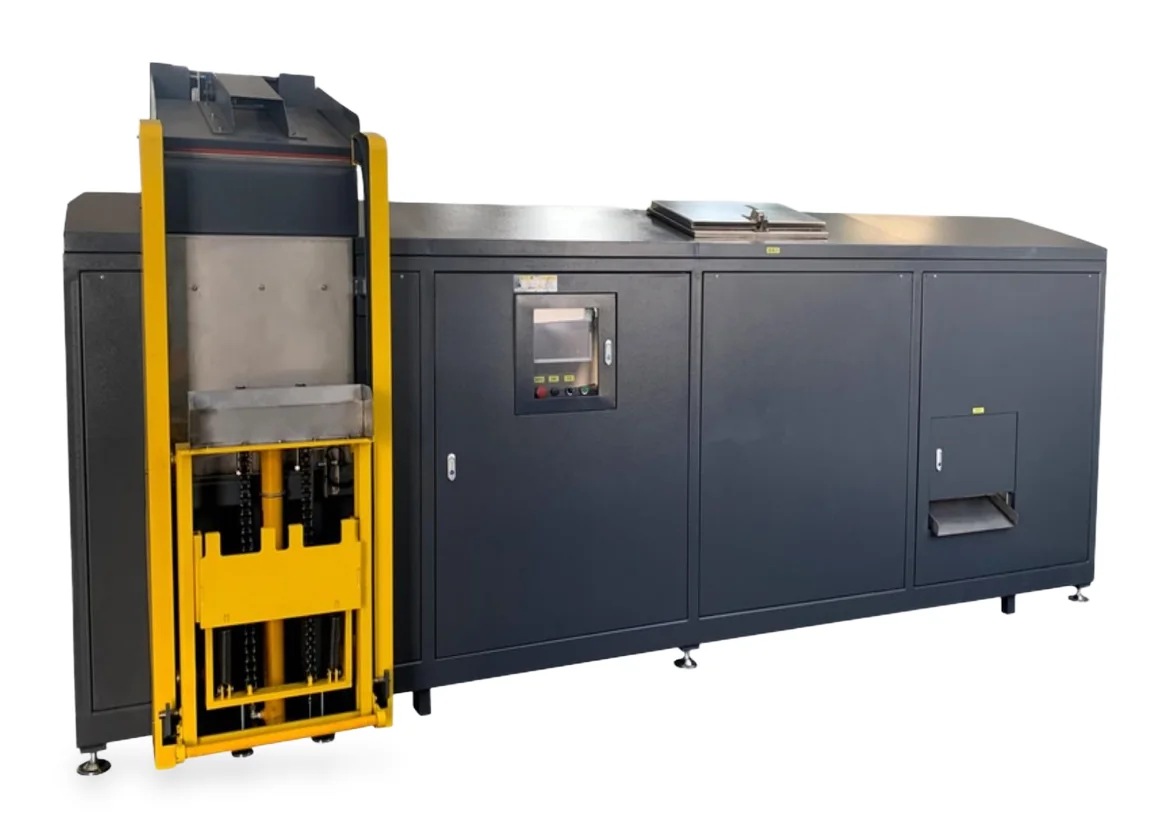
Sizing
Sizing a system for your site
Sizing a corporate cafeteria food waste composter starts with the meals served in a day, counting every shift. A rule of thumb is about 0.26 kg (0.57 lb) of food waste per meal. Add prep waste, coffee grounds and landscaping material, then size for your busiest regular day. Capacities run from 130 kg (287 lb) a day on the ECO-130 KSN to 1,000 kg (2,205 lb) on the ECO-1000 KSN. Our engineers confirm the final size after a site review.
A plant serving 1,500 meals a day across three shifts produces about 390 kg (860 lb) of food waste a day, which fits the ECO-500 KSN.
Source: EPA Ireland, food waste in full-service restaurants
Open the system finderWhere it already runs
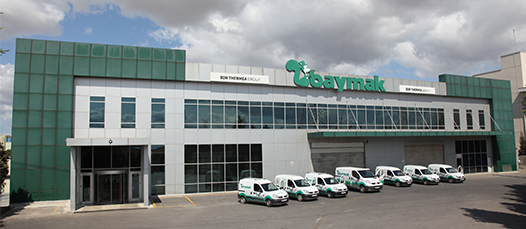 BDR BaymakTürkiyeSystem: ECO-500 KSN, up to 500 kg (1,102 lb) a day
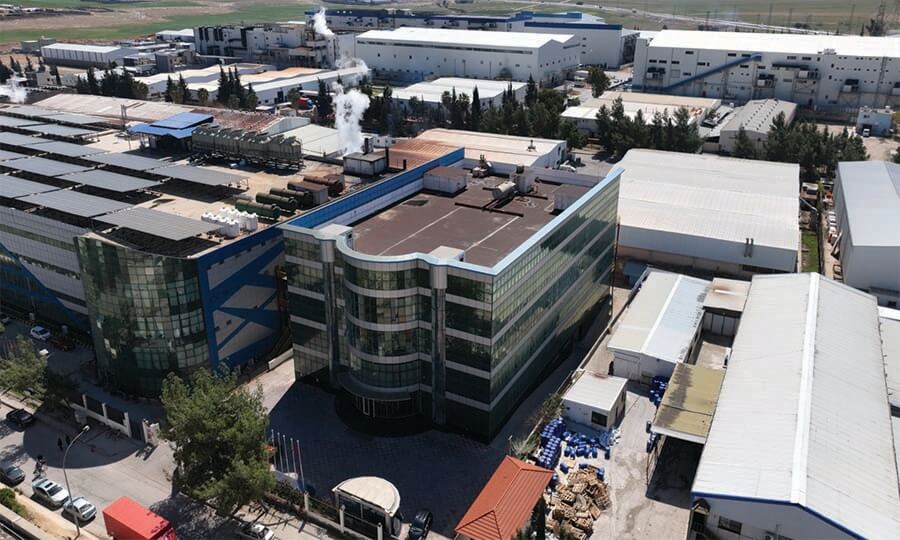 Classic Fashion ApparelAl Hassan Industrial Estate, Irbid, JordanSystem: ECO-500 KSN and OCTOEN shredder, up to 500 kg (1,102 lb) a day
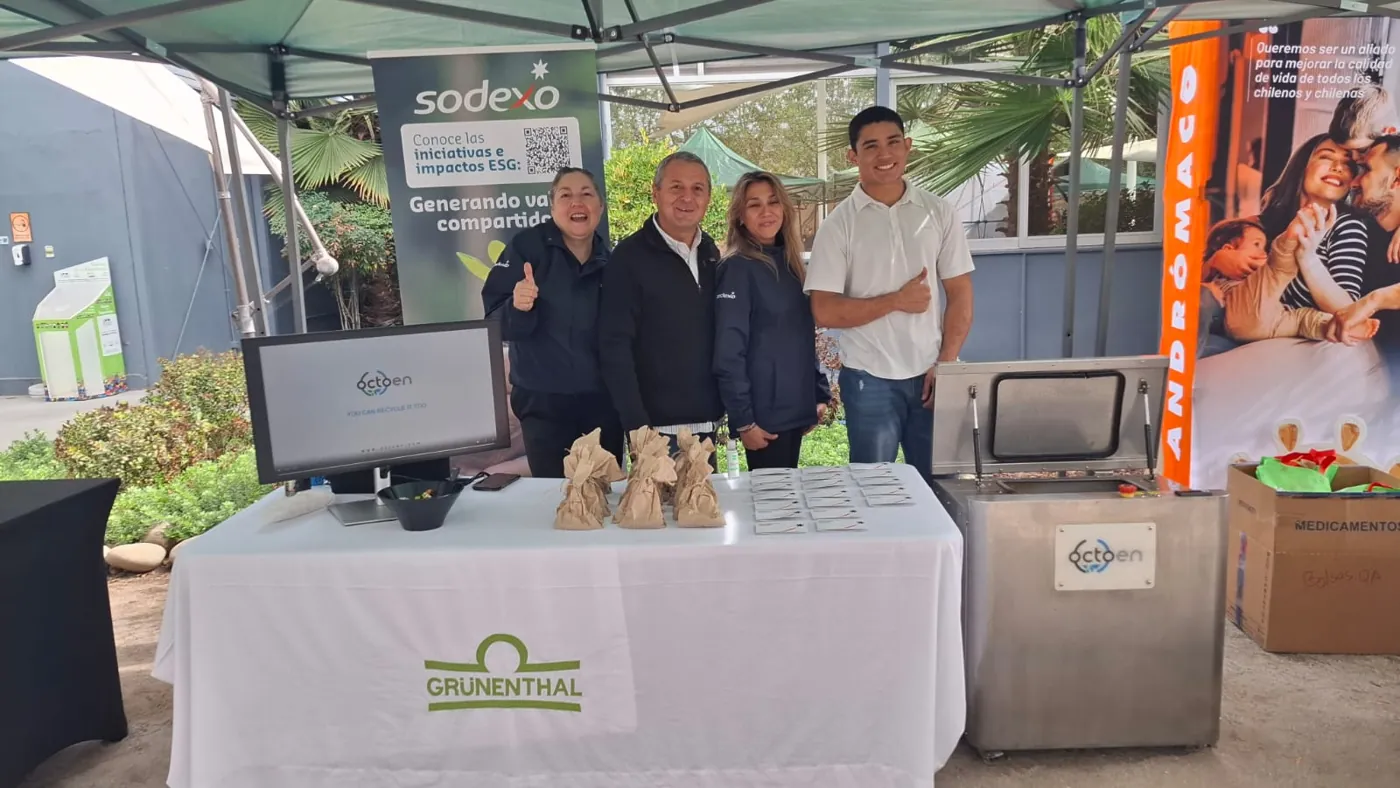 GrünenthalSantiago, ChileSystem: ECO-130 KSN, up to 130 kg (287 lb) a day
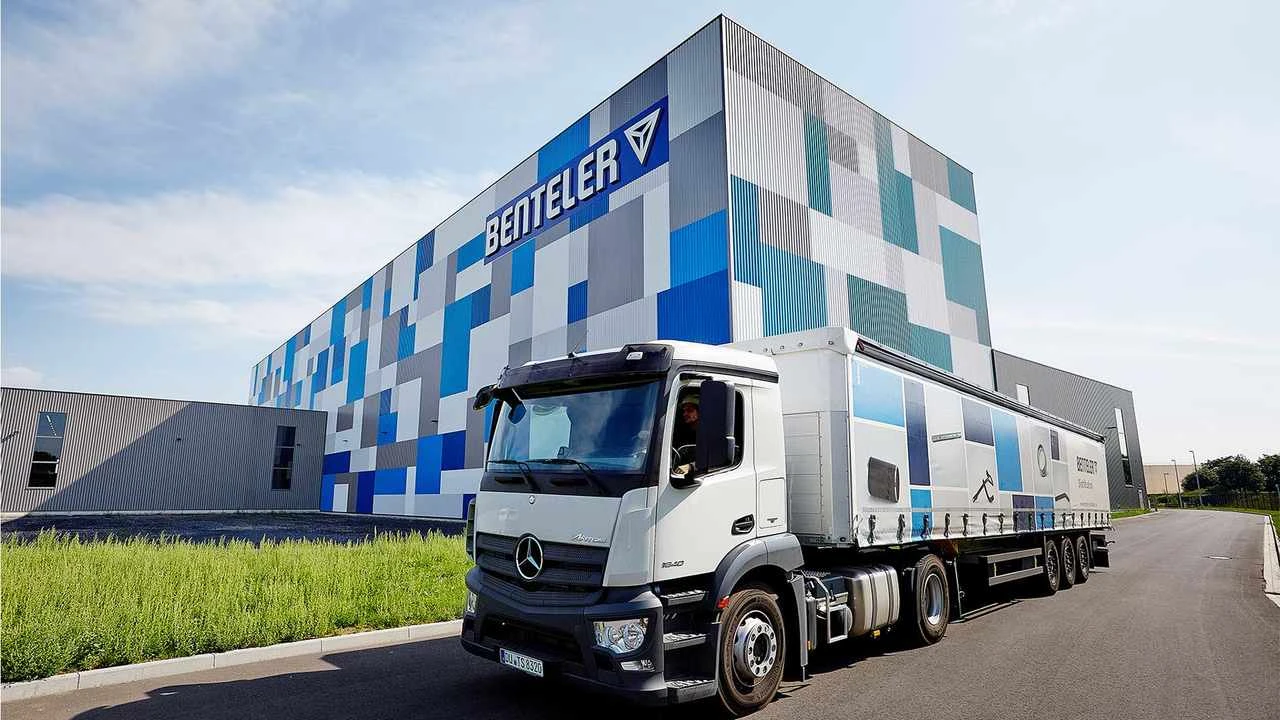 BentelerTürkiyeSystem: ECO-130 KSN
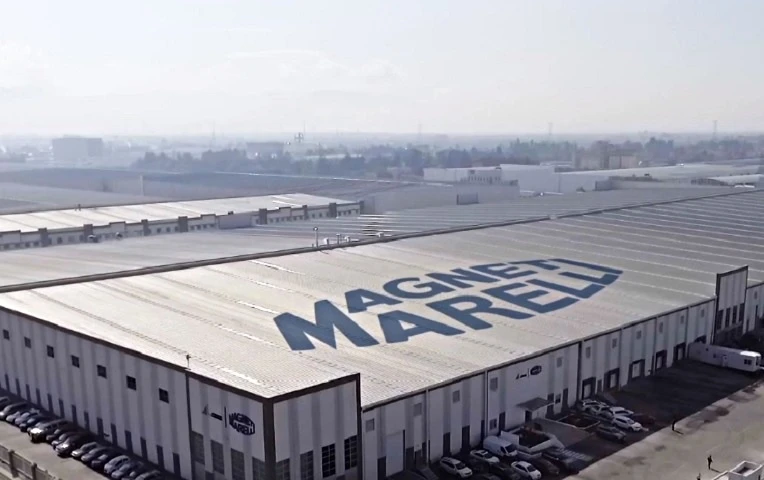 Marelli MakoTürkiyeSystem: ECO-130 KSN
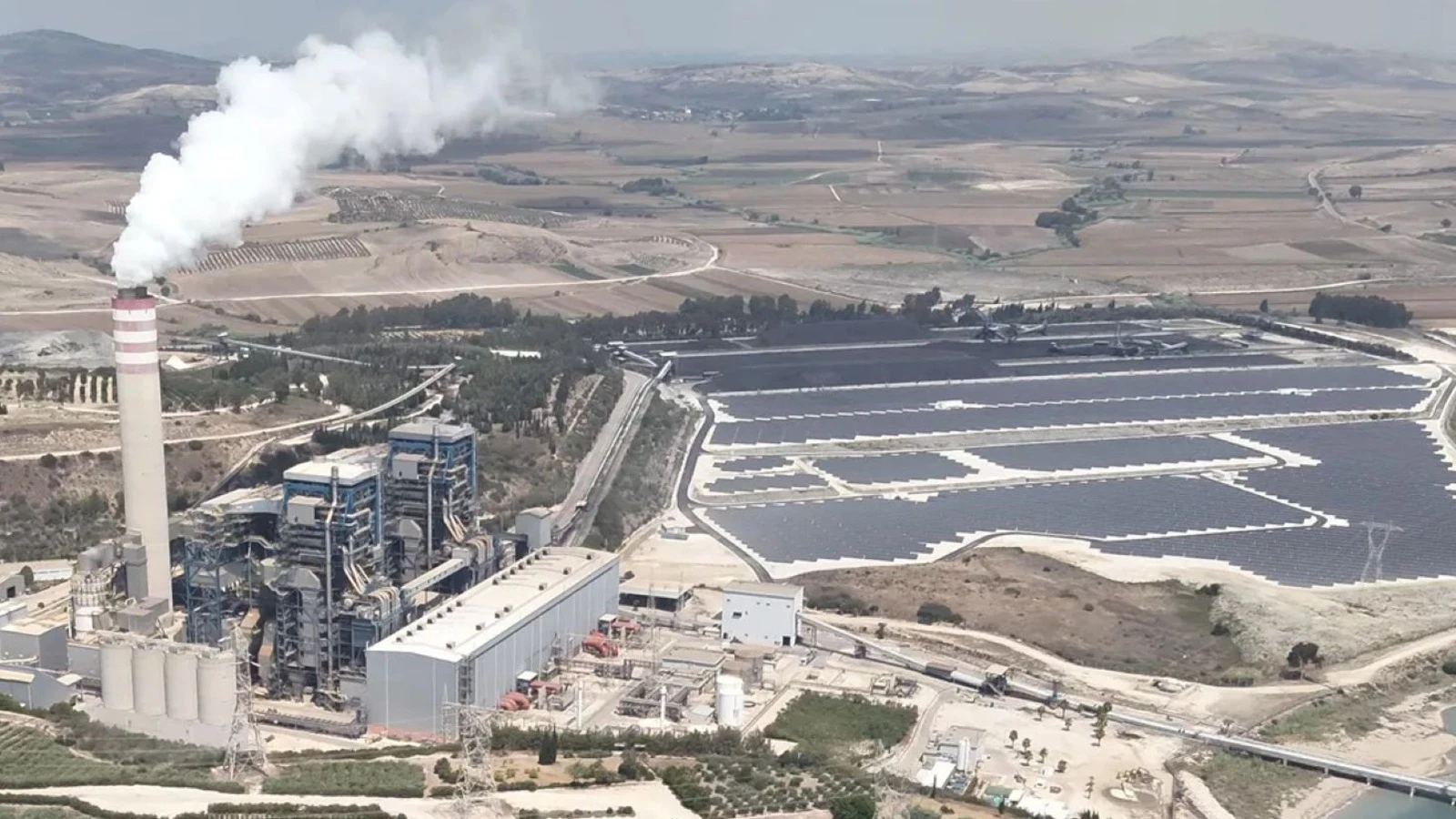 İSKENTürkiyeSystem: ECO-130 KSN
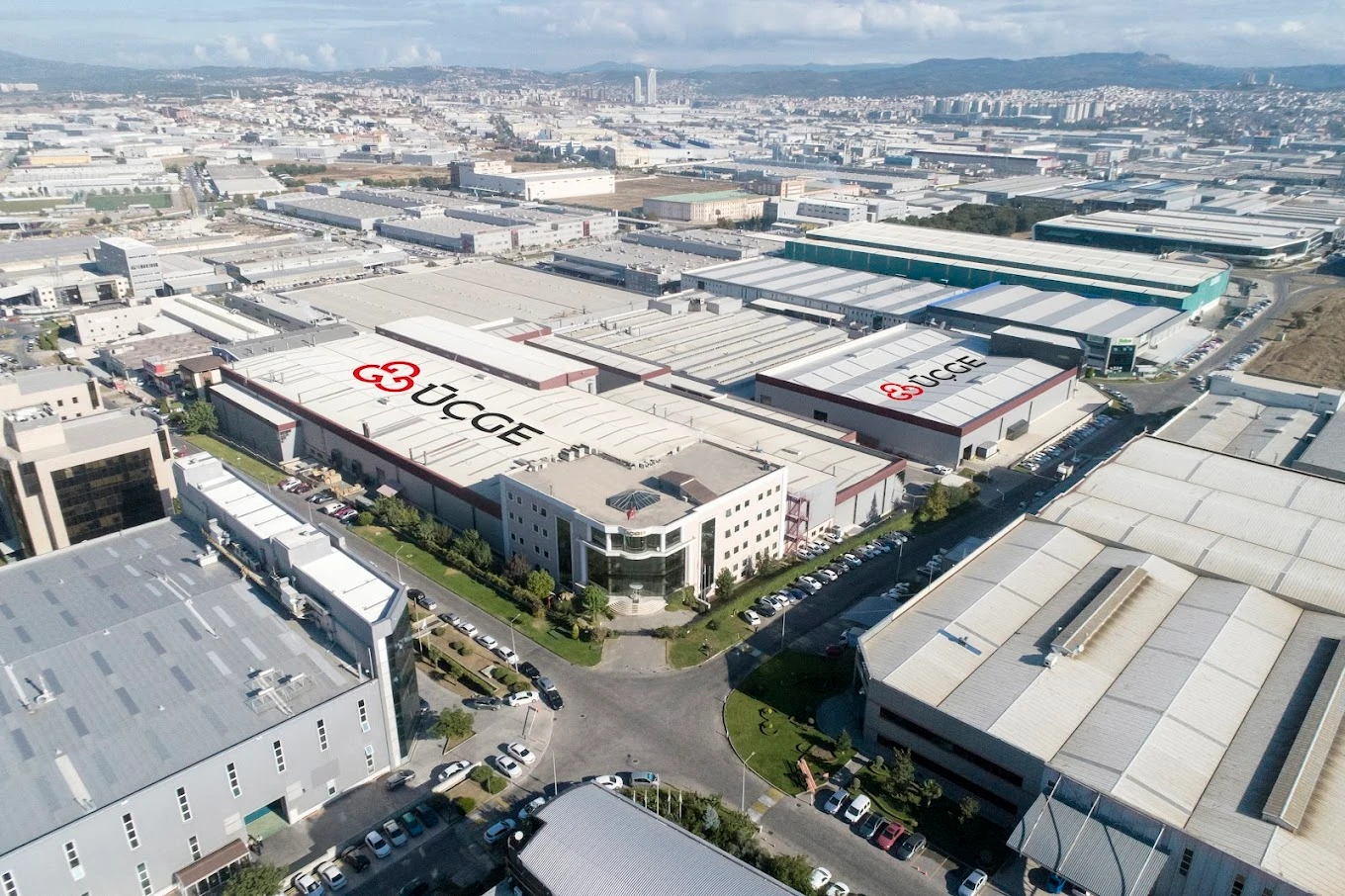 ÜÇGETürkiyeSystem: ECO-130 KSN
 Ünlü Tekstil and Keskin ColorTürkiyeSystem: ECO-130 KSN
Rules and reporting
There is no federal composting mandate in the US; the binding rules come from states and cities, and some can apply to large plant cafeterias. Massachusetts bars businesses and institutions that dispose of half a ton or more of food material a week from sending it to a disposal facility. New Jersey covers generators of 52 tons a year or more within 25 road miles of an authorized facility and accepts enclosed on-site composting as a way to comply. Where no rule applies, the machine's weighed records still support zero-waste goals and ESG reporting. This is general information, not legal advice.
See the rules on our regulations pageQuestions from plant and campus teams
Which factories already use OCTOEN?
BDR Baymak runs an ECO-500 KSN for up to 500 kg (1,102 lb) a day, and Classic Fashion Apparel an ECO-500 KSN with a shredder in Jordan. Grünenthal's pharmaceutical plant in Santiago, Chile, runs an ECO-130 KSN, as do Benteler, Marelli Mako, İSKEN, ÜÇGE, and Ünlü Tekstil and Keskin Color.
Can the data go into our ESG or sustainability report?
Yes. From the ECO-130 KSN up, four load cells weigh what goes in, an energy analyzer measures the energy used and OCTOEN Carbon Tracker records each load with the date and time, ready for ESG and zero-waste reporting.
Where can the machine stand?
Indoors or outdoors, near the cafeteria or the loading dock. It needs a grounded supply with residual-current protection, a ventilated area and a flat, load-bearing floor. The ECO-130 KSN runs on single-phase power (208-240 V, 60 Hz in the US); larger models need three-phase power, confirmed per project.
What can go in besides cafeteria food waste?
Other organic waste, landscaping material, compostable tableware and brown cardboard. Packaging, metal, glass and plastics stay out. Bones, shells and fibrous waste go through the ECO-100 Shredder first.
How do installation and warranty work in the US?
OCTOEN LLC serves US customers from Chicago. Installation, commissioning and training are quoted with the machine, and the limited warranty runs 12 months from acceptance or 14 months from shipment. Contact us for a quote.
Plan a system for your plant
Tell us how many meals your cafeterias serve a day, and we will recommend a model and send a written quote.