Food waste composting systems for municipalities
OCTOEN builds in-vessel aerobic composting systems for market, kitchen and park waste, from 1,000 kg (2,205 lb) to 5,000 kg (11,023 lb) a day, installed close to where the waste is collected. A program can add a pet food line for the animal shelter and a drop-off center for sorted recyclables.
- 12-24 h
- composting cycle
- Up to 90%
- less wet food waste volume
- No
- water or drain connection
- Own factory
- every system built in Sivas, Türkiye
The challenge
What municipal waste teams deal with
- Heavy, wet organics on the truckMarket produce and kitchen waste are mostly water. Hauling them to a distant facility costs fuel, crew time and disposal fees every week.
- Sites in public viewMarkets, parks and depots sit next to homes and shops. A processing point there has to stay quiet and free of odor.
- Targets that need proofZero waste and climate programs ask how much was diverted and what it became. The answer has to come from a scale.
How OCTOEN fits
How on-site composting fits a city program
A municipal food waste composting system from OCTOEN is a closed stainless steel vessel that runs an enzyme-assisted biological process at 45-75 °C (113-167 °F) on a 12-24 hour cycle. Volume drops by up to 90% for wet food waste and 60-70% for fibrous or acidic material, and the fresh compost goes to parks and green areas as an organic fertilizer or soil amendment. In Istanbul, Üsküdar Municipality has processed the waste of Bulgurlu street market with an ECO-1000 KSN since September 2025, in public view; the project won the KentFest 2025 award from the KENTSEV foundation for the best urban carbon reduction project by a municipality. Istanbul Metropolitan Municipality received an ECO-130 KSN and separate collection bins under an EU IPA-funded project. Şanlıurfa, Kars and Gerze make food for street animals with OCTOEN machines, and Bakı Abadlıq Xidməti runs 3 × ECO-1000 KSN in Baku and Lachin.
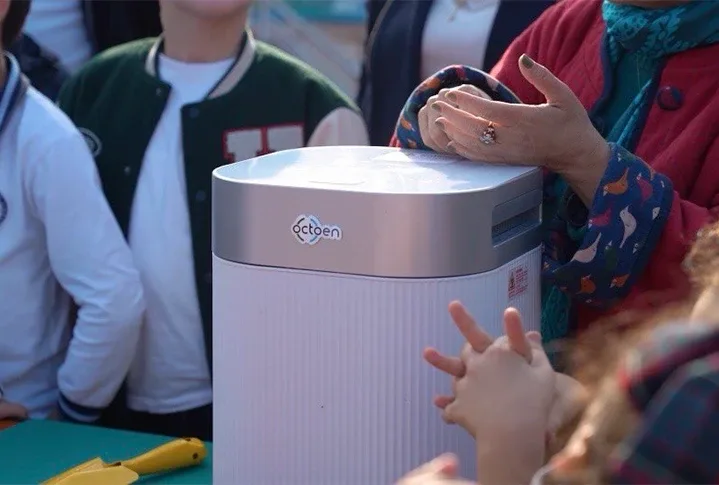
- ECO-1000 KSN: 1,000 kg (2,205 lb) a day, built-in bin lifter, under 45 dB
- ECO-2500 KSN: about 912 metric tons a year, with shredder and automatic discharge
- ECO-5000 KSN: a complete line for 5,000 kg (11,023 lb) a day
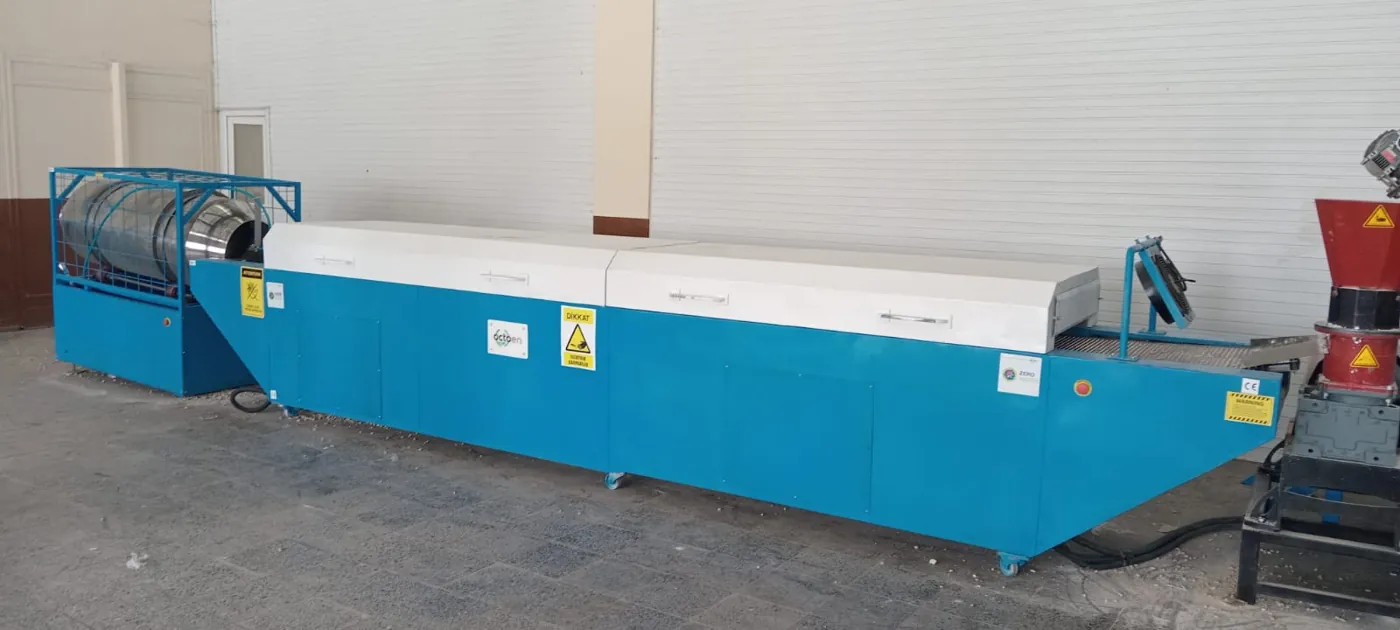
- Pet food machine set: shredder, conveyor, mixer, pelletizer or extruder, three-tier oven, coating machine
- 7-compartment drop-off center for glass, plastic, metal, paper, e-waste, batteries and waste oil
Recommended systems
Sized by the food waste you produce per day. Our engineers confirm the final size after a site review.
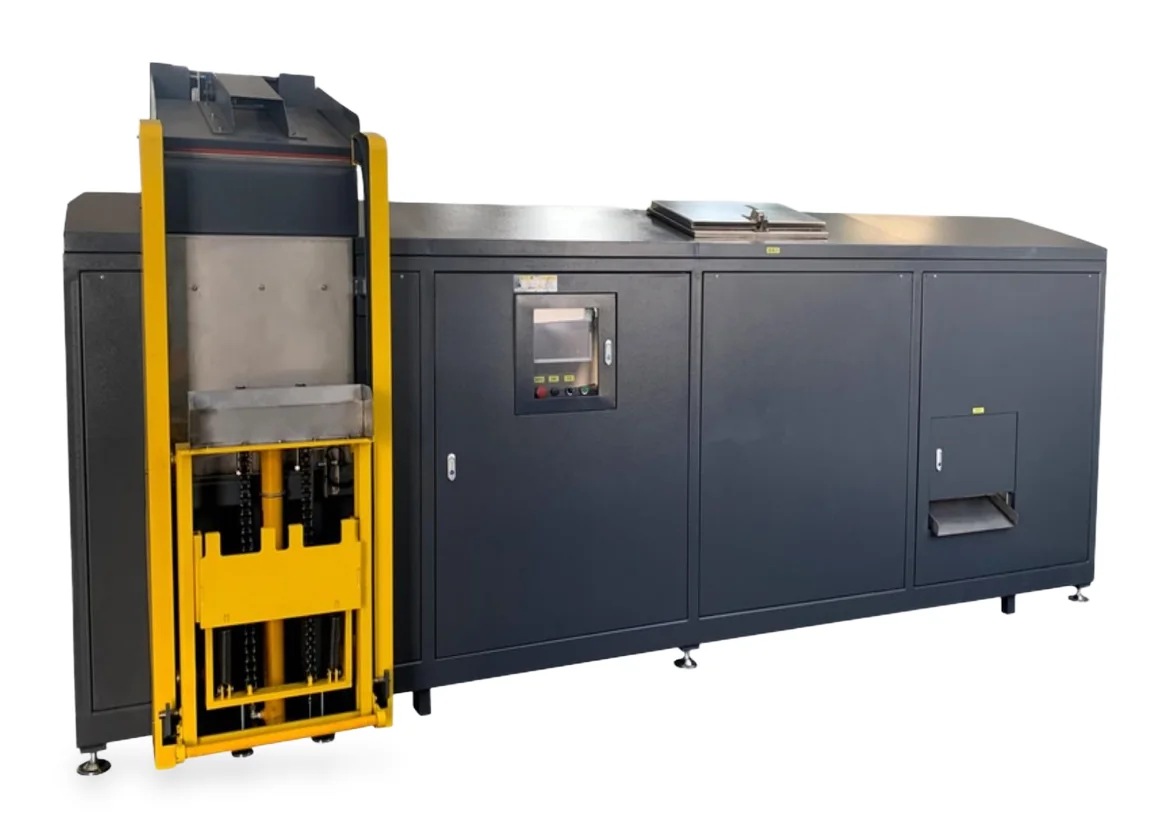 ECO-1000 KSN1,000 kg a day2,205 lb a dayView the system
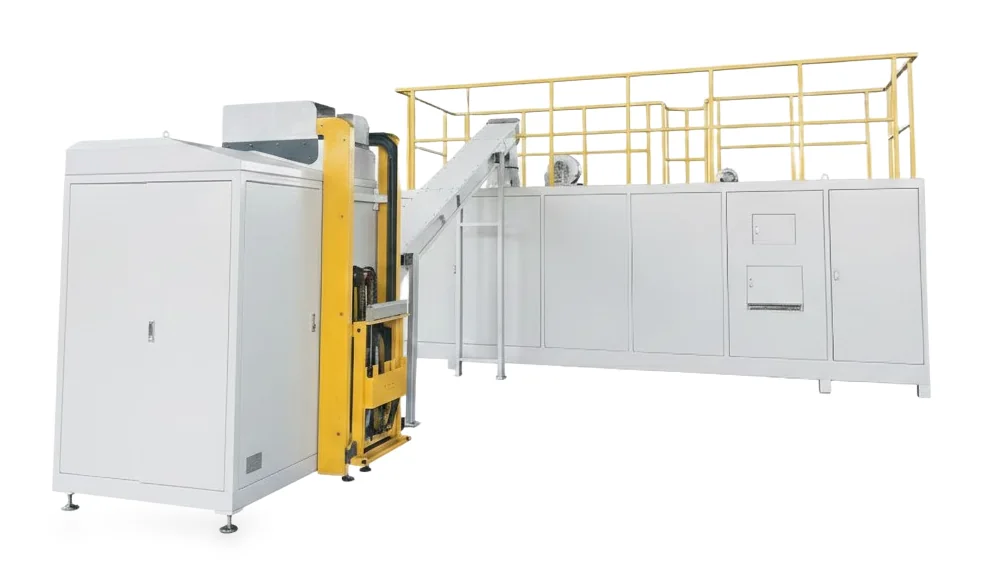 ECO-2500 KSN2,500 kg a day5,512 lb a dayView the system
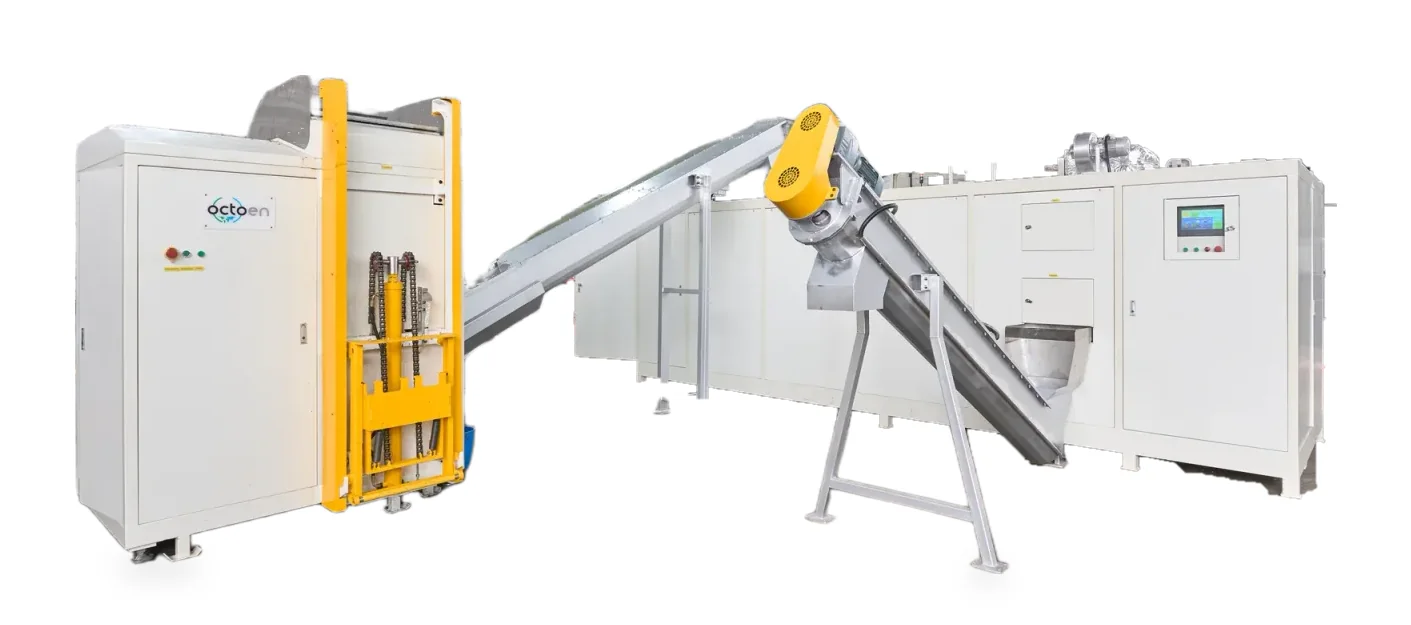 ECO-5000 KSN5,000 kg a day11,023 lb a dayView the system
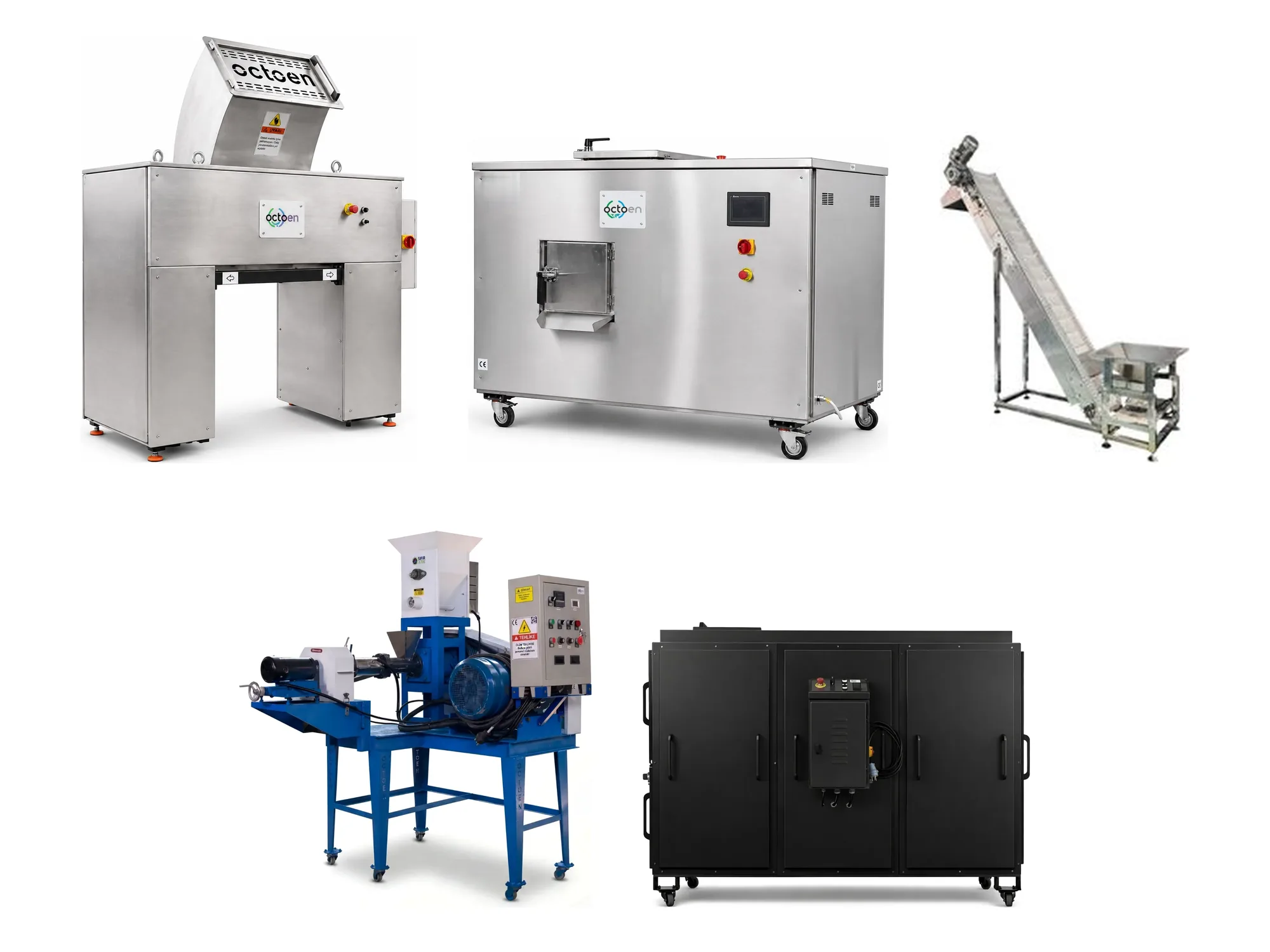 Pet Food Machine SetShred, heat treat, shape and bakeView the system
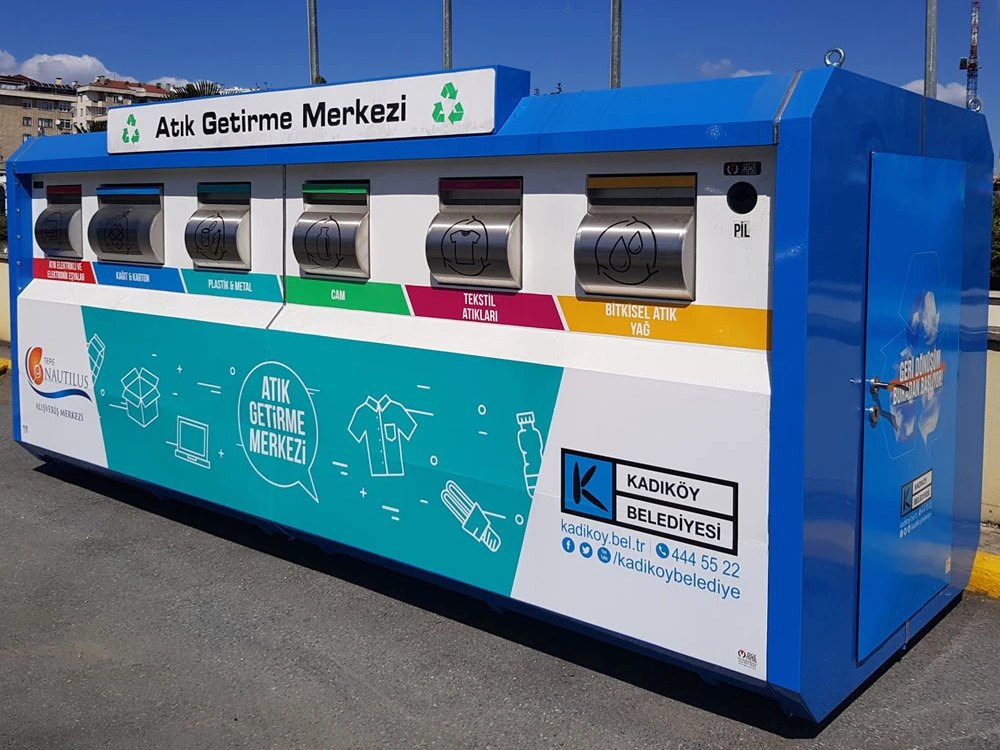 7-Compartment Drop-off CenterSeven compartments: glass, plastic, metal, paper, e-waste, batteries, waste oilView the system
Sizing
How to size a municipal system
Size by the organic waste you can collect separately each day: produce from street and wholesale markets, kitchen waste from public kitchens, and leaves and grass from parks. Weigh a sample of collection days first; market waste peaks on market days, so tell us the weekly total and the busiest day. Daily capacities run from 1,000 kg (2,205 lb) to 5,000 kg (11,023 lb) across the three models, and above that we design a complete line for the site. Our engineers confirm the size after a site review.
A district that collects 2,000 kg (4,409 lb) of sorted market and kitchen waste a day fits the ECO-2500 KSN, which handles about 912 metric tons a year.
Open the system finderWhere it already runs
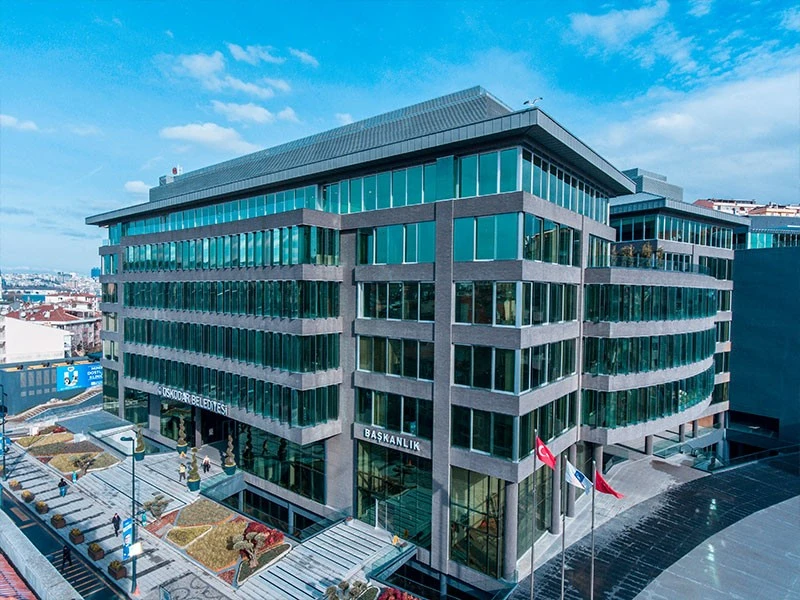 Üsküdar MunicipalityIstanbul, TürkiyeSystem: ECO-1000 KSN
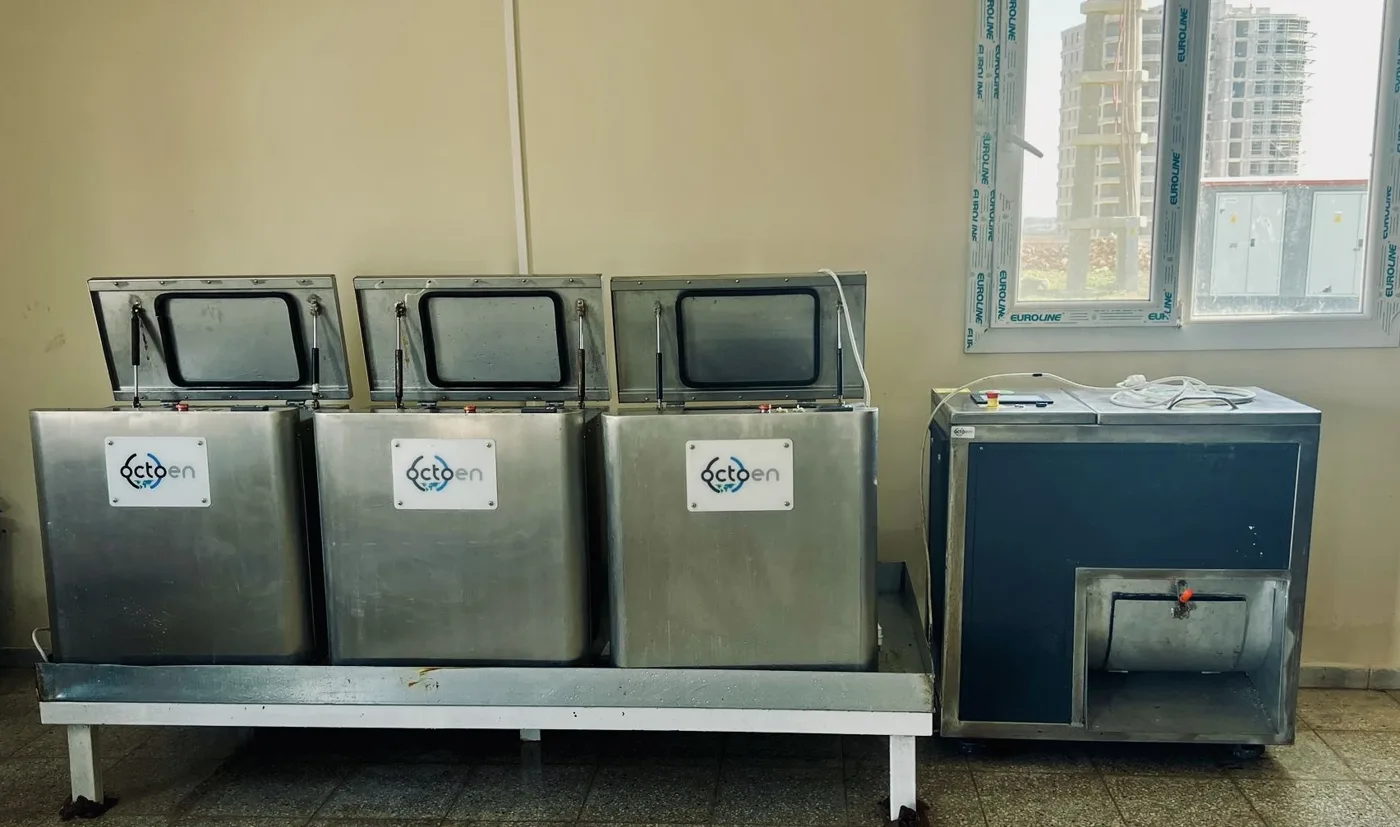 Şanlıurfa Metropolitan MunicipalityŞanlıurfa, TürkiyeSystem: ECO-130 KSN and pet food set
 Kars MunicipalityKars, TürkiyeSystem: OCTOEN pet food machine
 Gerze MunicipalityGerze, Sinop, TürkiyeSystem: OCTOEN animal food machine
 Istanbul Metropolitan MunicipalityIstanbul, TürkiyeSystem: ECO-130 KSN and waste bins
 Bakı Abadlıq XidmətiBaku and Lachin, AzerbaijanSystem: 3 × ECO-1000 KSN
Rules behind municipal organics programs
There is no federal composting mandate in the US. The national strategy from EPA, USDA and FDA backs the goals of halving food loss and waste by 2030 and recycling more organics, while states and cities set the binding rules. Vermont has banned food scraps from the trash for everyone since July 1, 2020. Denver has required food businesses, multifamily buildings and permitted events to provide composting since September 1, 2026, and Washington's HB 1799 lists managing organics on site as a way for businesses to comply. This is general information, not legal advice.
See the rules on our regulations pageQuestions from municipalities
Can a composter run at a public market?
Yes. Üsküdar Municipality processes the waste of Bulgurlu street market in Istanbul, held on Thursdays, with an ECO-1000 KSN in public view. Built-in odor filtration (UVC, activated carbon and HEPA on the ECO-1000) allows installation indoors or outdoors.
Can food waste become food for an animal shelter?
Yes, with the pet food machine set. At the Gerze Municipality animal shelter, an OCTOEN machine turns leftover food, collected under suitable conditions from restaurants, businesses and homes, into food for the shelter's animals. Kars runs an OCTOEN pet food machine, and Şanlıurfa an ECO-130 KSN with a pet food set.
What can go in, and what stays out?
Food and other organic waste, landscaping material, compostable tableware and brown cardboard. Very wet market waste gets an automatic recipe; bones and shells go through the ECO-100 Shredder, which takes up to 300 kg (661 lb) an hour. Packaging, metal, glass and plastics stay out.
How much does a municipal system process in a year?
The ECO-2500 KSN handles about 912 metric tons (1,005 US tons) a year. The ECO-5000 KSN line handles about 1,825 metric tons (2,012 US tons) a year and has a production lead time of 90 days.
Who installs and services systems in the US?
OCTOEN LLC serves US customers from Chicago, where we assemble, install and service systems. Installation, commissioning and training are quoted per project; the limited warranty runs 12 months from acceptance or 14 months from shipment.
Plan a municipal composting program
Tell us how much organic waste you collect a day and where, and we will recommend a system and send a quote.