
On-site composting for food and beverage plants
Production scraps, off-spec product and canteen waste can become fresh compost at the plant instead of leaving by truck. OCTOEN builds food processing waste composting systems from 500 kg (1,102 lb) to 5,000 kg (11,023 lb) a day, up to a complete line with shredding and dewatering.
- 12-24 h
- composting cycle
- Up to 90%
- less wet food waste volume
- No
- water or drain connection
- Own factory
- every system built in Sivas, Türkiye
The challenge
What food plant waste asks of a system
- Steady, heavy streamsPeels, trimmings, dough, pulp and rejected batches leave the line every shift, and each load has to be stored, hauled and paid for.
- Wet, oily and acidic wastePlant waste is rarely uniform: one line sends wet vegetable trim, another oily product or acidic fruit.
- Production and canteen on one siteBones and shells from processing, canteen plate waste and audit questions about where it all goes arrive together.
How OCTOEN fits
How on-site composting fits a food plant
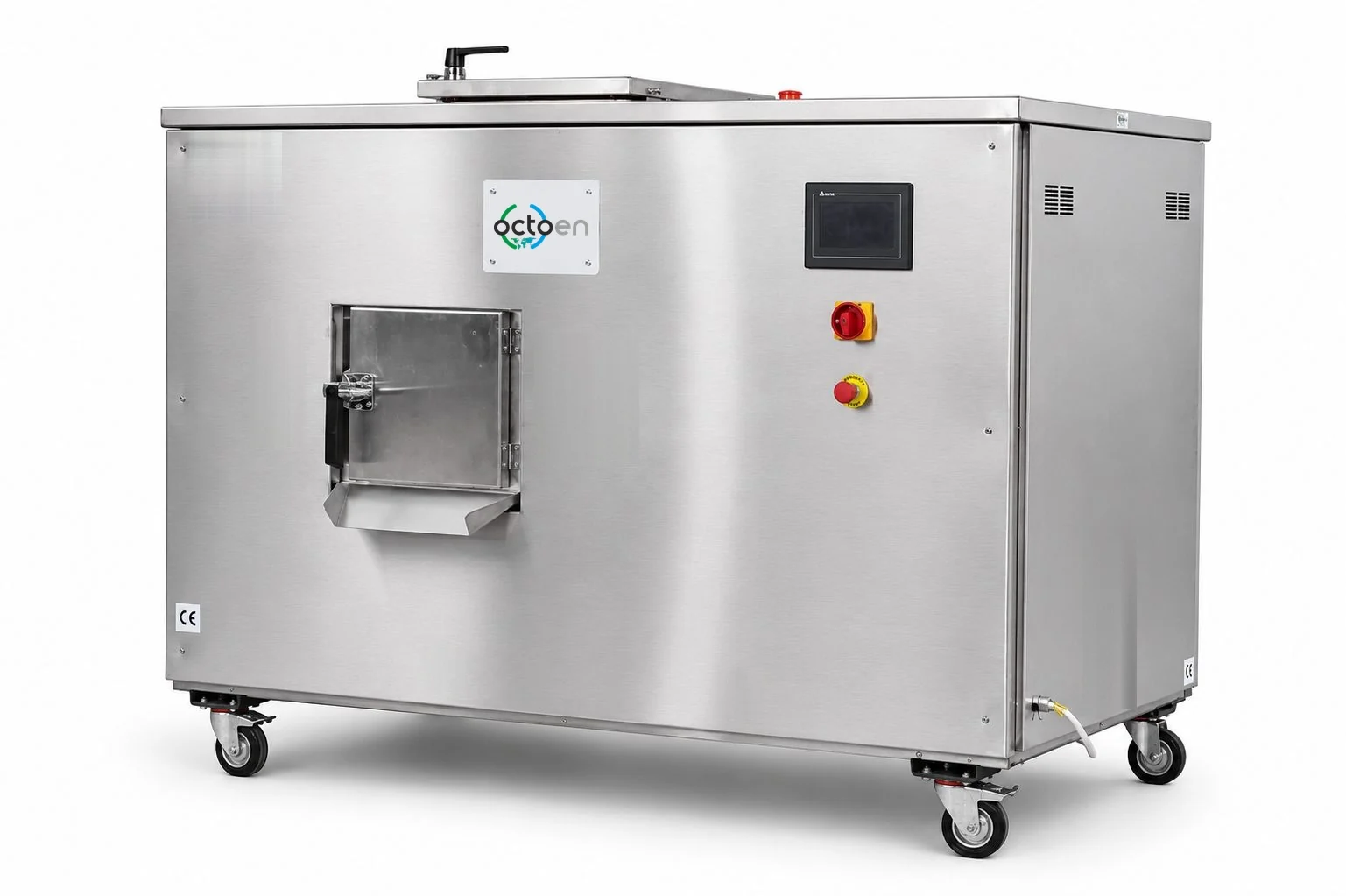
Put the composter where the waste comes off the line or in the waste yard. ECO-130 KSN and larger models run an enzyme-assisted biological process at 45-75 °C (113-167 °F); each 12-24 hour cycle turns the load into fresh compost, used as organic fertilizer or soil amendment. Meat and fish trimmings are handled as food waste, while bones and shells pass through the ECO-100 Shredder first, at up to 300 kg (661 lb) an hour. Above 5,000 kg (11,023 lb) a day, we design a complete line for your site.
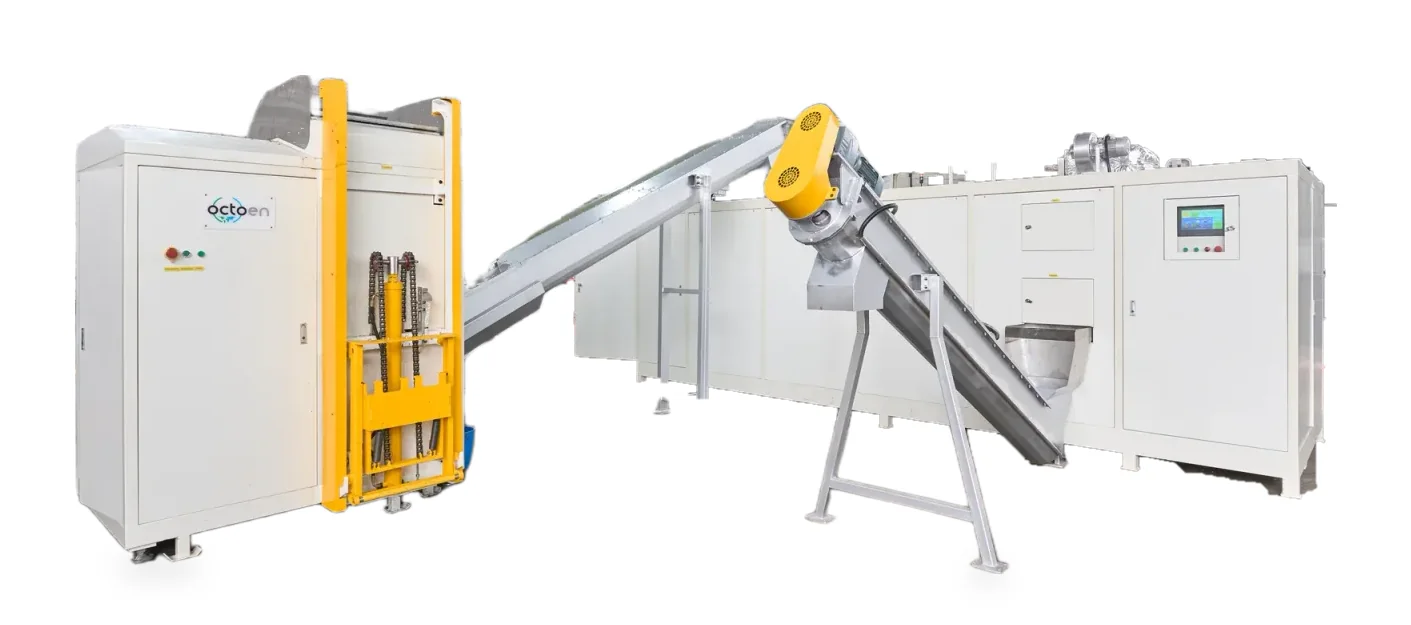
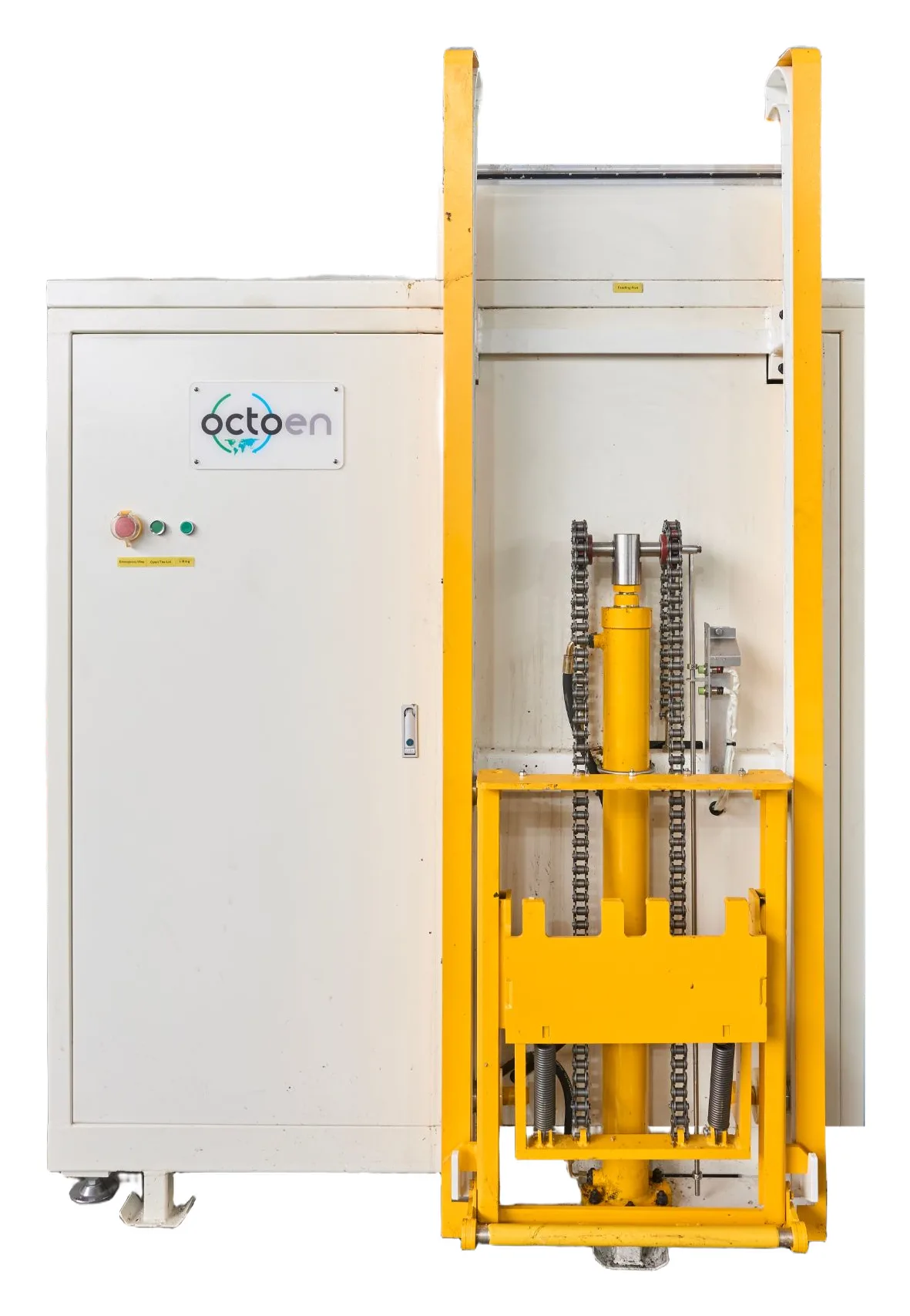
- ECO-5000 KSN: a complete line with feed hopper, screw conveyors, shredder, dewatering unit and infrared-assisted closed bioreactor, 1,825 t (2,012 US tons) a year.
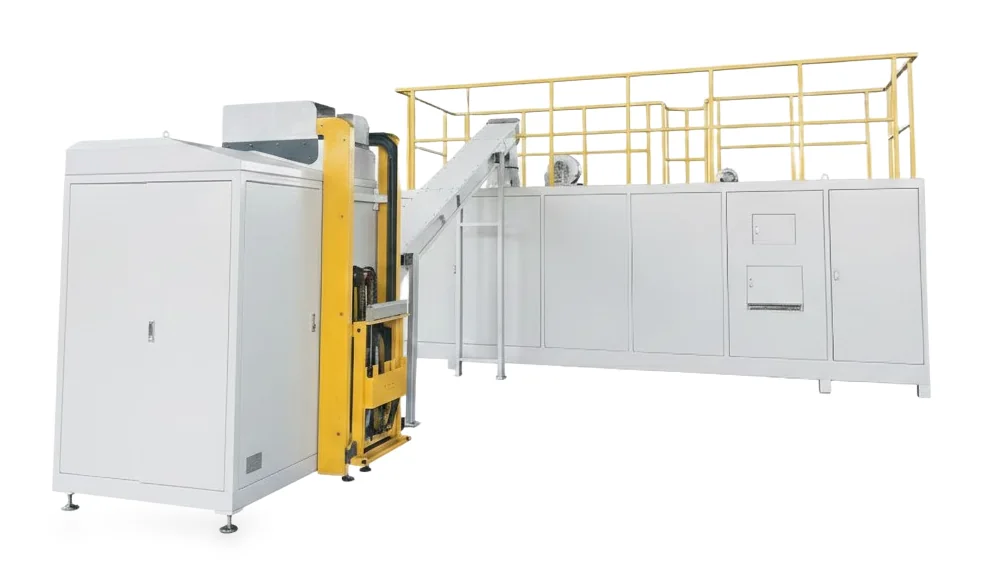
- ECO-2500 KSN: AISI 316 contact parts and AISI 304 exterior, 65-75 °C (149-167 °F), about 912 t (1,005 US tons) a year.
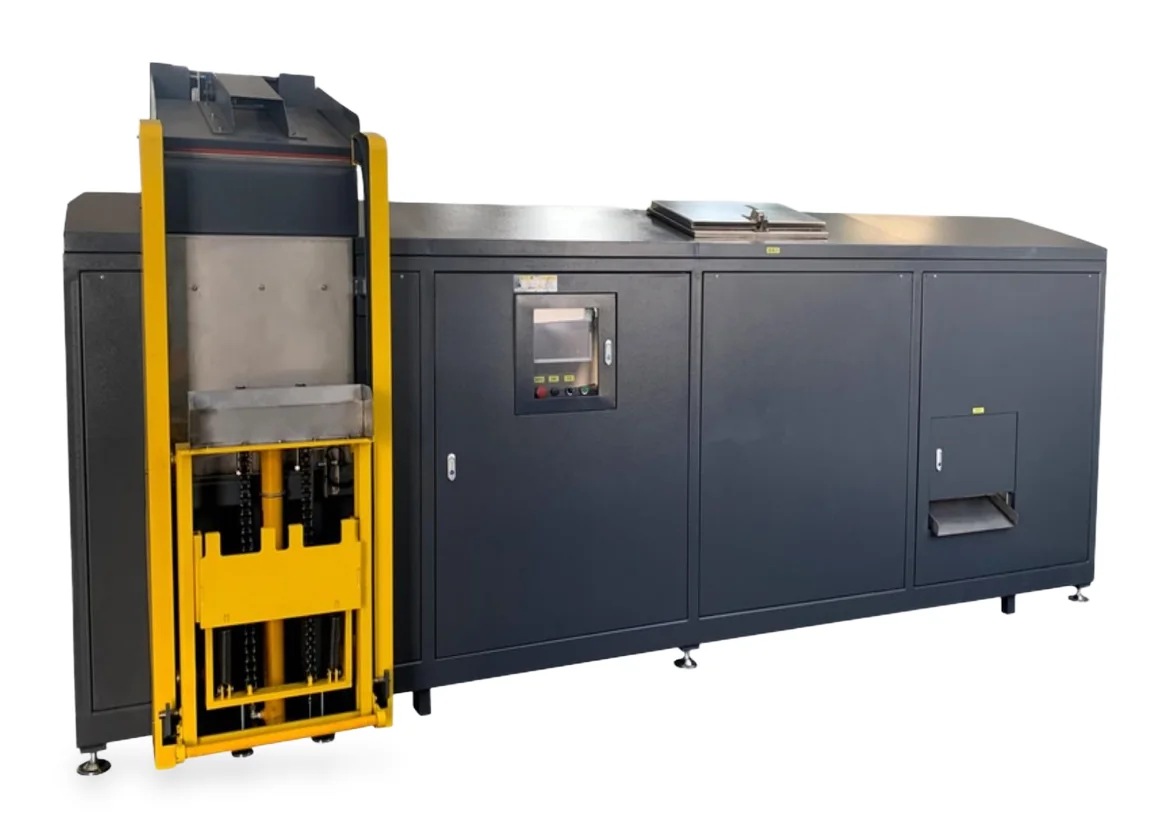
- ECO-1000 KSN: 1,000 kg (2,205 lb) a day, with an optional 1.5 kW dewatering unit, shredder and conveyor.
- Volume reduction of up to 90% for wet food waste and 60-70% for carbohydrate-rich, fibrous or acidic waste.
- OCTOEN Carbon Tracker, an energy analyzer and four load cells record waste in, energy used and net weight out.
Recommended systems
Sized by the food waste you produce per day. Our engineers confirm the final size after a site review.
Sizing
How to size a system for a food plant
Size food processing waste composting from weights, not estimates: production scraps and off-spec product per shift, times the shifts a day, plus the staff canteen. For the canteen, a rule of thumb of about 0.26 kg (0.57 lb) of food waste per meal served gives a first figure. Note which streams are wet, oily, bony or fibrous, because they decide whether a shredder or dewatering goes in front of the composter. We confirm the final size after a site review.
A plant with 2,000 kg (4,409 lb) of production scraps a day and a canteen serving 900 meals (about 234 kg, 516 lb) needs capacity for about 2,234 kg (4,925 lb) a day, which fits the ECO-2500 KSN.
Source: EPA Ireland, food waste in full-service restaurants
Open the system finderWhere it already runs
Our references span stadiums, Michelin-starred kitchens, campuses, municipalities and a copper mine.
See all referencesUS organics rules and food plants
There is no federal mandate, but several states set thresholds far below the roughly 400 US tons a year that a plant generating 1,000 kg (2,205 lb) a day produces. New Jersey covers generators of 52 tons a year or more within 25 road miles of an authorized facility and accepts enclosed on-site composting as a way to comply. Connecticut covers businesses generating 26 tons a year or more within 20 miles of a facility. In Massachusetts, businesses that dispose of half a ton or more of food material a week may not send it to a disposal facility. Check the official sources on our regulations page.
See the rules on our regulations pageFood plant composting questions
Can the system take meat and fish scraps?
Yes, as food waste: trimmings go in with the rest, and the machine adjusts its recipe for oily or wet batches. Bones and shells go through the ECO-100 Shredder first.
What about very wet waste?
The machine applies the right recipe for wet or oily batches automatically, and a little sawdust can speed up very wet loads. For high-moisture streams, the ECO-1000 KSN takes an optional dewatering unit, and the ECO-5000 KSN line includes one. The machines need no water connection.
Is this a food waste dehydrator?
No. ECO-130 KSN and larger models are in-vessel aerobic composting systems with an enzyme-assisted biological process at 45-75 °C (113-167 °F). A dehydrator only dries the waste; OCTOEN machines compost it.
How long does an ECO-5000 KSN line take?
The ECO-5000 KSN has a production lead time of 90 days. Installation, commissioning and training are quoted with the line; the US limited warranty runs 12 months from acceptance or 14 from shipment.
Who serves US plants?
OCTOEN LLC (Illinois) serves US customers from its assembly, installation and service facility in Chicago. Every system is designed and built in our factory in Sivas, Türkiye. Contact us for a quote.
Plan a composting line for your plant
Send us your daily waste by stream and shift; we will recommend a system and send a quote.