Where On-Site Composting Counts for Compliance: A State and City Guide
Most US organics rules tell businesses to keep food waste out of the trash. A few also say, in their own text, that processing it on site is an accepted way to comply. Here is what we found in the official sources.
Rules that name on-site processing
- Washington, DC (D.C. Code § 8-1031.03a): covered commercial food waste generators may process back-of-house food waste in an on-site organic waste processing system. Any on-site composting must be in-vessel or a system approved by DPW, and equipment must be properly sized and installed under the plumbing and wastewater rules.
- Seattle (SMC 21.36.082): businesses that generate food waste or compostable paper must subscribe to food and yard waste service, compost their food waste on site or self-haul it to a transfer station.
- Washington State (RCW 70A.205.545, from HB 1799): in Business Organics Management Areas, managing organic material on site is a listed way to comply; the latest threshold, 96 gallons a week, took effect January 1, 2026.
- Denver (Universal Recycling and Composting Ordinance rules): food businesses and buildings can apply to process food waste on site as an alternative way to comply, with city approval renewed every year.
- Maine (38 M.R.S. § 2147): from July 1, 2030, designated food waste generators (2 tons or more a week at one location, within 20 miles of an organics recycler with capacity) may manage food waste at the point of generation through agricultural use, composting or anaerobic digestion.
The Connecticut caveat
Connecticut's law (CGS § 22a-226e) treats covered generators that compost on site, or use permitted on-site organic treatment equipment, as compliant. DEEP adds two limits: material from an on-site dehydrator is still solid waste and only complies if it is then composted or digested, and food waste liquefied and sent down the drain to the sewer does not comply.
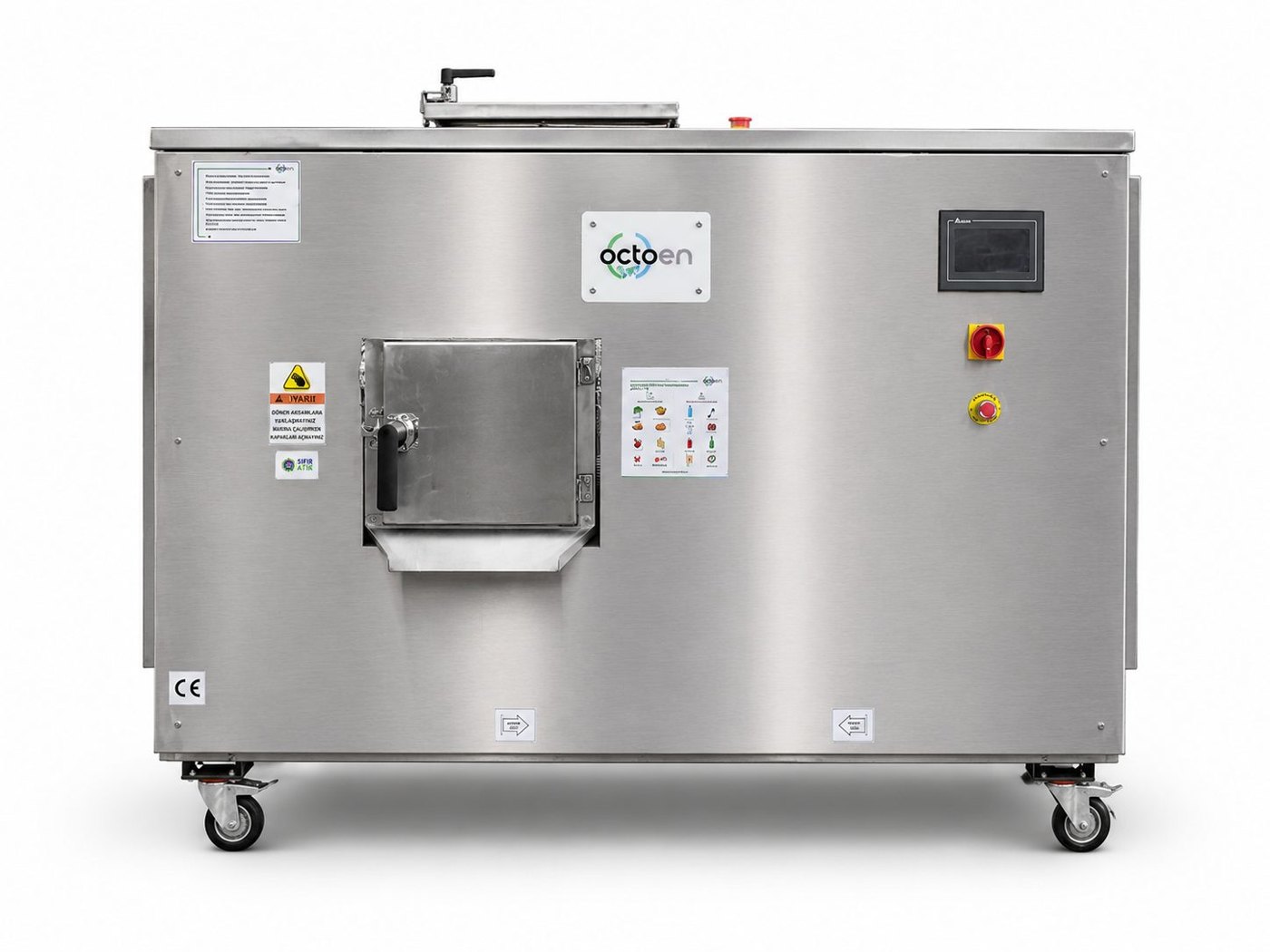
This is why the process matters. OCTOEN's ECO-130 KSN and larger models run an enzyme-assisted biological process at 45-75 °C (113-167 °F), an in-vessel aerobic composting system, not a dehydrator. Even so, rules differ by place, so confirm with your agency before you count on-site composting toward compliance.
Talk to us about your site, or see all rules on our regulations page.
This article is general information, not legal advice. Check the official source or ask a qualified advisor before you rely on a rule.
Written by the OCTOEN team.
All news and blog posts