California SB 279: CalRecycle Starts Rules for Small Compost Sites
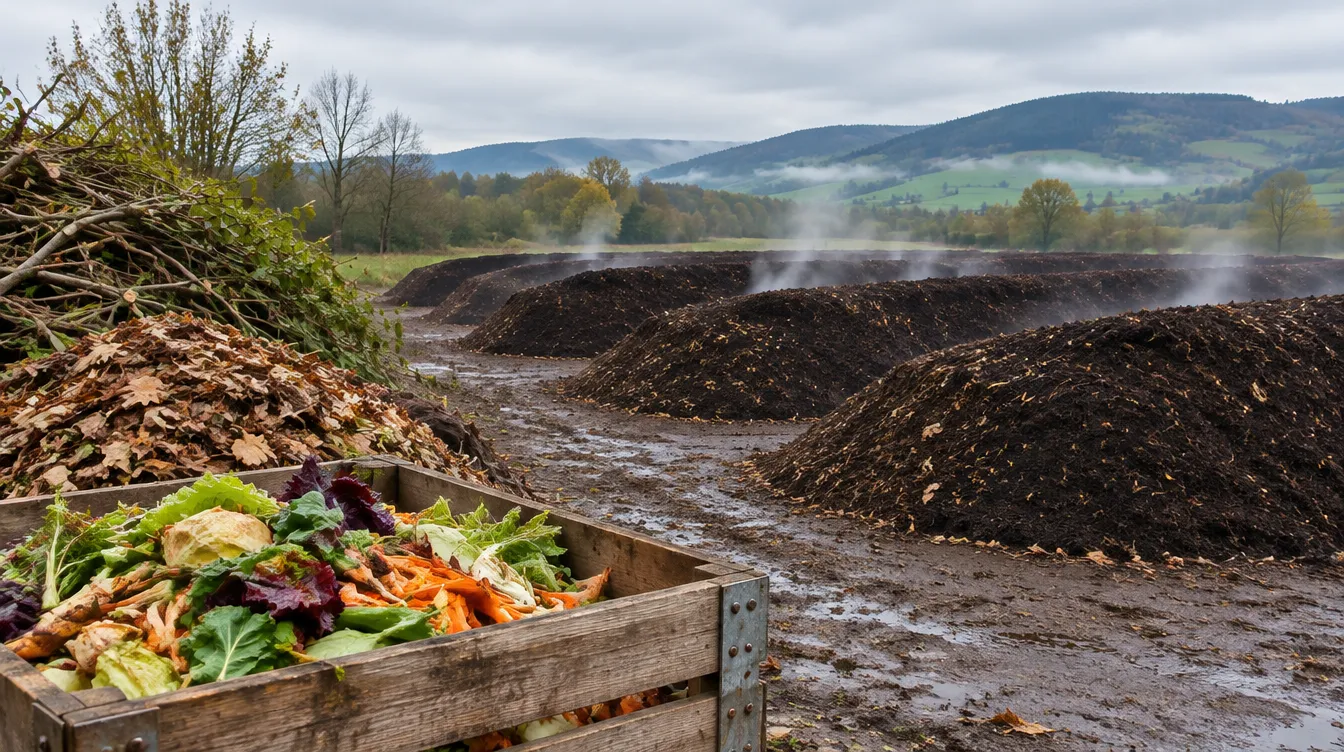
AI-generated illustration
CalRecycle (the California Department of Resources Recycling and Recovery) has started work on new compost regulations to carry out California SB 279, a 2025 law that eases the rules for small composting sites. It scheduled an informal public workshop for September 8, 2026, on regulatory concepts for SB 279 and AB 411, ahead of a formal rulemaking with the Office of Administrative Law (OAL).
What California SB 279 changed
The governor approved SB 279 on October 11, 2025 (Chapter 651, Statutes of 2025). Its new Public Resources Code § 44019 took effect on January 1, 2026:
- Composting green material, agricultural material, food material and vegetative food material is an "excluded activity" if the total feedstock and compost on site at any one time is no more than 200 cubic yards (about 153 m³). For a composting activity owned by a public agency, such as a city, county or special district, the limit is 500 cubic yards (about 382 m³).
- The earlier limit was 100 cubic yards and 750 square feet. The square-foot cap is gone.
- Excluded activities are not subject to the permit requirements of the state's compost rules. Operators must still get any permits that other agencies require, such as local health and land use authorities.
- CalRecycle may raise the on-site limit by regulation.
SB 279 also sets 5,000 cubic yards (about 3,823 m³) a year as the amount of compost a composting activity may give away or sell under two provisions of the compost rules.
What comes next
A March 2026 Senate budget subcommittee agenda lists changes the compost regulations need, including more feedstocks counted as food material, higher volume thresholds for excluded activities and possibly higher thresholds for the permit tiers. CalRecycle will post the formal documents on its rulemaking page once it files a public notice with OAL.
What it means for on-site composting
Campuses, hotels, venues, farms and public agencies that compost food waste where it is generated get more room under the new limit. The limit counts all feedstock and compost on site at one time, including compost that is curing. For scale, the bin of an OCTOEN ECO-1000 KSN holds 1,800-2,000 L (about 475-528 gal). Its enzyme-assisted process runs a 12-24 hour composting cycle and cuts volume by up to 90%. CalRecycle notes that the local enforcement agency can still inspect an activity, so check your plans with it and with local permitting offices first.
See our products page or contact us to plan on-site composting in California.
Frequently asked questions
What does California SB 279 change for composting?
Since January 1, 2026, composting green, agricultural and food material is an excluded activity in California if no more than 200 cubic yards of feedstock and compost are on site at one time, or 500 cubic yards for a public agency. The earlier limit was 100 cubic yards and 750 square feet.
Do excluded composting sites in California still need permits?
Excluded activities fall outside the permit requirements of the state's compost rules. Operators must still get any permits other agencies require, such as local health and land use authorities.
When will CalRecycle update its compost regulations for SB 279?
CalRecycle scheduled an informal public workshop on regulatory concepts for September 8, 2026. It will post the formal rulemaking documents once it files a public notice with the Office of Administrative Law.
Written by the OCTOEN team.
All news and blog posts