New York Food Scraps Law 2027: A Guide to the 1-Ton Threshold
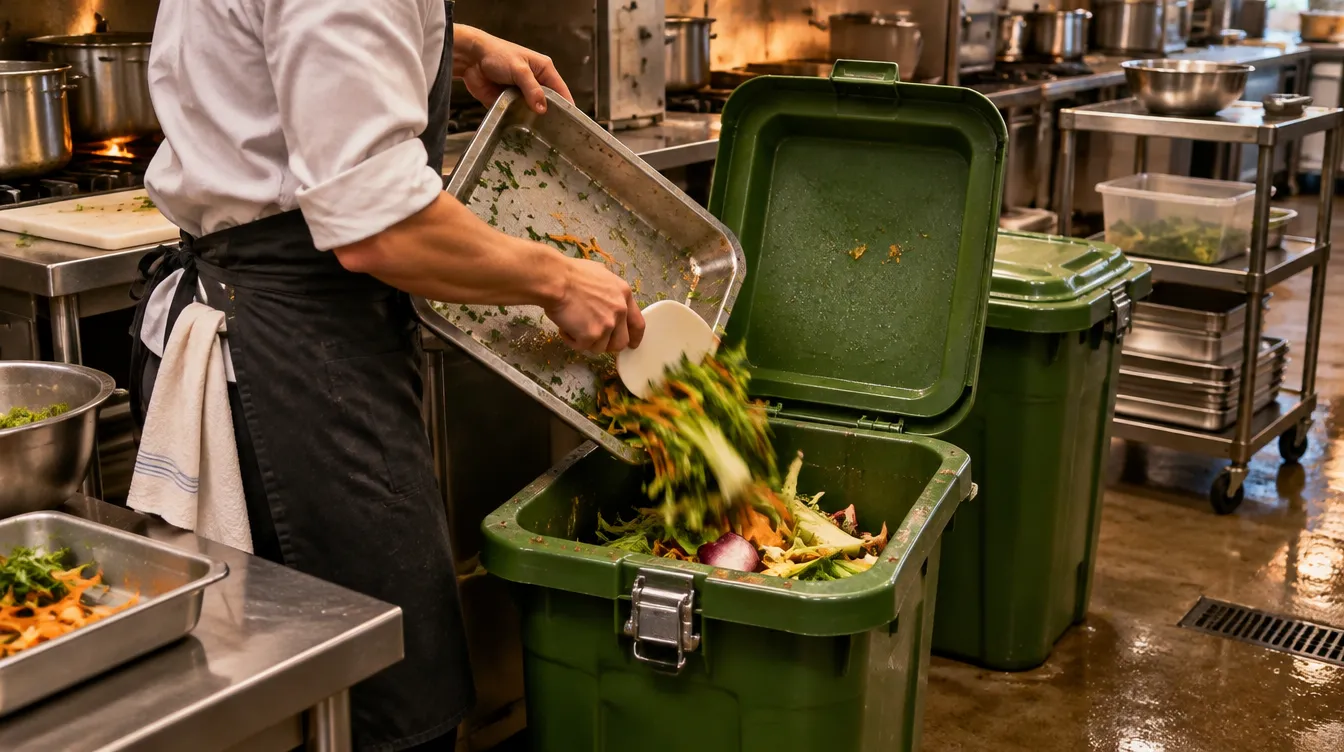
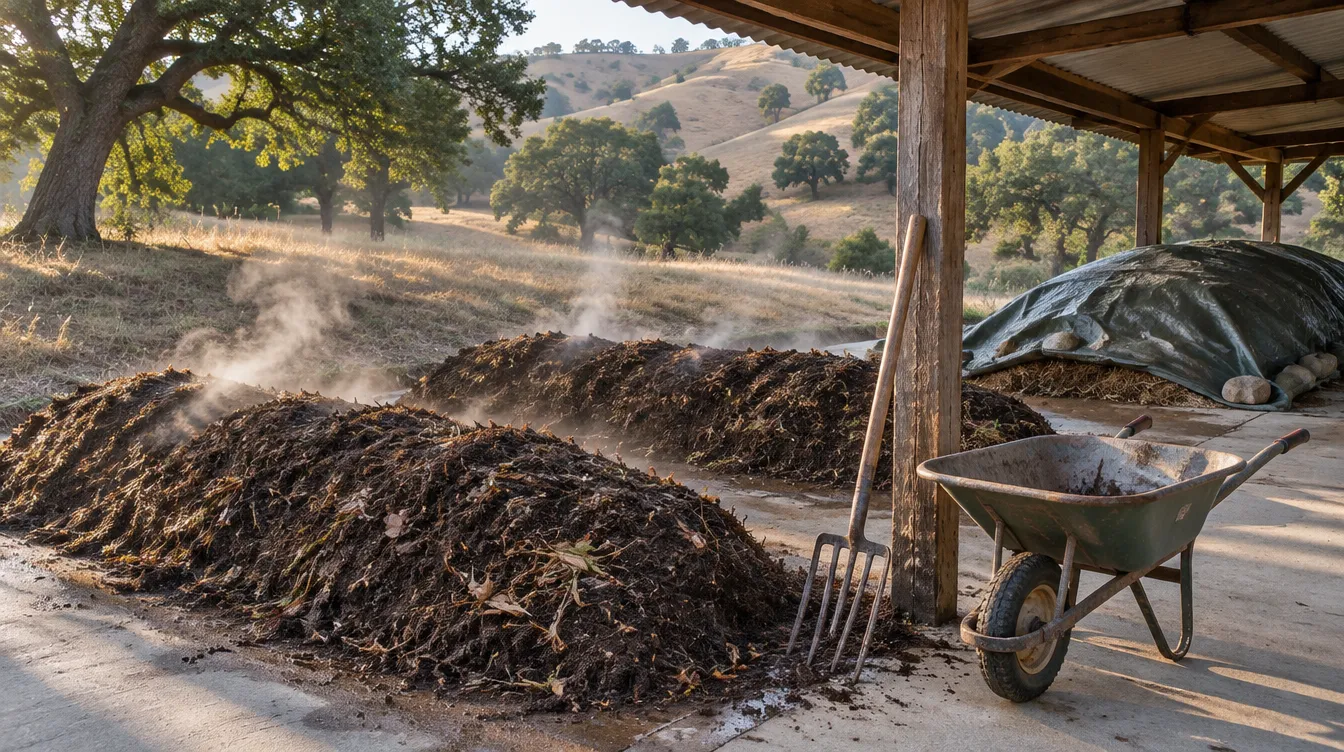
AI-generated illustration
From January 1, 2027, the New York food scraps law (the state's Food Donation and Food Scraps Recycling Law) applies to businesses and institutions that generate an annual average of 1 ton (about 907 kg) or more of food scraps a week at a single location. Today the threshold is 2 tons. Covered sites outside New York City must donate excess edible food and recycle the rest if an organics recycler is within 50 miles, up from 25 miles.
The New York State Department of Environmental Conservation (DEC) has already published its 2027 list of covered sites and held two webinars this fall, on September 15 and October 15, 2026. Here is what the change means and how to prepare.
Who the New York food scraps law covers from 2027
The law names supermarkets, large food service businesses, colleges and universities, hotels, food processors, correctional facilities, and sports or entertainment venues as typical covered generators. A few definitions matter:
- Single location: contiguous property under common ownership. It can include more than one building.
- Shared sites: where several independent food businesses operate in one place, such as a mall or a college campus, the entity that contracts for waste hauling manages the food scraps for all of them.
- Food scraps: inedible food, kitchen trimmings, food-soiled paper and edible food that is not donated. Used cooking oil and yellow grease are not included.
The state law does not apply to New York City, which has its own local law, or to hospitals, nursing homes, adult care facilities and K-12 schools.
The threshold drops again on January 1, 2029, to 0.5 ton (about 454 kg) a week. For a first check, 1 ton a week averages about 286 lb (130 kg) a day over seven days. DEC also links to a food waste estimator from the NYS Pollution Prevention Institute.
What covered businesses must do
Under Environmental Conservation Law § 27-2203, a designated food scraps generator must:
- Donate excess edible food to the maximum extent practicable.
- Separate its remaining food scraps from other solid waste.
- Store food scraps so they do not become odorous or attract pests, for example in a container with a lid and a latch that resists rodents and other wildlife.
- Give employees information and training on how to separate and store food scraps.
- Recycle the food scraps in one of three ways: hire a transporter that delivers them to an organics recycler, self-haul them to an organics recycler, or recycle them on site through in-vessel composting, aerobic or anaerobic digestion, or another method DEC approves by regulation.
- Send DEC an annual report by March 1 on food donated, food scraps recycled, and the recyclers and transporters used.
The on-site route can cover some or all of the food scraps, as long as the rest goes to an organics recycler. The recycling duty applies where a recycler within 50 miles has capacity for the site's food scraps, based on DEC's yearly estimate.
Key dates and paperwork
- Now: check DEC's 2027 list of designated food scraps generators (updated July 21, 2026).
- Listed, but below 1 ton a week: submit DEC's removal form with supporting documents.
- Undue hardship: petition DEC for a one-year waiver. Grounds in the law include recycling costs that are not reasonably competitive with landfill disposal, a recycler without enough capacity, and unique circumstances. Sites with a 2026 waiver must reapply for 2027.
- January 1, 2027: the 1-ton threshold and the 50-mile test take effect, and DEC opens the form for the 2026 annual report.
- March 1, 2027: 2026 annual reports are due from sites covered in 2026.
- June 1, 2027: DEC publishes the list for 2028.
DEC is also amending its Part 350 regulations to match the 2025 changes to the law. Free help is available: DEC funds Feeding New York State to support food donation programs, and the Rethink Food Waste NY program, run by the Center for EcoTechnology (CET), for waste reduction and composting advice.
Where on-site composting fits
The law names in-vessel composting as an on-site option. That can help where hauling to a recycler is costly, irregular or far away. OCTOEN's ECO-130 KSN and larger models are in-vessel aerobic composting systems: an enzyme-assisted biological process at 45-75 °C (113-167 °F) turns food waste into fresh compost in a 12-24 hour composting cycle and cuts its volume by up to 90%. The fresh compost is used as a soil amendment.
For scale, the ECO-130 KSN handles 130 kg (287 lb) a day, close to the daily average of a site right at the new threshold. Sites that run fewer days a week, or have busy peaks, need more capacity on those days. Our guide to sizing an on-site composter walks through the steps. Load cells and OCTOEN Carbon Tracker software (ECO-130 KSN and up) record what goes in, which helps with the annual report.
Before you count on-site composting toward compliance, ask DEC how it will treat your system and what records it expects. Plan where the compost will go, too: the law requires compost that organics recyclers make from food scraps to be used as a soil amendment, not disposed of.
Contact us to size a system for your site, or see our regulations page for other US rules.
This article is general information, not legal advice. Check the official source or ask a qualified advisor before you rely on a rule.
Frequently asked questions
Who must comply with the New York food scraps law in 2027?
From January 1, 2027, businesses and institutions outside New York City that generate an annual average of 1 ton or more of food scraps a week at a single location, and are within 50 miles of an organics recycler with capacity. Hospitals, nursing homes, adult care facilities and K-12 schools are excluded.
Can a business compost food scraps on site under the New York law?
Yes. The law lets covered sites recycle some or all of their food scraps on site through in-vessel composting, aerobic or anaerobic digestion, or another method DEC approves by regulation. Food scraps not processed on site must go to an organics recycler.
How do I find out if my site is on DEC's list?
DEC publishes a list of designated food scraps generators every year, and the 2027 list is on its Food Donation and Food Scraps Recycling Law page. A listed site that generates less than 1 ton a week can apply to be removed, and others can petition for a one-year waiver.
Written by the OCTOEN team.
All news and blog posts