NYC Commercial Organics Rules Will Cover More Businesses in 2027
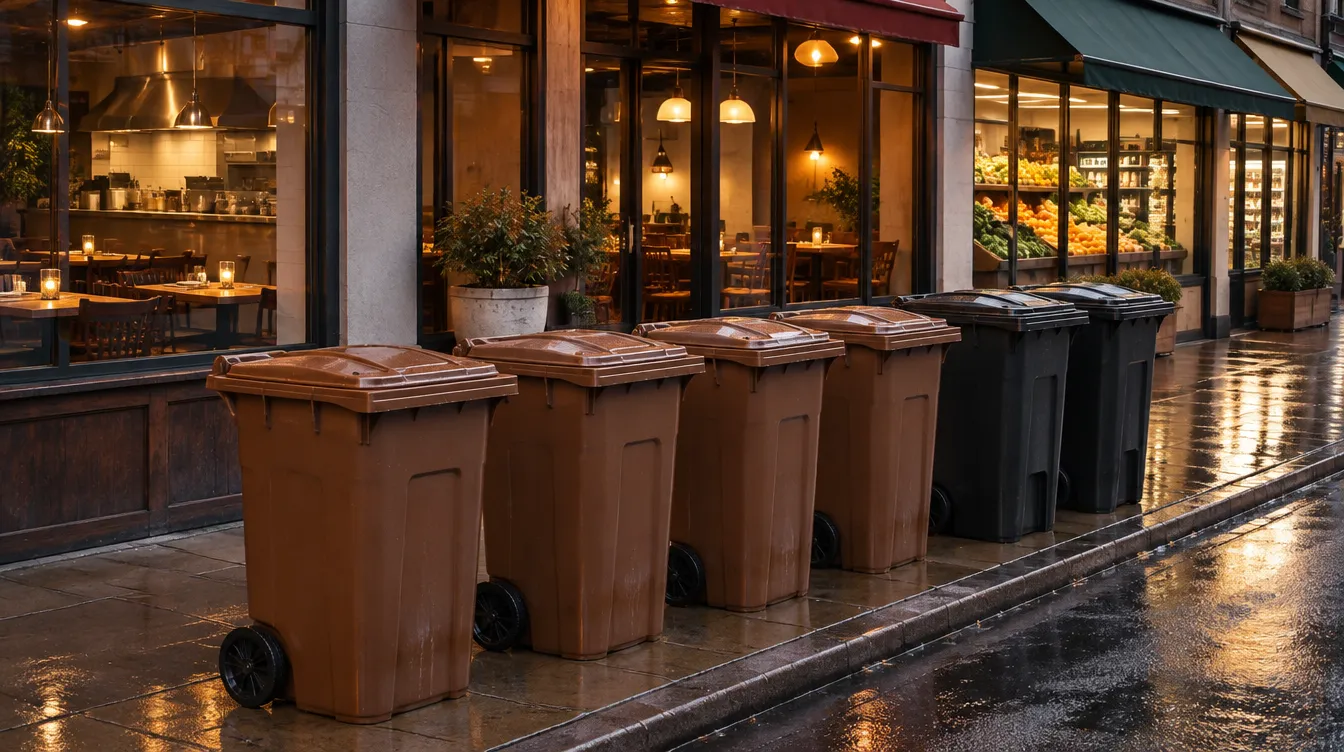
AI-generated illustration
New York City is widening its commercial organics rules. Local Law 118 of 2026 (Intro 31), enacted on July 30, 2026, lets the Department of Sanitation (DSNY) require more categories of businesses to separate food and other organic waste. DSNY first assesses whether there is enough organics processing capacity at competitive prices. If there is, it designates the additional covered establishments by December 1, 2026, and they must comply from June 1, 2027, or when their commercial waste zone starts, whichever is later.
What changes in NYC's commercial organics rules
The current NYC commercial organics rules, under Local Law 146 of 2013, cover set categories above size limits. Examples include food service establishments of 7,000 square feet (650 m²) or more, retail food stores of 10,000 square feet (929 m²) or more, food service in hotels with 100 or more guest rooms, and arenas and stadiums with 15,000 or more seats.
According to DSNY, Intro 31 authorizes it to require all businesses that produce food waste and other organic waste to separate it for composting. Private carters will also have to give the establishments they collect organics from information on donating excess edible food. DSNY says businesses pay less for composting than for trash collection under the Commercial Waste Zone program.
New York City businesses follow these city rules rather than the state food scraps law, which excludes the city.
On-site processing stays an option
Covered businesses can hire a private carter, haul organics themselves after registering with the Business Integrity Commission, or process the material on site. On-site processing must use in-vessel composting or another DSNY-approved method that does not discharge food waste into the sewer. Equipment must be registered with DSNY within 30 days of installation and renewed every year. The business must weigh and measure what it processes and keep the records for at least three years. Since September 25, 2021, the Department of Environmental Protection has prohibited, with limited exceptions, devices such as liquefiers that break down food waste to send it into the sewer.
What it means for businesses
Restaurants, grocers, caterers and venues below the old thresholds should watch for DSNY's designation. Where space for carts or pickup slots is tight, in-vessel composting on site can reduce what has to leave the building. OCTOEN's ECO-130 KSN and larger models compost food waste in a closed drum at 45-75 °C (113-167 °F) in a 12-24 hour composting cycle, and their load cells and OCTOEN Carbon Tracker software record what goes in. Confirm your setup with DSNY before you rely on it.
See our products page or contact us to talk through your site.
Frequently asked questions
What does NYC Local Law 118 of 2026 change?
It lets the Department of Sanitation (DSNY) designate more categories of businesses that must separate organic waste. DSNY first reviews organics processing capacity and pricing, and the designation is due by December 1, 2026.
When do newly designated NYC businesses have to comply?
If DSNY designates them, on June 1, 2027, or when the business's commercial waste zone takes effect, whichever comes later.
Can NYC businesses process food waste on site?
Yes, through in-vessel composting or another DSNY-approved method that does not discharge food waste into the sewer. The equipment must be registered with DSNY within 30 days of installation and renewed every year.
Written by the OCTOEN team.
All news and blog posts