Preparing Your Site for an On-Site Composter
Choosing the right capacity is only half of a composting project. The other half is the site. A machine that fits your daily food waste still has to get through the door, sit on the right floor, connect to the right power and work next to your staff every day.
This checklist walks through what to plan before delivery, using the OCTOEN ECO series as the example.
Space and access
Start with the footprint, then plan the route from the truck to the final spot. Approximate machine dimensions (length × width × height):
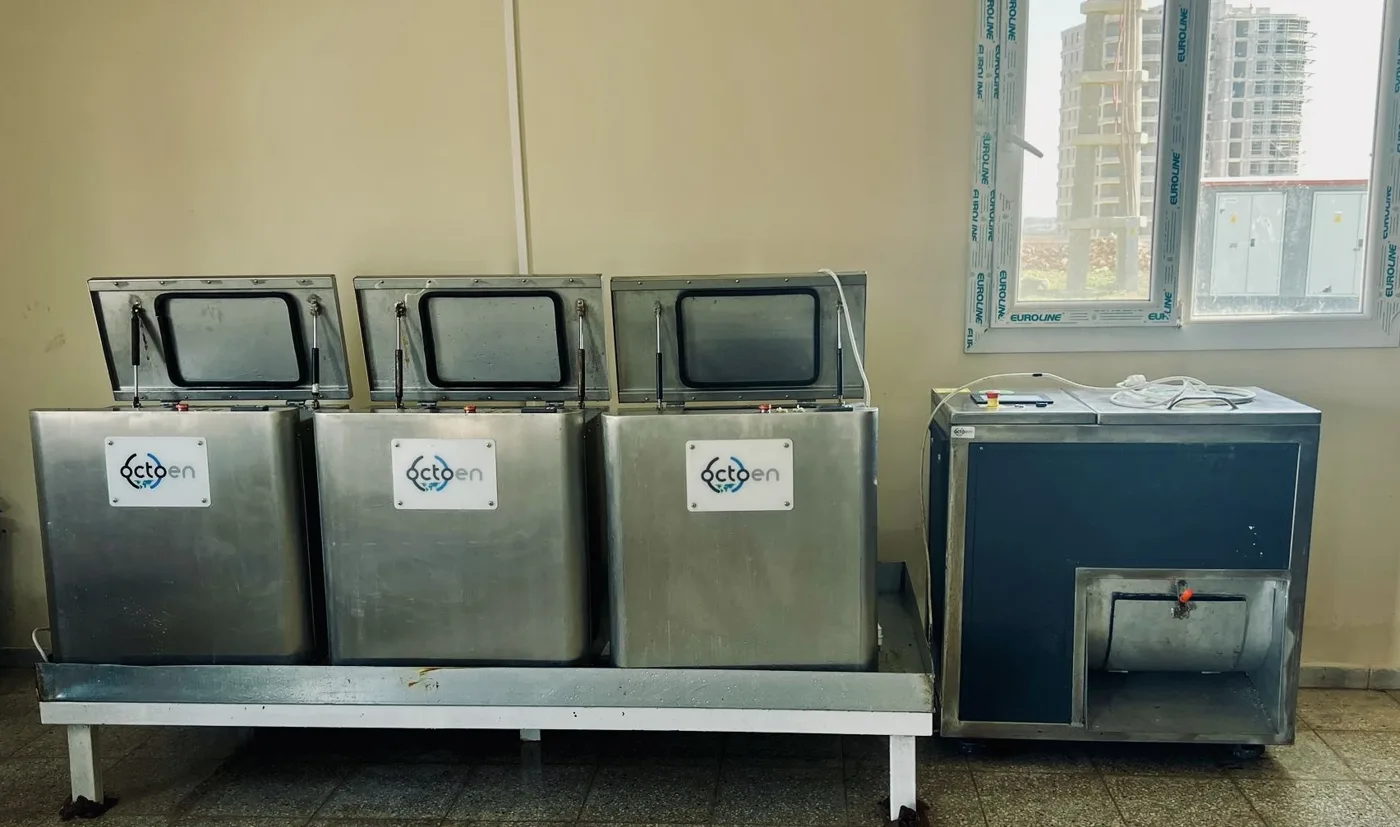
- ECO-30 KSN: 720 × 420 × 730 mm (28 × 17 × 29 in), 75 kg (165 lb) net.
- ECO-130 KSN: 1,350 × 720 × 840 mm (53 × 28 × 33 in), 290 kg (639 lb) net.
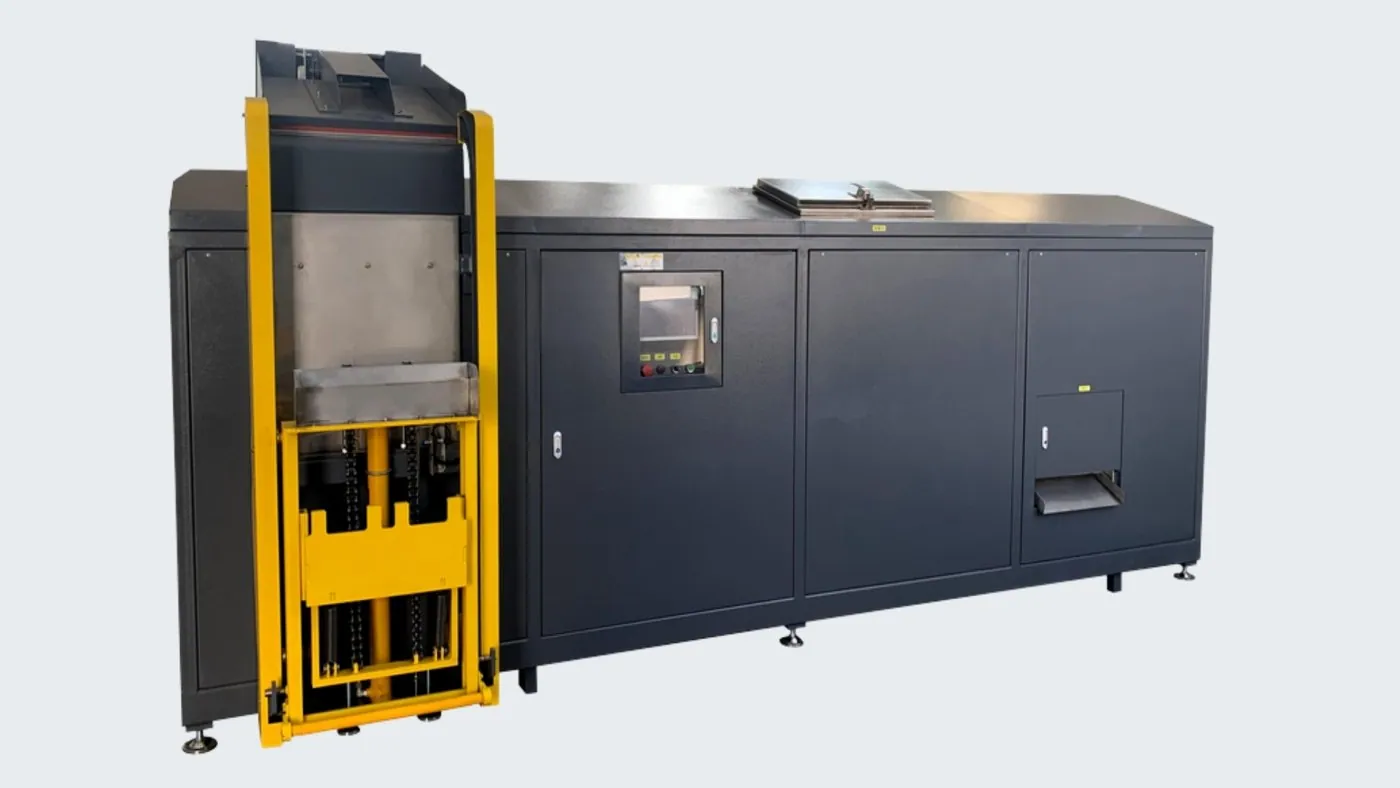
- ECO-300 KSN and ECO-500 KSN: 2,000 × 965 × 1,425 mm (79 × 38 × 56 in), 640 kg (1,411 lb) and 700 kg (1,543 lb) net.
- ECO-1000 KSN: 3,355 × 1,600 × 1,405 mm (132 × 63 × 55 in), 2,700 kg (5,952 lb) net.
Machines arrive in wooden or plywood crates, which are larger than the machine itself. The ECO-130 KSN crate measures 1,500 × 830 × 1,170 mm (59 × 33 × 46 in), and the ECO-300 KSN and ECO-500 KSN crate measures 2,100 × 1,065 × 1,525 mm (83 × 42 × 60 in). Check doors, corridors, elevators, ramps and turning space against these sizes.
Placement with a forklift or crane is the buyer's responsibility, so arrange equipment and access for delivery day early. Leave working space around the machine for loading, emptying and service.
Floor, power and air
Three site requirements apply across the ECO series:
- A flat, load-bearing floor. Check the floor rating for the machine's weight plus the waste inside it, especially on upper floors, loading docks and outdoor pads.
- A grounded electrical supply with residual-current protection. Small models run on single-phase power: 208-240 V, 60 Hz in the US for the ECO-30 KSN and ECO-130 KSN. Larger models use three-phase industrial power, and site voltage and frequency are confirmed per project. In the US, 480 V or 208 V at 60 Hz is typical.
- A ventilated or air-circulated area. The machine needs fresh air around it, whether it stands indoors or outdoors.
There is no need for a water connection. Water is only added in small amounts if the compost becomes too dry, so a nearby tap or hose is enough.
Odor, noise and location
Where the machine goes affects how often staff use it. The closer it is to the kitchen or the waste room, the less waste sits in bins.
From the ECO-130 KSN up, the machines have built-in odor filtration with activated carbon and UVC, and the ECO-1000 KSN adds a HEPA filter. This is why they can be installed indoors or outdoors.
Noise levels differ by model. The ECO-30 KSN, ECO-130 KSN and ECO-1000 KSN run below 45 dB, a quiet office level. The ECO-300 KSN and ECO-500 KSN run below 60 dB, the ECO-2500 KSN at 50 dB and the ECO-5000 KSN below 65 dB. For the larger models, a back-of-house room, a loading dock or an outdoor pad is usually the better spot.
A few practical questions help pick the location:
- Where is food waste produced, and how far does a full cart have to travel?
- Is there room to store a few days of output, or a place to use it on site?
- If waste is bulky, is there space for an ECO-100 Shredder next to the machine? It measures 1,500 × 640 × 1,870 mm (59 × 25 × 74 in).
- Who will load the machine, and is the route safe for carts on every shift?
Installation, training and the first weeks
How installation works depends on the model. The ECO-30 KSN is set up with remote installation and training. Larger models are installed and commissioned on site, and staff training is part of the start-up.
On the first start, the machine needs a base material such as sawdust, and models from the ECO-130 KSN up spray liquid enzyme for a few seconds. After that, the compost left in the drum acts as the starter, and enzyme is only needed again after a full emptying. Machines from the ECO-130 KSN up use PLC control with one-button operation, so no dedicated operator is required.
Plan a short review after the first few weeks. Check how much waste goes in each day, how the output is used and whether the location works for staff. Small changes at this stage, like moving bins or adjusting a loading routine, make daily use much easier.
To discuss your site and choose the right model, visit our products page or contact us for a site review.
Written by the OCTOEN team.
All news and blog posts