Peru DS 011-2026-MIDAGRI: A Guide to the New Agrarian Waste Rules
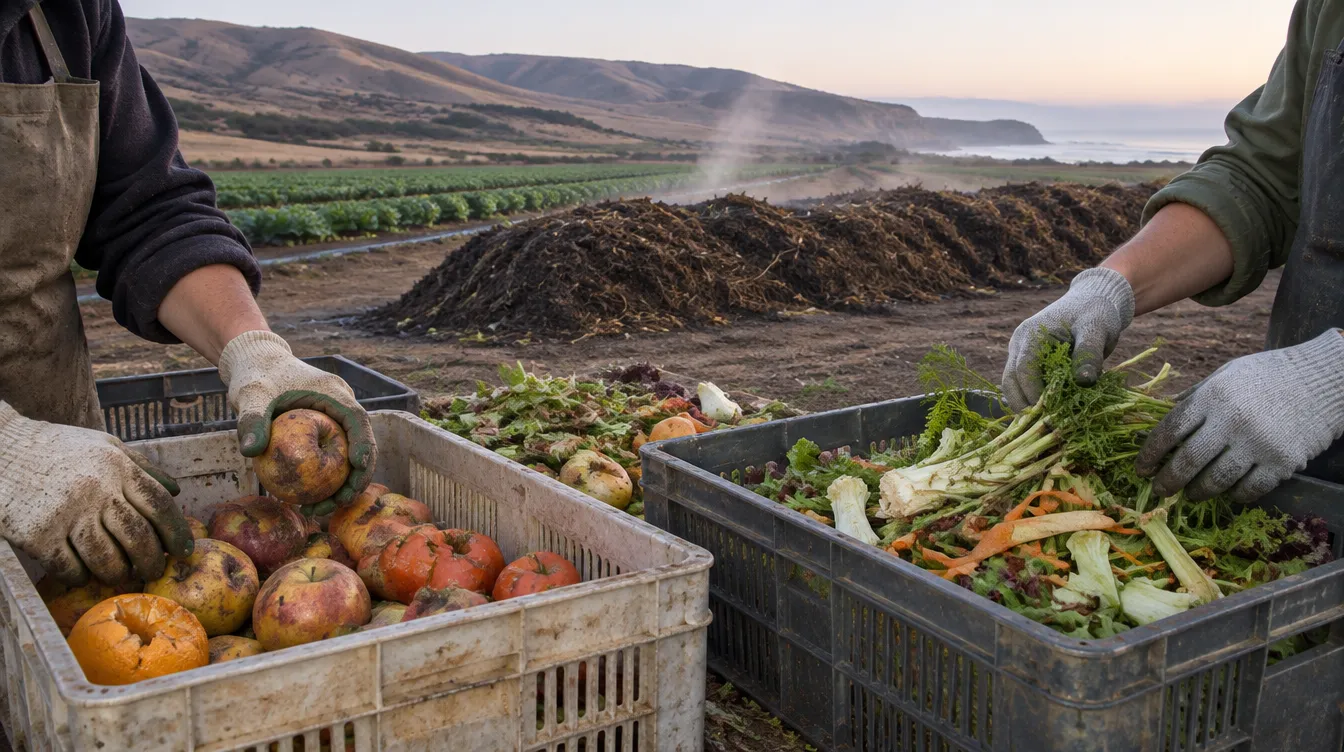
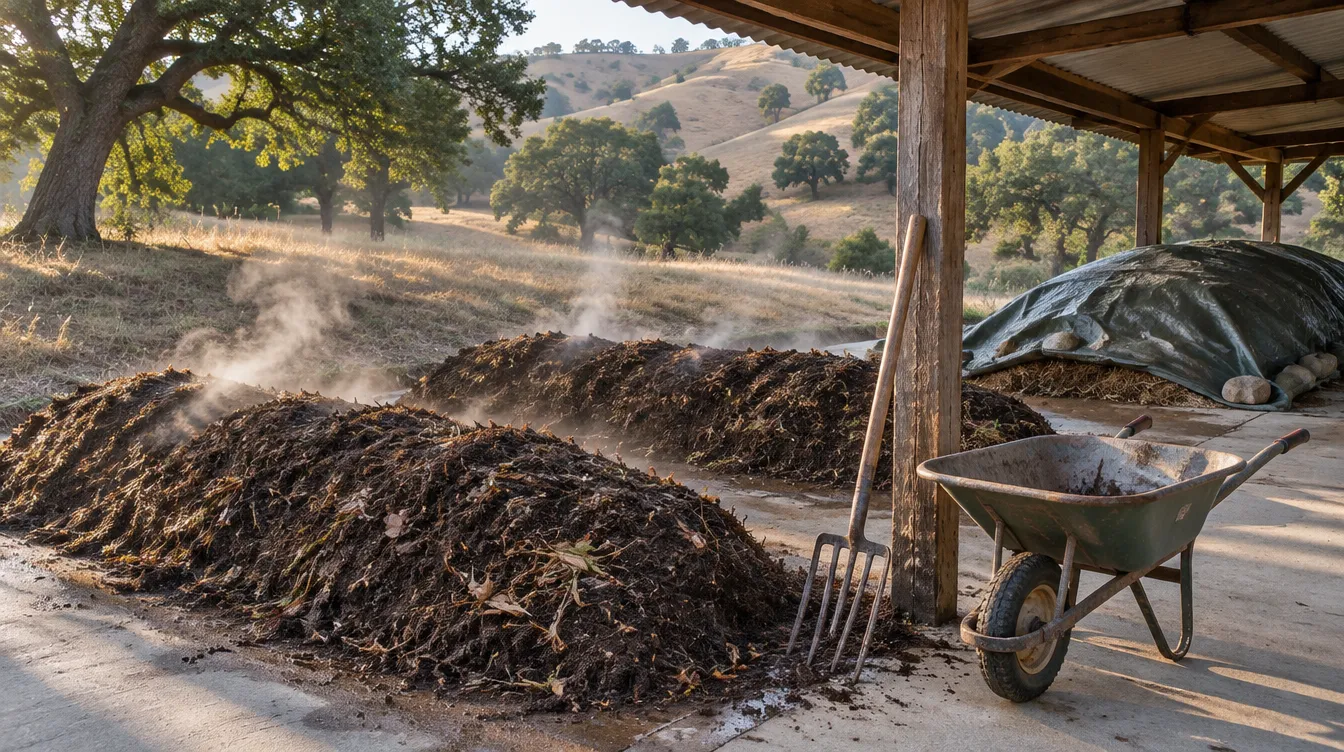
AI-generated illustration
On October 9, 2026, Peru's Ministry of Agrarian Development and Irrigation (MIDAGRI) published Supreme Decree 011-2026-MIDAGRI (DS 011-2026-MIDAGRI) in the official gazette El Peruano. It approves Peru's new agrarian solid waste regulation (Reglamento de Gestión Integral de Residuos Sólidos del Sector Agrario y de Riego) and repeals the 2012 rules, Supreme Decree 016-2012-AG. Farms, livestock operations, agro-processors and forestry sites now have to put valorization, such as composting, ahead of landfill.
Who the agrarian solid waste regulation covers
The regulation applies to every person or company that runs investment projects or activities under MIDAGRI's remit, and to national, regional and local governments. Article 8 names four sources of agrarian waste:
- agricultural production and processing
- livestock production and processing, including poultry farms, hatcheries and slaughter facilities
- irrigation and water infrastructure works
- forestry production and processing
MIDAGRI's Directorate General of Agrarian Environmental Affairs (DGAAA) is the sector authority. The environmental enforcement agency OEFA will adapt its list of waste infractions to the new rules.
Discard material or waste: the key distinction
The regulation separates two kinds of organic leftovers.
Discard material (material de descarte) is a by-product or loss from an agrarian process that can be used directly as an input, by the same company in another process or by another company. Annex II sets minimum conditions:
- the receiving company is identified and can handle the type and amount
- handling follows the applicable sanitary rules and guides
- the material produces no leachate and is kept free of water and other liquids
- it travels in suitable containers or in covered bulk loads
- it is kept apart from hazardous materials such as fuels, oils and contaminated containers
Before first use, the generator files a one-time sworn statement (the Annex IV form) with the competent environmental authority and the enforcement agency. After that, it reports every year through SIGERSOL, the waste information system of the Ministry of the Environment (MINAM). Discard material can be transported without hiring a licensed waste operator (EO-RS). Generators that reuse it in another process of the same activity do not file the statement.
Waste is everything else: leftovers that do not meet Annex II, discard material that has lost its use, and materials from post-consumer sources or from activities complementary to the main one. Food waste from a farm canteen or a worker camp falls in this group. For waste, the rule is the same: valorize first, dispose last (Articles 30 and 40).
What the rule says about composting and on-site treatment
Article 38 lists composting next to reuse, recycling, oil recovery and bioconversion as material valorization. It also names organic fertilizers, inputs for balanced feed, biogas and biol as possible products.
Two articles matter for sites that want to treat organics where they are produced:
- Article 27.1: a generator may treat its waste inside its own facilities, as long as the treatment is included in its environmental management instrument (IGA). It then does not need to register as an EO-RS.
- Article 39: conditioning on site, such as sorting, storage, cleaning, shredding or grinding, compaction and pelletizing, counts as a complementary activity and also needs no EO-RS registration.
The regulation also bans open burning of agrarian waste (Article 28). It bans feeding animals directly with organic waste that has no use potential, or with livestock waste, including dead animals (Article 29).
A checklist for agribusiness, and where on-site composting fits
- Map your organic streams. Sort them into discard material that meets Annex II and waste that does not.
- Line up receivers. For discard material sent to another company, identify the receiver and file the sworn statement before the first delivery.
- Check your IGA. On-site composting or shredding should be part of your environmental management instrument. Where using discard material changes your facilities, the IGA has to be modified before the work starts (Article 16.1).
- Update your waste plan. Waste minimization and management plans (PMMRS) approved before the regulation must be adapted to Ministerial Resolution 089-2023-MINAM. If you improve waste handling, file the modified plan before you implement it; the transitional provision sets a 15-working-day period for this.
- Report every year. File the annual declarations through SIGERSOL.
Fruit and vegetable rejects, crop residues and canteen food waste can be composted on site in an in-vessel system. That cuts truck trips to a landfill and gives you compost for your own fields or green areas. OCTOEN's ECO series runs a 12-24 hour composting cycle and reduces volume by up to 90% for wet food waste, or by 60-70% for carbohydrate-rich, fibrous or acidic waste. The ECO-130 KSN and larger models work at 45-75 °C (113-167 °F). Models range from 30 kg (66 lb) to 5,000 kg (about 11,000 lb) a day, and the ECO-100 Shredder handles up to 300 kg (661 lb) an hour ahead of any model.
Article 38 also names inputs for balanced feed, while Article 29 bans feeding raw organic waste to animals directly. For sites that want to turn suitable food waste into animal feed through a controlled process, OCTOEN's Pet Food Machine Set shreds the material, mixes it with a probiotic enzyme in an ECO-300 KSN, holds it at 85 °C (185 °F) for 65 minutes as a heat step against Salmonella and other pathogens, then shapes and bakes it into kibble. It handles up to 1,000 kg (2,205 lb) a day. Check the sanitary rules that apply to feed before you plan it.
OCTOEN has assembly, installation and service facilities in Peru, and the Las Bambas copper mine runs an ECO-5000 KSN line for its camp food waste. Whether on-site treatment fits your permits depends on your IGA, so check with your environmental authority before you plan it.
This article is general information, not legal advice. Check the official text or ask a qualified advisor before you rely on a rule.
Send us your daily volume of organic waste through our contact page and we will suggest a system size.
Frequently asked questions
Who must comply with Peru's DS 011-2026-MIDAGRI?
Every person or company that runs agricultural, livestock, forestry or irrigation projects and activities in Peru under MIDAGRI's remit. National, regional and local governments apply it too.
What is discard material (material de descarte) under the regulation?
A by-product or loss from an agrarian process that can be used directly as an input, by the same company or another one. The generator notifies the authorities once before first use and reports every year through SIGERSOL.
Can a farm or agro-processor in Peru compost its organic waste on site?
Yes. The regulation lists composting as a valorization activity, and a generator may treat its waste inside its own facilities without registering as a waste operator (EO-RS), as long as the treatment is included in its environmental management instrument (IGA).
Written by the OCTOEN team.
All news and blog posts